Chen Xidan, Page Andrew
Centre for Health Research, School of Medicine, Western Sydney University, Sydney, New South Wales, Australia.
PLoS One. 2016 May 27;11(5):e0156399. doi: 10.1371/journal.pone.0156399. eCollection 2016.
This study assessed the long-term stability and instability of subjective well-being during post-school transition (i.e., transition from adolescence to young adulthood) and evaluated the determinants of transition stability.
Using two cohorts from a national representative longitudinal study, the Longitudinal Study of Australian Youth (N = 20991), latent profile analysis and latent transition analysis were conducted to examine transition patterns among subjective well-being profiles for youth from age 17 to 25. Multinomial logistic regressions were conducted to evaluate whether key socio-demographic variables were associated with transition stability.
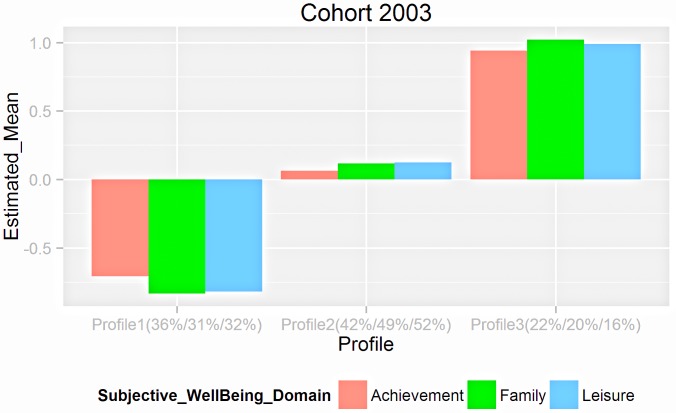
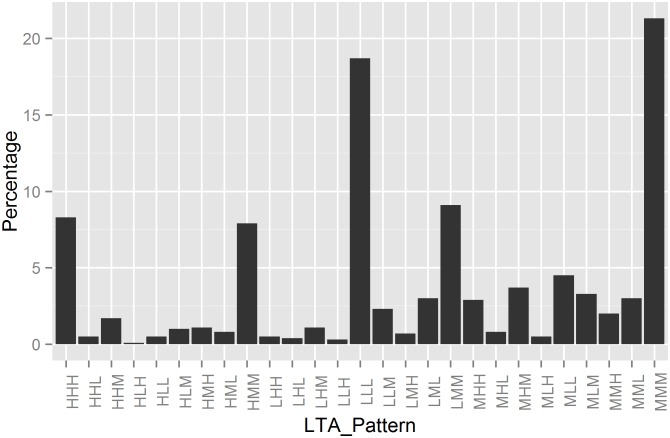
We identified: (1) three subjective well-being profiles: Low (30%), Moderate (50%), and High (20%); and (2) three major transition patterns among these subjective well-being profiles: stable, partially-stable, and unstable. The majority of youth had stable transition patterns during the transition from adolescence to adulthood. A large percentage of youth (52%) started low in subjective well-being profile and remained in the low subjective-wellbeing profile. Our examination also revealed gender was the most pronounced indicator for transition stability during this time period, with males more likely to have unstable transition patterns than females.
Results suggest that different subjective well-being status and transition patterns can be identified in the post-high school transition to adulthood, including unstable transitions. By targeting those groups more vulnerable to transition, mental health promotion and interventions may be delivered more effectively.
本研究评估了从学校毕业后过渡阶段(即从青少年到青年期的过渡)中主观幸福感的长期稳定性和不稳定性,并评估了过渡稳定性的决定因素。
利用来自全国代表性纵向研究“澳大利亚青年纵向研究”(N = 20991)的两个队列,进行了潜在剖面分析和潜在转变分析,以研究17至25岁青年主观幸福感剖面之间的转变模式。进行多项逻辑回归以评估关键社会人口变量是否与过渡稳定性相关。
我们确定了:(1)三种主观幸福感剖面:低(30%)、中(50%)和高(20%);以及(2)这些主观幸福感剖面之间的三种主要转变模式:稳定、部分稳定和不稳定。大多数青年在从青少年向成年期过渡期间具有稳定的转变模式。很大比例的青年(52%)在主观幸福感剖面上开始处于低水平,并一直保持在低主观幸福感剖面。我们的研究还表明,在此期间,性别是过渡稳定性最显著的指标,男性比女性更有可能具有不稳定的转变模式。
结果表明,在高中毕业后向成年期的过渡中,可以识别出不同的主观幸福感状态和转变模式,包括不稳定的转变。通过针对那些更容易过渡的群体,可以更有效地开展心理健康促进和干预措施。