AlSharari Shakir D, Al-Rejaie Salim S, Abuohashish Hatem M, Ahmed Mohamed M, Hafez Mohamed M
Department of Pharmacology and Toxicology, College of Pharmacy, King Saud University, P.O. Box 2457, Riyadh 11451, Saudi Arabia.
Department of Pharmacology and Toxicology, College of Pharmacy, King Saud University, P.O. Box 2457, Riyadh 11451, Saudi Arabia; Department of Biomedical Dental Sciences, College of Dentistry, University of Dammam, Dammam 31441, Saudi Arabia.
Oxid Med Cell Longev. 2016;2016:5436745. doi: 10.1155/2016/5436745. Epub 2016 Apr 27.
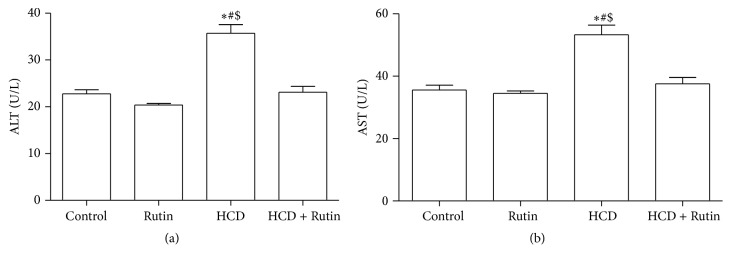
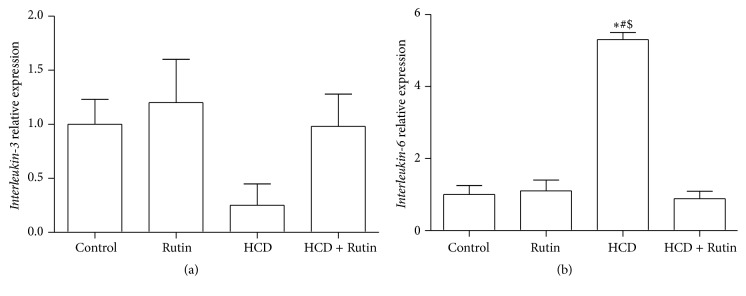
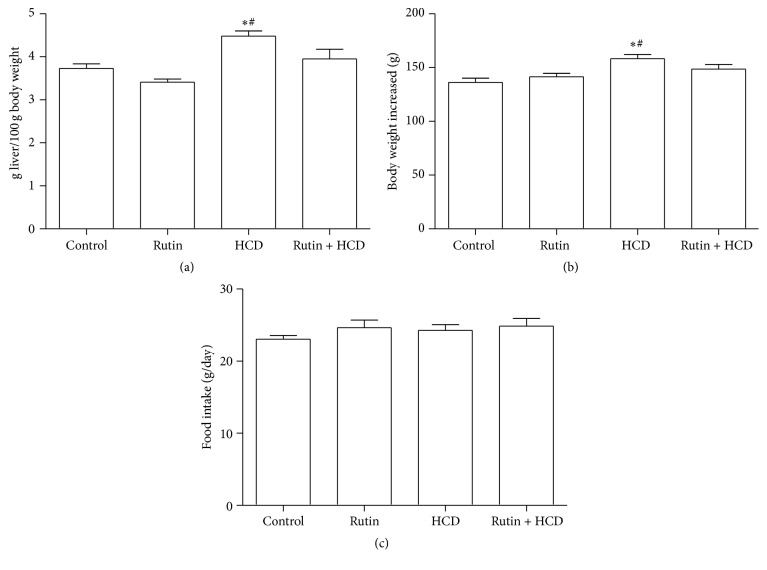
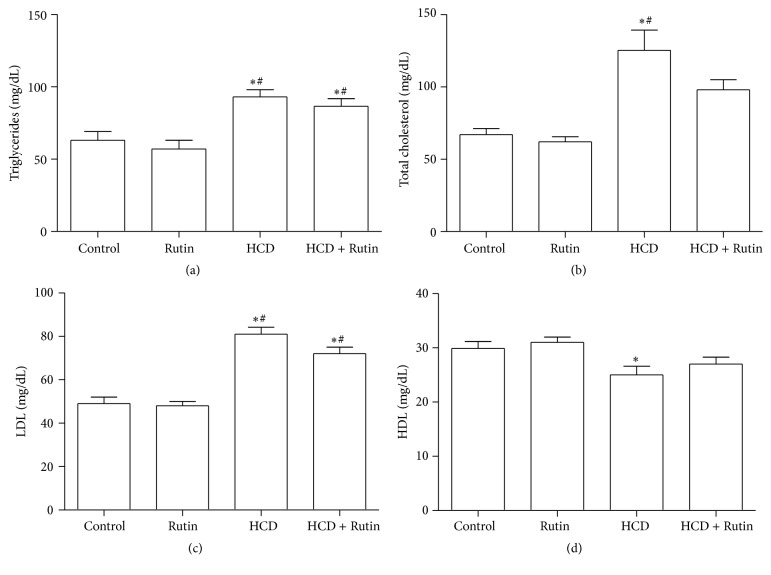
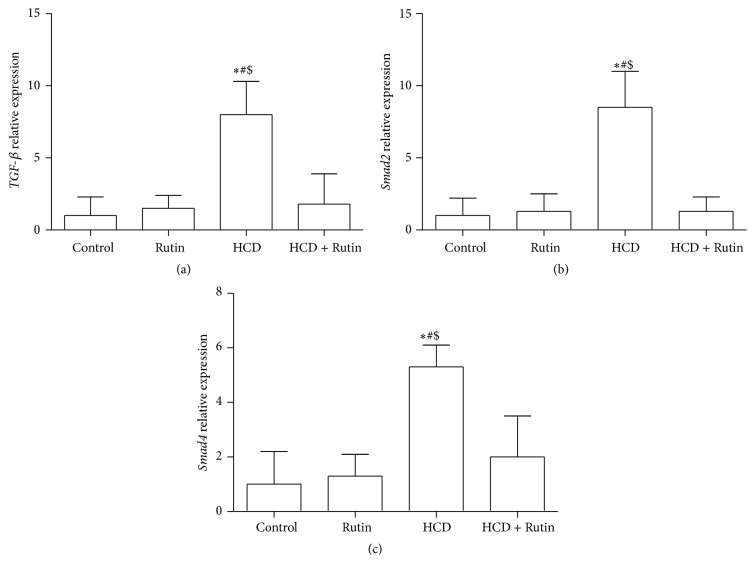
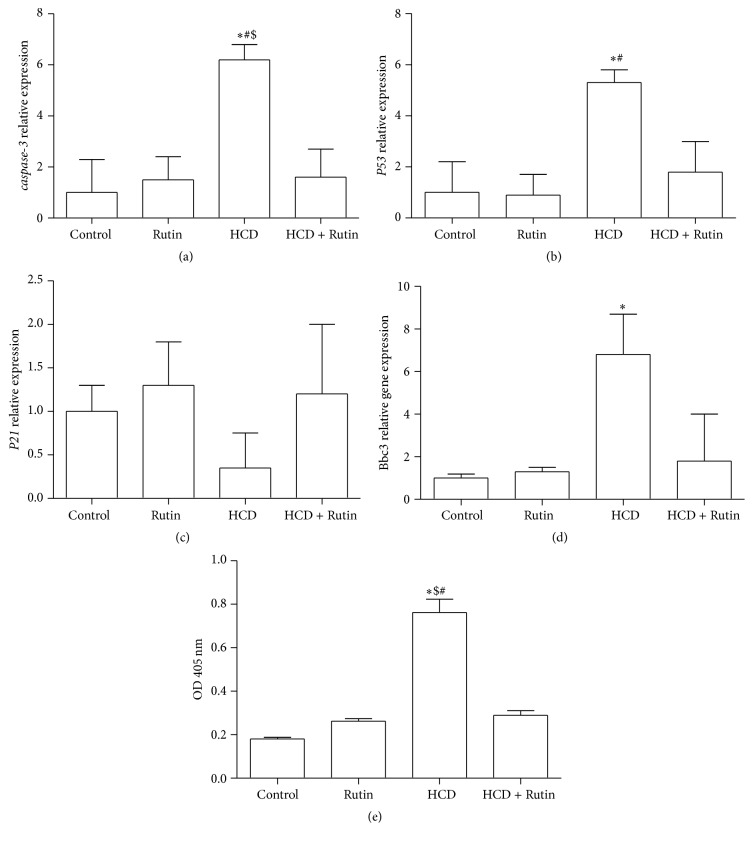
Background and Objective. High-cholesterol diet (HCD) intends to increase the oxidative stress in liver tissues inducing hepatotoxicity. Rutin is a natural flavonoid (vitamin p) which is known to have antioxidative properties. The aim of the present study was to investigate the potential effects of Rutin on hypercholesterolemia-induced hepatotoxicity in rats. Materials and Methods. Male Wistar rats were divided into four groups: G-I control, G-II Rutin, G-III HCD, and G-IV Rutin + HCD. The liver functions and lipid profile were used to evaluate the HCD-induced hepatotoxicity. Quantitative real time-PCR was carried out to evaluate the expression levels of genes in TGF-β/Smad signaling pathway. Results. Rutin in combination with HCD showed a significant protective effect against hepatotoxicity. HCD caused significant increase in the mRNA expression of transforming growth factor beta (TGF-β), Mothers Against Decapentaplegic Homolog 2 (Smad-2), Mothers Against Decapentaplegic Homolog 4 (Smad-4), Bcl-2-binding component 3 (Bbc3), caspase-3, P53 and Interleukin-6 (IL-6) and decrease in the expression levels of Cyclin depended kinase inhibitor (P21) and Interleukin-3 (IL-3) in hepatic cells. Conclusion. TGF-β/Smad signaling pathway is involved in HCD-induced hepatotoxicity and Rutin inhibits the hepatotoxicity via suppressing this pathway. Therefore, Rutin might be considered as a protective agent for hepatotoxicity.
背景与目的。高胆固醇饮食(HCD)旨在增加肝脏组织中的氧化应激,从而诱发肝毒性。芦丁是一种天然黄酮类化合物(维生素P),已知具有抗氧化特性。本研究的目的是探讨芦丁对大鼠高胆固醇血症诱导的肝毒性的潜在影响。材料与方法。雄性Wistar大鼠分为四组:G-I对照组、G-II芦丁组、G-III高胆固醇饮食组和G-IV芦丁+高胆固醇饮食组。利用肝功能和血脂谱评估高胆固醇饮食诱导的肝毒性。采用定量实时聚合酶链反应(qRT-PCR)评估转化生长因子β(TGF-β)/Smad信号通路中基因的表达水平。结果。芦丁与高胆固醇饮食联合使用对肝毒性具有显著的保护作用。高胆固醇饮食导致肝细胞中转化生长因子β(TGF-β)、抗五聚体蛋白同源物2(Smad-2)、抗五聚体蛋白同源物4(Smad-4)、Bcl-2结合成分3(Bbc3)、半胱天冬酶-3、P53和白细胞介素-6(IL-6)的mRNA表达显著增加,而细胞周期蛋白依赖性激酶抑制剂(P21)和白细胞介素-3(IL-3)的表达水平降低。结论。TGF-β/Smad信号通路参与了高胆固醇饮食诱导的肝毒性,芦丁通过抑制该信号通路抑制肝毒性。因此,芦丁可被视为肝毒性的保护剂。