Quarta Marco, Brett Jamie O, DiMarco Rebecca, De Morree Antoine, Boutet Stephane C, Chacon Robert, Gibbons Michael C, Garcia Victor A, Su James, Shrager Joseph B, Heilshorn Sarah, Rando Thomas A
Department of Neurology and Neurological Sciences, Stanford University School of Medicine, Stanford, California, USA.
Paul F. Glenn Center for the Biology of Aging, Stanford University School of Medicine, Stanford, California, USA.
Nat Biotechnol. 2016 Jul;34(7):752-9. doi: 10.1038/nbt.3576. Epub 2016 May 30.
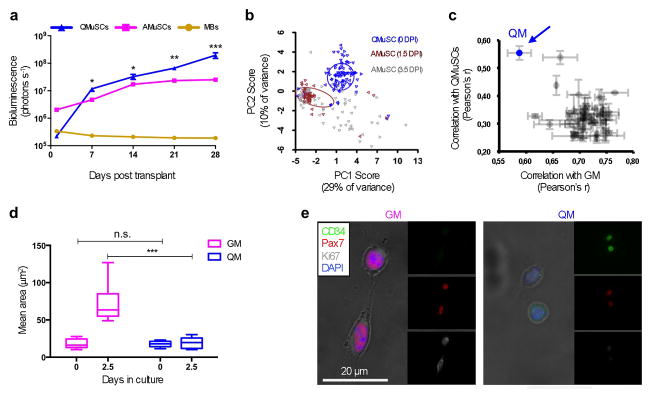
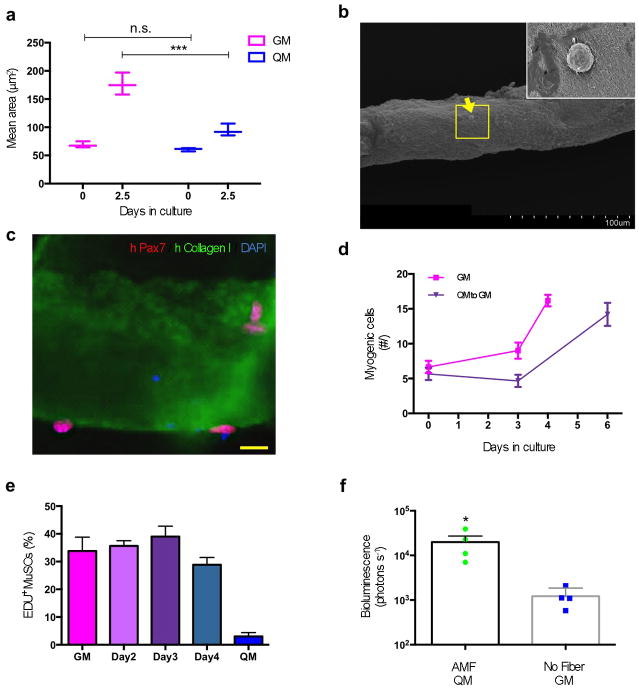
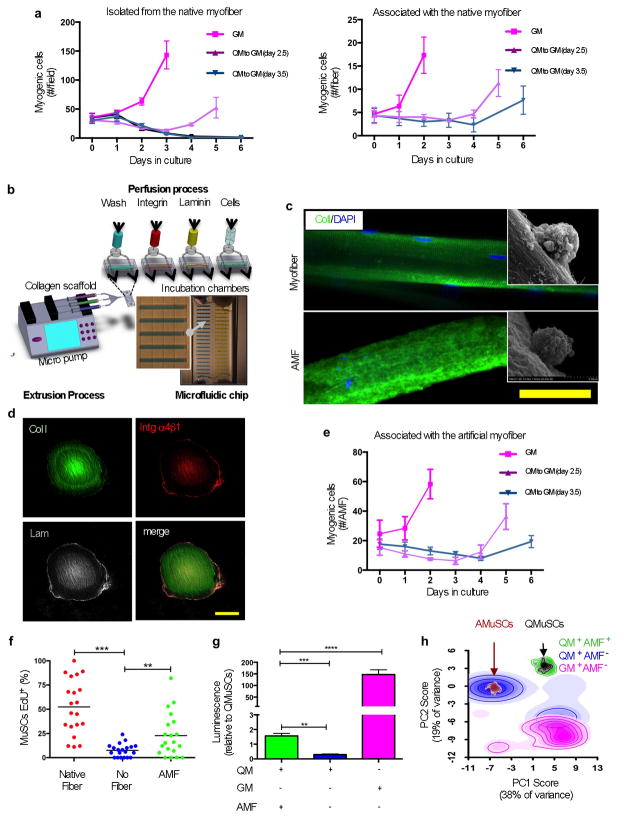
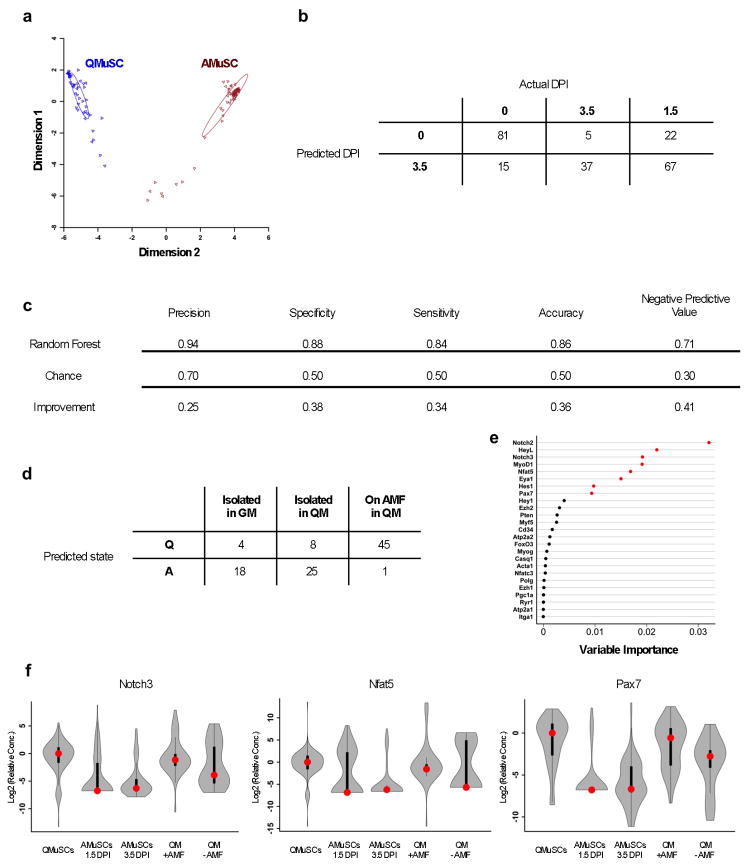
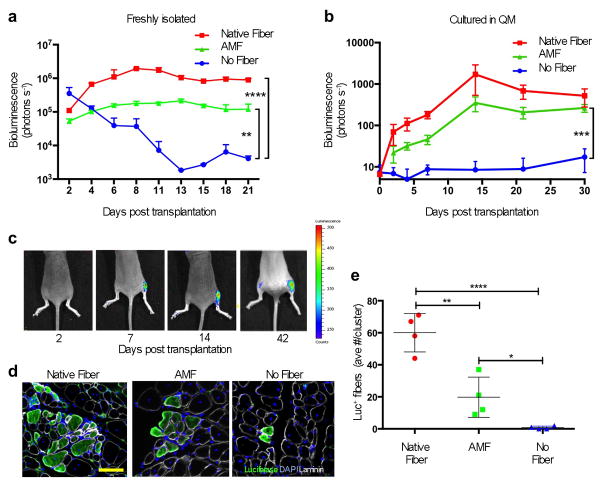
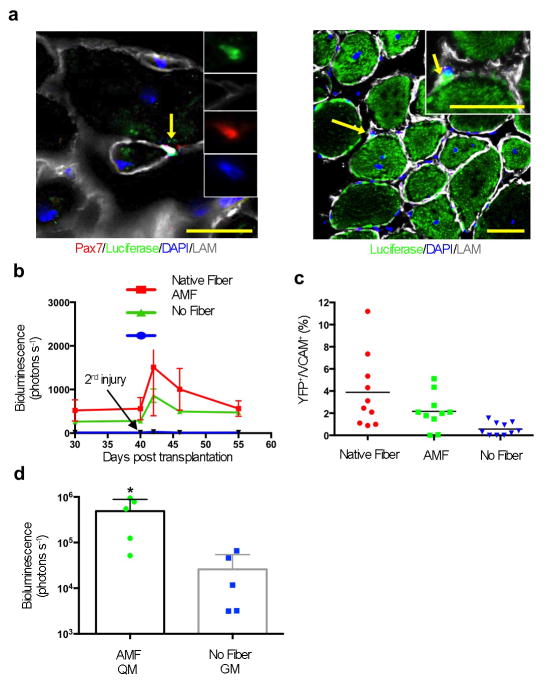
A promising therapeutic strategy for diverse genetic disorders involves transplantation of autologous stem cells that have been genetically corrected ex vivo. A major challenge in such approaches is a loss of stem cell potency during culture. Here we describe an artificial niche for maintaining muscle stem cells (MuSCs) in vitro in a potent, quiescent state. Using a machine learning method, we identified a molecular signature of quiescence and used it to screen for factors that could maintain mouse MuSC quiescence, thus defining a quiescence medium (QM). We also engineered muscle fibers that mimic the native myofiber of the MuSC niche. Mouse MuSCs maintained in QM on engineered fibers showed enhanced potential for engraftment, tissue regeneration and self-renewal after transplantation in mice. An artificial niche adapted to human cells similarly extended the quiescence of human MuSCs in vitro and enhanced their potency in vivo. Our approach for maintaining quiescence may be applicable to stem cells isolated from other tissues.
一种针对多种遗传性疾病的有前景的治疗策略涉及移植经体外基因校正的自体干细胞。此类方法中的一个主要挑战是培养过程中干细胞潜能的丧失。在此,我们描述了一种用于在体外将肌肉干细胞(MuSCs)维持在有潜能的静止状态的人工微环境。使用机器学习方法,我们确定了一种静止的分子特征,并利用它来筛选可维持小鼠MuSC静止的因子,从而定义了一种静止培养基(QM)。我们还构建了模拟MuSC微环境天然肌纤维的肌纤维。在工程化纤维上于QM中维持的小鼠MuSCs在移植到小鼠体内后显示出增强的植入、组织再生和自我更新潜能。适用于人类细胞的人工微环境同样在体外延长了人类MuSCs的静止时间,并增强了它们在体内的潜能。我们维持静止的方法可能适用于从其他组织分离的干细胞。