Oliveira Anderson S, Schlink Bryan R, Hairston W David, König Peter, Ferris Daniel P
Human Neuromechanics Laboratory, School of Kinesiology, University of Michigan Ann Arbor, MI, USA.
Translational Neuroscience, Human Research and Engineering Directorate, U.S. Army Research Laboratory Adelphi, MD, USA.
Front Hum Neurosci. 2016 May 10;10:188. doi: 10.3389/fnhum.2016.00188. eCollection 2016.
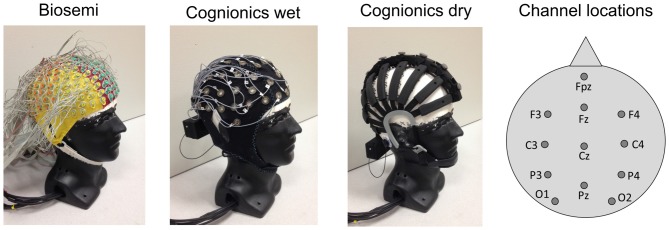
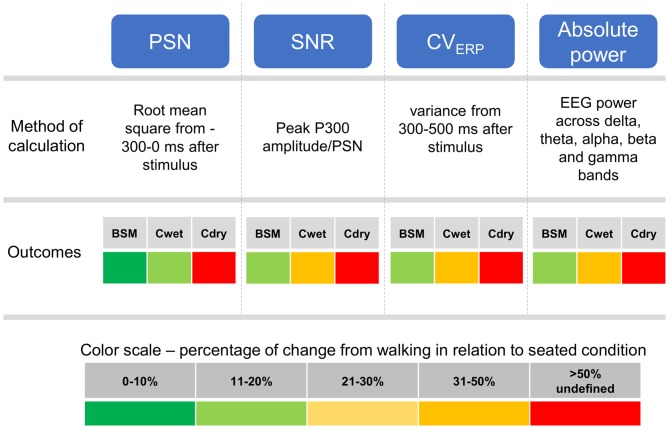
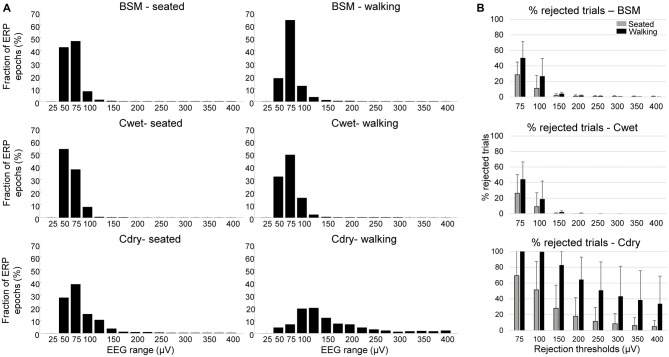
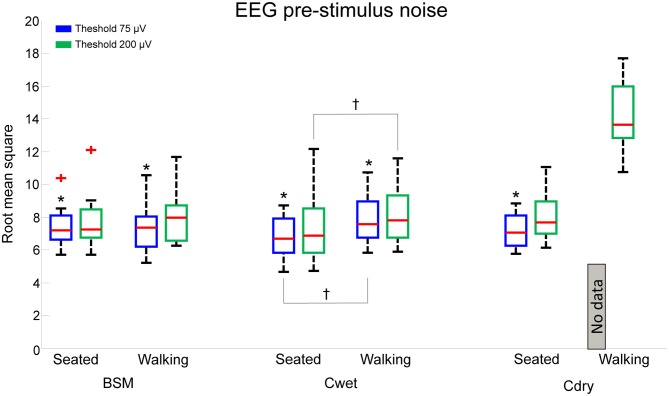
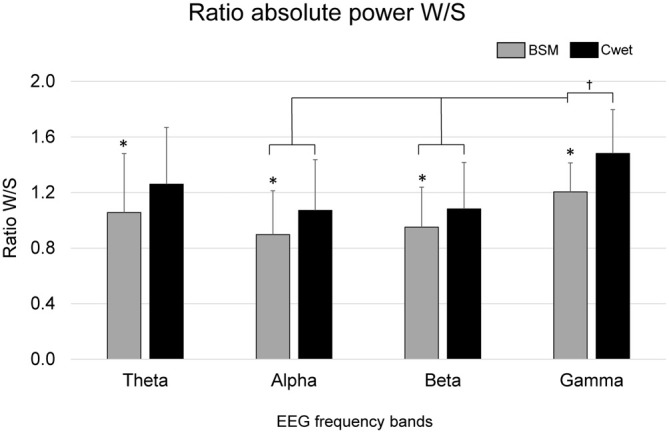
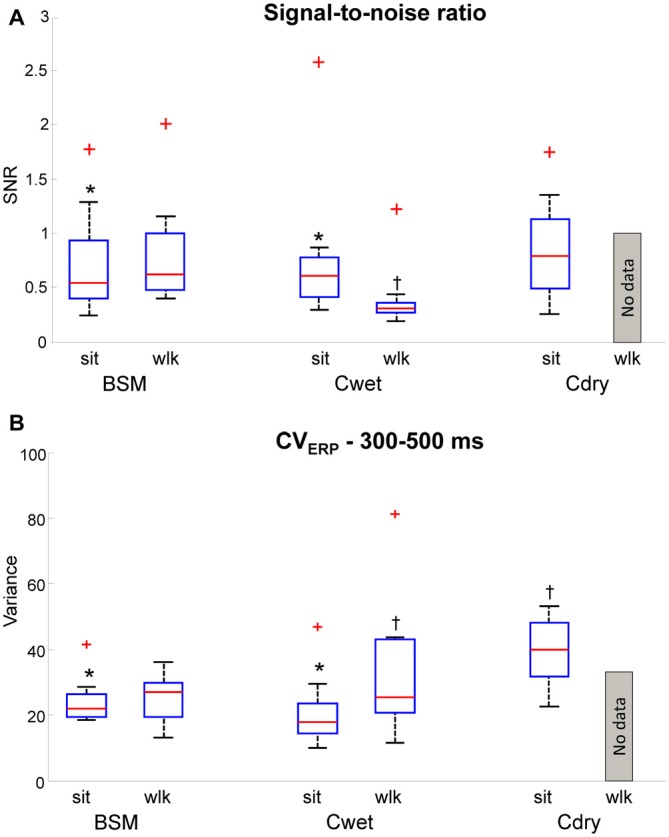
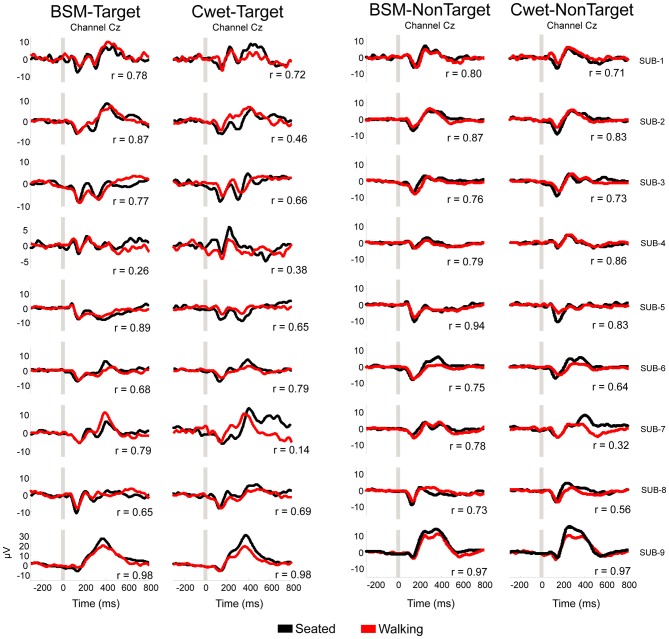
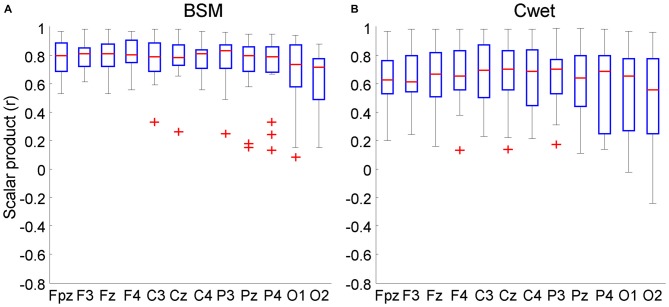
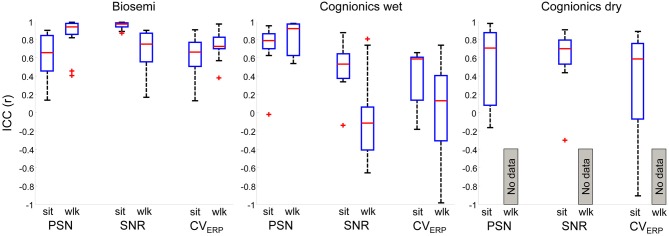
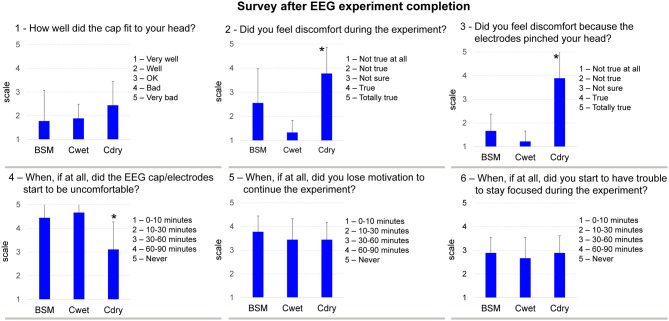
Recent advances in electroencephalographic (EEG) acquisition allow for recordings using wet and dry sensors during whole-body motion. The large variety of commercially available EEG systems contrasts with the lack of established methods for objectively describing their performance during whole-body motion. Therefore, the aim of this study was to introduce methods for benchmarking the suitability of new EEG technologies for that context. Subjects performed an auditory oddball task using three different EEG systems (Biosemi wet-BSM, Cognionics Wet-Cwet, Conionics Dry-Cdry). Nine subjects performed the oddball task while seated and walking on a treadmill. We calculated EEG epoch rejection rate, pre-stimulus noise (PSN), signal-to-noise ratio (SNR) and EEG amplitude variance across the P300 event window (CVERP) from a subset of 12 channels common to all systems. We also calculated test-retest reliability and the subject's level of comfort while using each system. Our results showed that using the traditional 75 μV rejection threshold BSM and Cwet epoch rejection rates are ~25% and ~47% in the seated and walking conditions respectively. However, this threshold rejects ~63% of epochs for Cdry in the seated condition and excludes 100% of epochs for the majority of subjects during walking. BSM showed predominantly no statistical differences between seated and walking condition for all metrics, whereas Cwet showed increases in PSN and CVERP, as well as reduced SNR in the walking condition. Data quality from Cdry in seated conditions were predominantly inferior in comparison to the wet systems. Test-retest reliability was mostly moderate/good for these variables, especially in seated conditions. In addition, subjects felt less discomfort and were motivated for longer recording periods while using wet EEG systems in comparison to the dry system. The proposed method was successful in identifying differences across systems that are mostly caused by motion-related artifacts and usability issues. We conclude that the extraction of the selected metrics from an auditory oddball paradigm may be used as a benchmark method for testing the performance of different EEG systems in mobile conditions. Moreover dry EEG systems may need substantial improvements to meet the quality standards of wet electrodes.
脑电图(EEG)采集技术的最新进展使得在全身运动过程中能够使用湿式和干式传感器进行记录。市面上大量的EEG系统与缺乏客观描述其在全身运动过程中性能的既定方法形成了鲜明对比。因此,本研究的目的是引入用于评估新EEG技术在该场景下适用性的基准测试方法。受试者使用三种不同的EEG系统(Biosemi湿式 - BSM、Cognionics湿式 - Cwet、Conionics干式 - Cdry)执行听觉Oddball任务。九名受试者在坐着和在跑步机上行走时执行Oddball任务。我们从所有系统共有的12个通道子集中计算了EEG时段拒绝率、刺激前噪声(PSN)、信噪比(SNR)以及P300事件窗口(CVERP)内的EEG幅度方差。我们还计算了重测信度以及受试者在使用每个系统时的舒适度水平。我们的结果表明,使用传统的75μV拒绝阈值时,BSM和Cwet在坐着状态下的时段拒绝率分别约为25%,在行走状态下分别约为47%。然而,此阈值在坐着状态下会拒绝Cdry约63%的时段,并且在行走过程中会排除大多数受试者100%的时段。对于所有指标,BSM在坐着和行走状态之间主要没有统计学差异,而Cwet在行走状态下PSN和CVERP增加,SNR降低。与湿式系统相比,Cdry在坐着状态下的数据质量主要较差。对于这些变量,重测信度大多为中等/良好,尤其是在坐着状态下。此外,与干式系统相比,受试者在使用湿式EEG系统时感觉不适较少,并且更愿意进行更长时间的记录。所提出的方法成功地识别了不同系统之间的差异,这些差异主要由与运动相关的伪迹和可用性问题引起。我们得出结论,从听觉Oddball范式中提取选定指标可作为测试不同EEG系统在移动条件下性能的基准测试方法。此外,干式EEG系统可能需要大幅改进以达到湿式电极的质量标准。