Elliott Emily R, Reason Robert D, Coffman Clark R, Gangloff Eric J, Raker Jeffrey R, Powell-Coffman Jo Anne, Ogilvie Craig A
Center for Teaching and Learning, University of Pennsylvania, Philadelphia, PA 19104
School of Education, Iowa State University, Ames, IA 50011.
CBE Life Sci Educ. 2016 Summer;15(2). doi: 10.1187/cbe.14-07-0112.
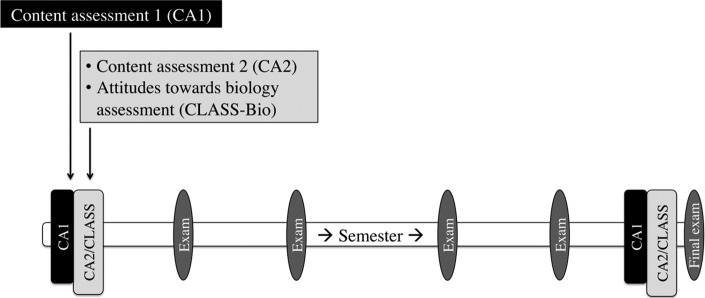
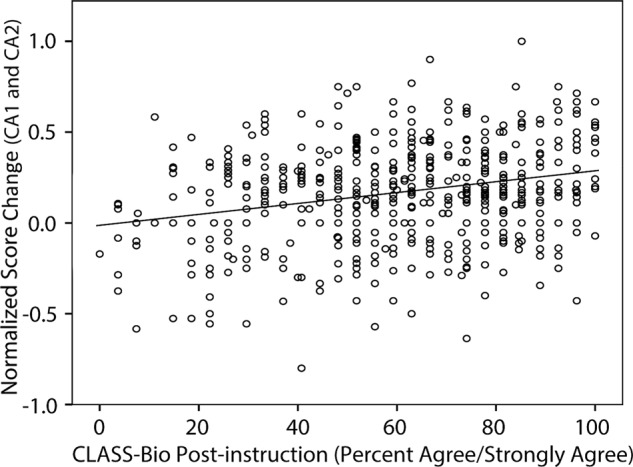
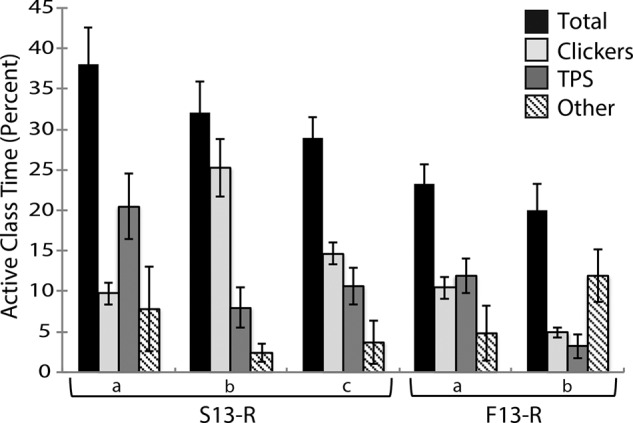
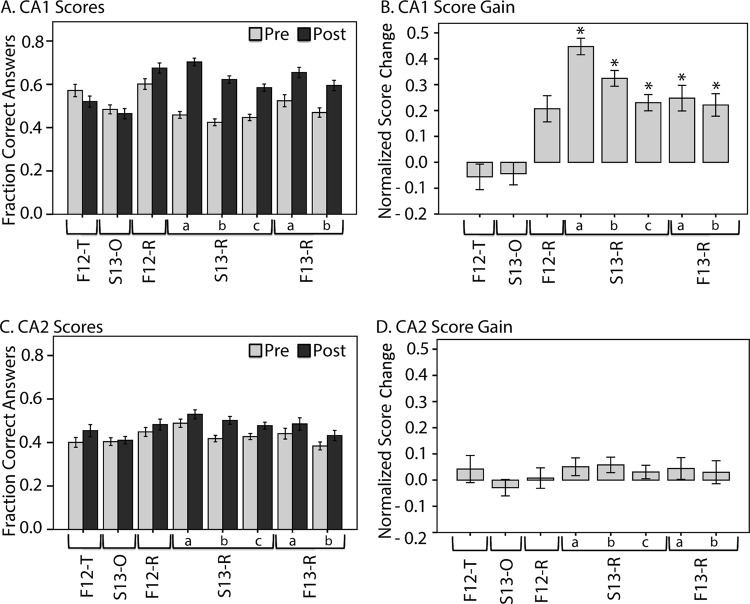
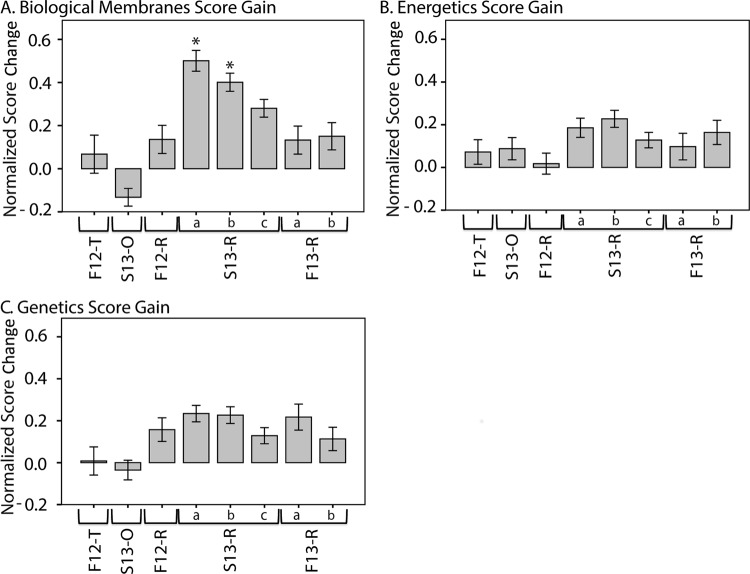
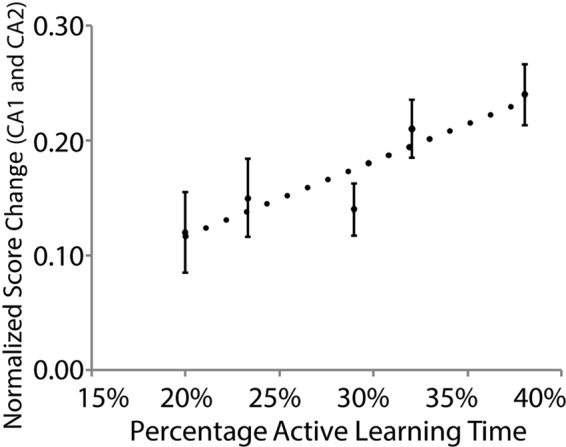
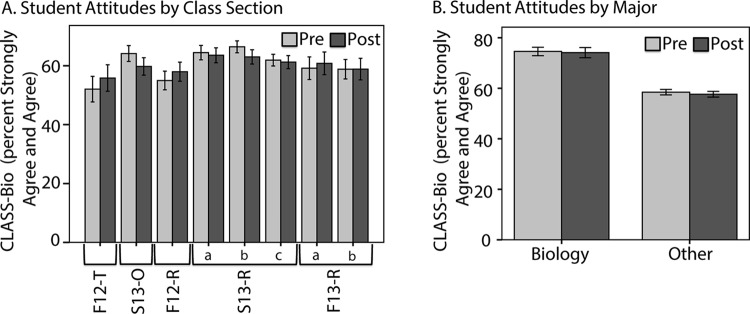
Undergraduate introductory biology courses are changing based on our growing understanding of how students learn and rapid scientific advancement in the biological sciences. At Iowa State University, faculty instructors are transforming a second-semester large-enrollment introductory biology course to include active learning within the lecture setting. To support this change, we set up a faculty learning community (FLC) in which instructors develop new pedagogies, adapt active-learning strategies to large courses, discuss challenges and progress, critique and revise classroom interventions, and share materials. We present data on how the collaborative work of the FLC led to increased implementation of active-learning strategies and a concurrent improvement in student learning. Interestingly, student learning gains correlate with the percentage of classroom time spent in active-learning modes. Furthermore, student attitudes toward learning biology are weakly positively correlated with these learning gains. At our institution, the FLC framework serves as an agent of iterative emergent change, resulting in the creation of a more student-centered course that better supports learning.
基于我们对学生学习方式的不断深入理解以及生物科学领域的快速科学进步,本科生物入门课程正在发生变化。在爱荷华州立大学,教师们正在对第二学期的大课堂生物入门课程进行改革,以便在课堂教学中融入主动学习。为了支持这一变革,我们成立了一个教师学习社区(FLC),教师们在其中开发新的教学方法,将主动学习策略应用于大型课程,讨论挑战与进展,对课堂干预措施进行批判和修订,并分享教学材料。我们展示了有关FLC的协作工作如何导致主动学习策略的更多实施以及学生学习的同步改善的数据。有趣的是,学生的学习收获与课堂上用于主动学习模式的时间百分比相关。此外,学生对学习生物学的态度与这些学习收获呈微弱的正相关。在我们学校,FLC框架作为迭代式涌现变革的推动者,促成了一门更以学生为中心、能更好地支持学习的课程的创建。