Pomié Céline, Blasco-Baque Vincent, Klopp Pascale, Nicolas Simon, Waget Aurélie, Loubières Pascale, Azalbert Vincent, Puel Anthony, Lopez Frédéric, Dray Cédric, Valet Philippe, Lelouvier Benjamin, Servant Florence, Courtney Michael, Amar Jacques, Burcelin Rémy, Garidou Lucile
Institut National de la Santé et de la Recherche Médicale (INSERM), Toulouse, France; Université Paul Sabatier (UPS), Unité Mixte de Recherche (UMR) 1048, Institut des Maladies Métaboliques et Cardiovasculaires (I2MC), Team 2: « Intestinal Risk Factors, Diabetes, Dyslipidemia », 1 avenue Jean Poulhès, BP 84225, F-31432 Toulouse Cedex 4, France.
Groupe Protéomique Centre Recherche Cancer Toulouse, Université Paul Sabatier (UPS), Unité Mixte de Recherche (UMR) 1037, 2 avenue Hubert Curien, CS 53717, 31037 Toulouse Cedex 1, France.
Mol Metab. 2016 Mar 28;5(6):392-403. doi: 10.1016/j.molmet.2016.03.004. eCollection 2016 Jun.
To demonstrate that glycemia and insulin resistance are controlled by a mechanism involving the adaptive immune system and gut microbiota crosstalk.
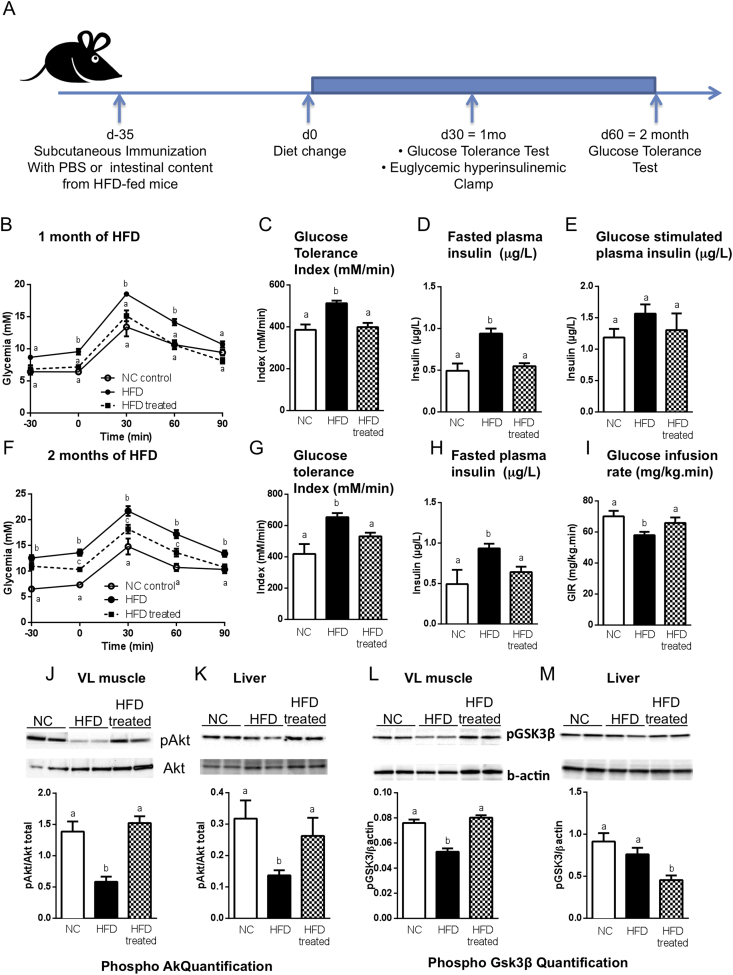
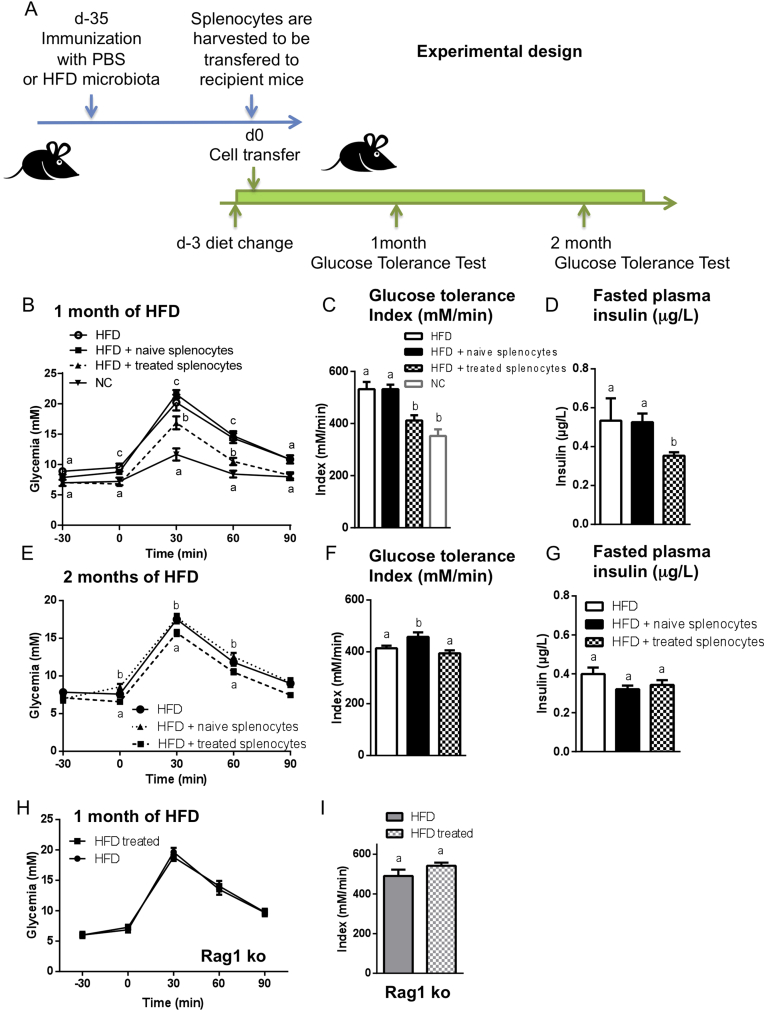
We triggered the immune system with microbial extracts specifically from the intestinal ileum contents of HFD-diabetic mice by the process of immunization. 35 days later, immunized mice were fed a HFD for up to two months in order to challenge the development of metabolic features. The immune responses were quantified. Eventually, adoptive transfer of immune cells from the microbiota-immunized mice to naïve mice was performed to demonstrate the causality of the microbiota-stimulated adaptive immune system on the development of metabolic disease. The gut microbiota of the immunized HFD-fed mice was characterized in order to demonstrate whether the manipulation of the microbiota to immune system interaction reverses the causal deleterious effect of gut microbiota dysbiosis on metabolic disease.
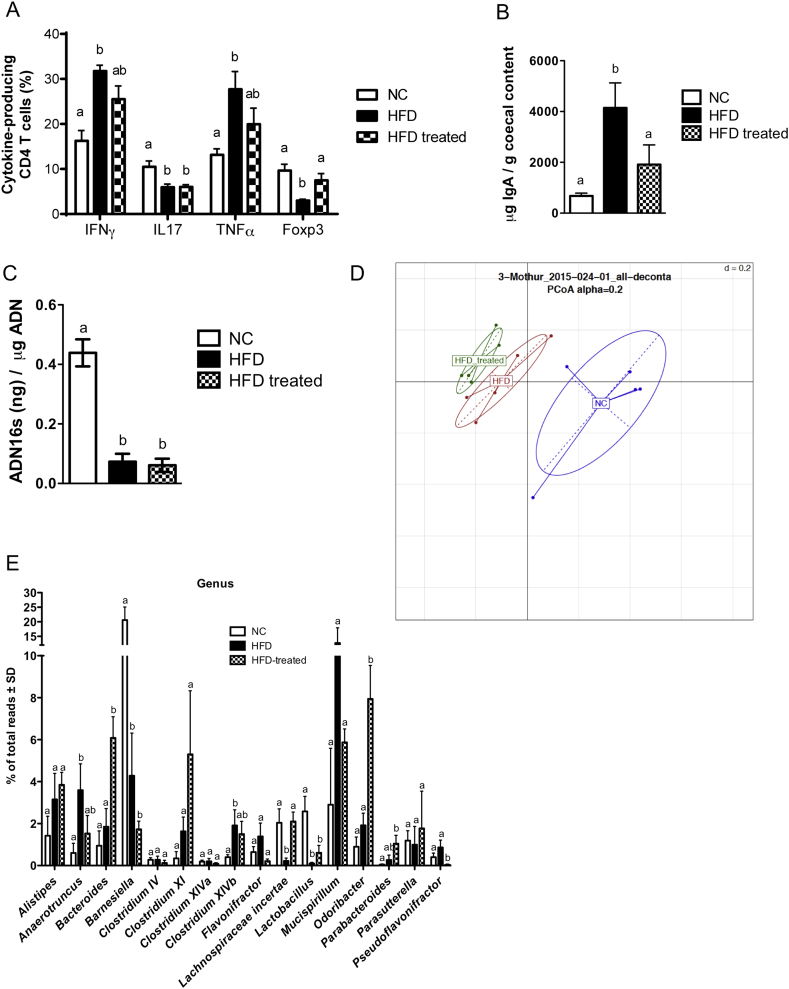
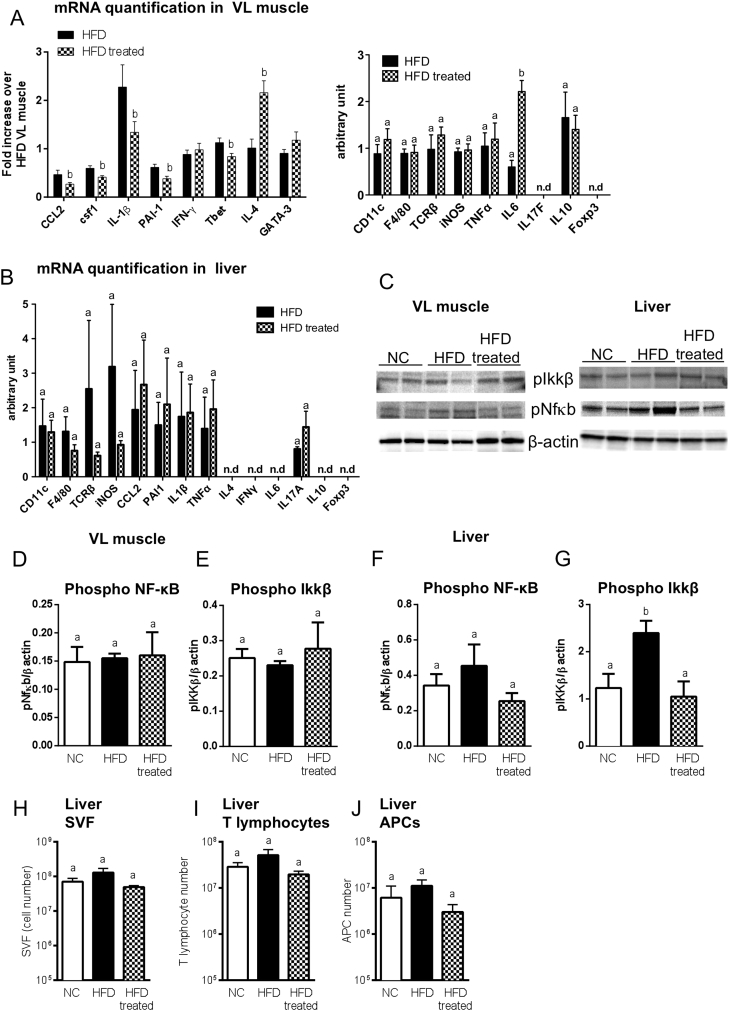
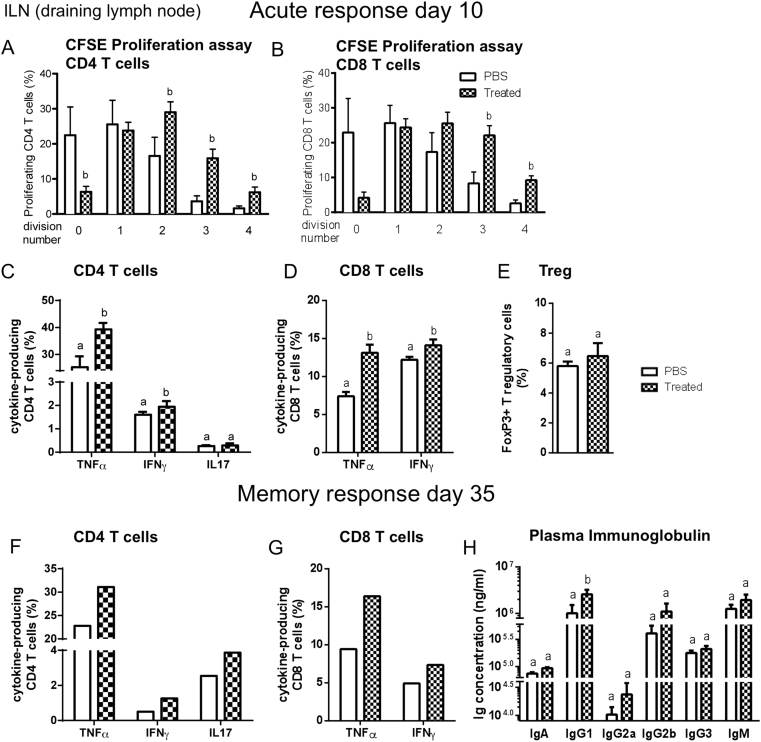
Subcutaneous injection (immunization procedure) of ileum microbial extracts prevented hyperglycemia and insulin resistance in a dose-dependent manner in response to a HFD. The immunization enhanced the proliferation of CD4 and CD8 T cells in lymphoid organs, also increased cytokine production and antibody secretion. As a mechanism explaining the metabolic improvement, the immunization procedure reversed gut microbiota dysbiosis. Finally, adoptive transfer of immune cells from immunized mice improved metabolic features in response to HFD.
Glycemia and insulin sensitivity can be regulated by triggering the adaptive immunity to microbiota interaction. This reduces the gut microbiota dysbiosis induced by a fat-enriched diet.
证明血糖和胰岛素抵抗受一种涉及适应性免疫系统与肠道微生物群相互作用的机制控制。
我们通过免疫过程,用高脂饮食诱导的糖尿病小鼠回肠内容物中的微生物提取物触发免疫系统。35天后,对免疫小鼠喂食高脂饮食长达两个月,以挑战代谢特征的发展。对免疫反应进行定量分析。最后,将微生物群免疫小鼠的免疫细胞过继转移至未接触过抗原的小鼠体内,以证明微生物群刺激的适应性免疫系统对代谢疾病发展的因果关系。对喂食高脂饮食的免疫小鼠的肠道微生物群进行表征,以证明操纵微生物群与免疫系统的相互作用是否能逆转肠道微生物群失调对代谢疾病的因果有害影响。
皮下注射(免疫程序)回肠微生物提取物可剂量依赖性地预防高脂饮食引起的高血糖和胰岛素抵抗。免疫增强了淋巴器官中CD4和CD8 T细胞的增殖,也增加了细胞因子的产生和抗体分泌。作为解释代谢改善的一种机制,免疫程序逆转了肠道微生物群失调。最后,来自免疫小鼠的免疫细胞过继转移改善了对高脂饮食的代谢特征。
血糖和胰岛素敏感性可通过触发适应性免疫与微生物群的相互作用来调节。这减少了由高脂饮食引起的肠道微生物群失调。