Institut National de La Santé Et de La Recherche Médicale (INSERM), Toulouse, France.
Unité Mixte de Recherche (UMR) 1297, Institut Des Maladies Métaboliques Et Cardiovasculaires (I2MC), Team 2: 'Intestinal Risk FactorsDiabetesDyslipidemia', Université Paul Sabatier (UPS), F-31432, Toulouse Cedex 4, France.
BMC Microbiol. 2023 Jan 30;23(1):34. doi: 10.1186/s12866-023-02774-4.
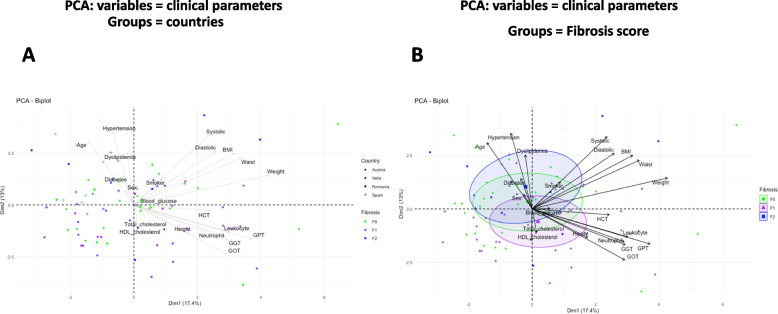
Gut microbiota is involved in the development of liver diseases such as fibrosis. We and others identified that selected sets of gut bacterial DNA and bacteria translocate to tissues, notably the liver, to establish a non-infectious tissue microbiota composed of microbial DNA and a low frequency live bacteria. However, the precise set of bacterial DNA, and thereby the corresponding taxa associated with the early stages of fibrosis need to be identified. Furthermore, to overcome the impact of different group size and patient origins we adapted innovative statistical approaches. Liver samples with low liver fibrosis scores (F0, F1, F2), to study the early stages of the disease, were collected from Romania(n = 36), Austria(n = 10), Italy(n = 19), and Spain(n = 17). The 16S rRNA gene was sequenced. We considered the frequency, sparsity, unbalanced sample size between cohorts to identify taxonomic profiles and statistical differences.
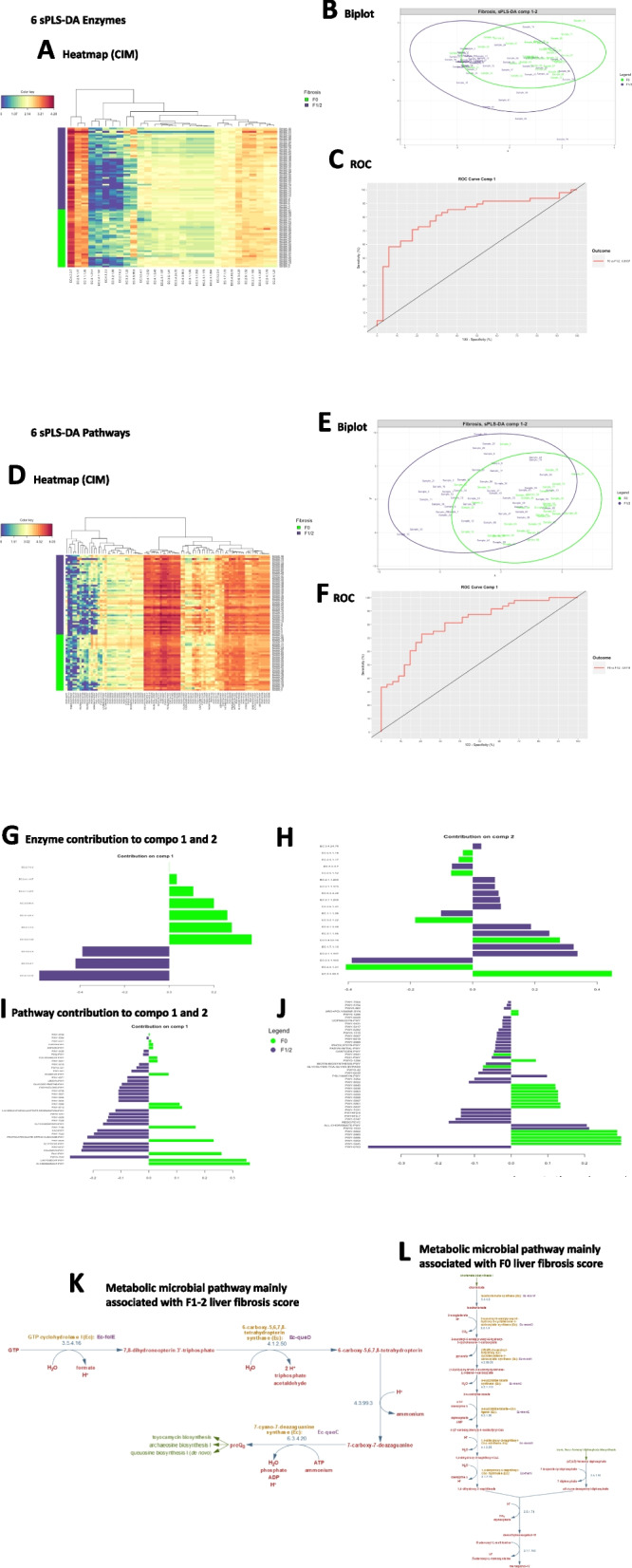
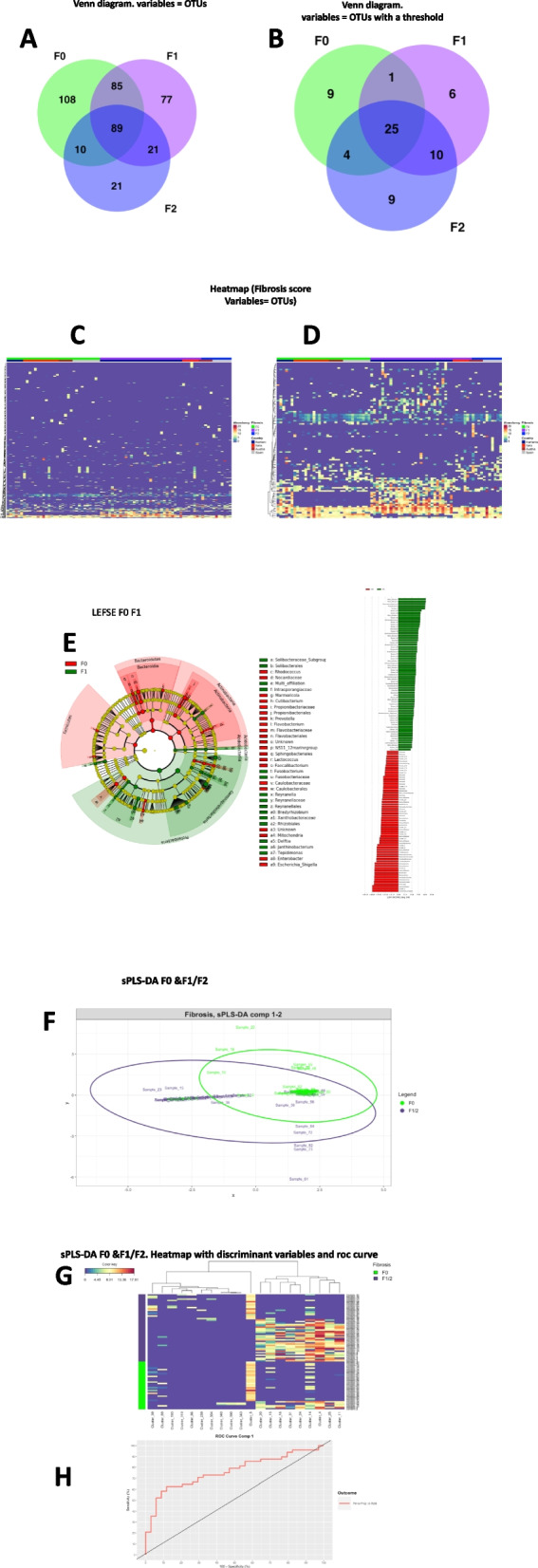
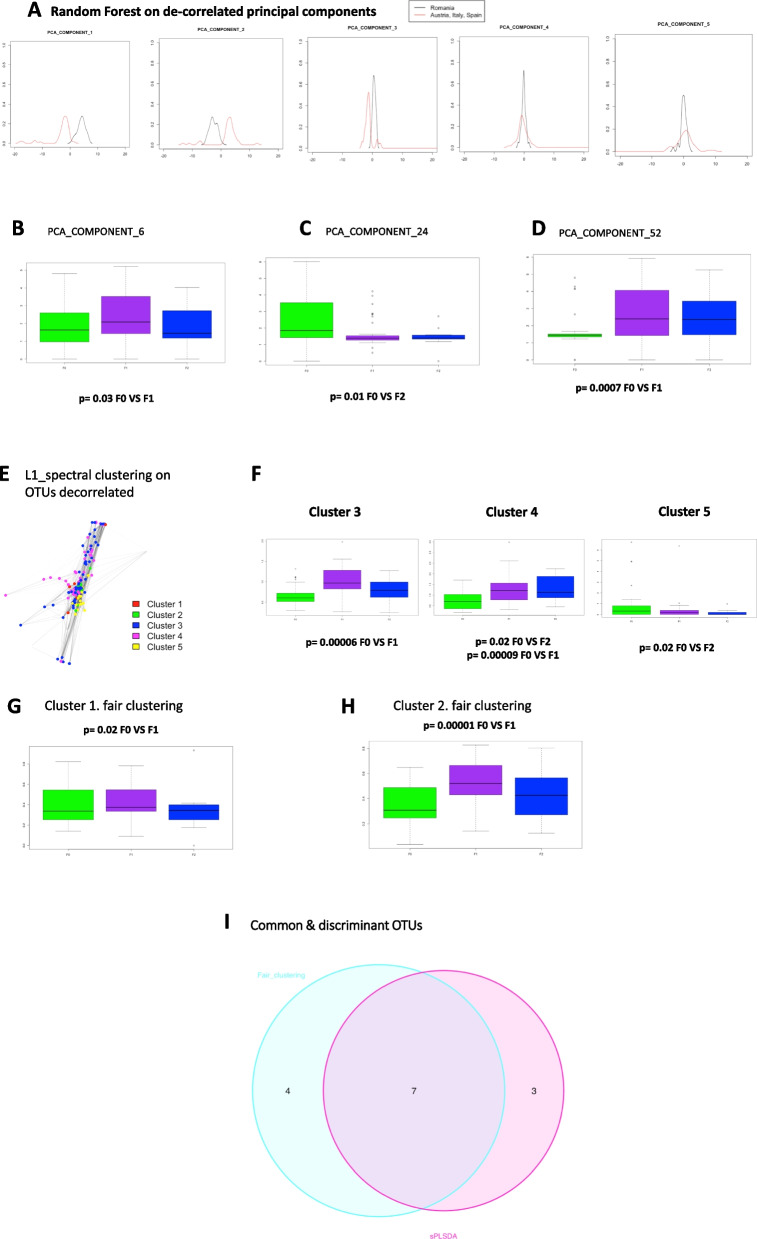
Multivariate analyses, including adapted spectral clustering with L1-penalty fair-discriminant strategies, and predicted metagenomics were used to identify that 50% of liver taxa associated with the early stage fibrosis were Enterobacteriaceae, Pseudomonadaceae, Xanthobacteriaceae and Burkholderiaceae. The Flavobacteriaceae and Xanthobacteriaceae discriminated between F0 and F1. Predicted metagenomics analysis identified that the preQ0 biosynthesis and the potential pathways involving glucoryranose and glycogen degradation were negatively associated with liver fibrosis F1-F2 vs F0.
Without demonstrating causality, our results suggest first a role of bacterial translocation to the liver in the progression of fibrosis, notably at the earliest stages. Second, our statistical approach can identify microbial signatures and overcome issues regarding sample size differences, the impact of environment, and sets of analyses.
TirguMECCH ROLIVER Prospective Cohort for the Identification of Liver Microbiota, registration 4065/2014. Registered 01 01 2014.
肠道微生物群参与了肝脏疾病的发展,如纤维化。我们和其他人发现,一些特定的肠道细菌 DNA 及其细菌会转移到组织中,特别是肝脏,以建立一个由微生物 DNA 和低频率活菌组成的非感染性组织微生物群。然而,需要确定与纤维化早期阶段相关的确切细菌 DNA 及其相应的分类群。此外,为了克服不同组大小和患者来源的影响,我们采用了创新的统计方法。从罗马尼亚(n=36)、奥地利(n=10)、意大利(n=19)和西班牙(n=17)收集低纤维化评分(F0、F1、F2)的肝组织样本,用于研究疾病的早期阶段。对 16S rRNA 基因进行测序。我们考虑了频率、稀疏性、队列之间不平衡的样本量,以识别分类群特征和统计差异。
采用多元分析,包括具有 L1-惩罚公平判别策略的自适应光谱聚类和预测宏基因组学,以确定与早期纤维化相关的 50%的肝脏分类群为肠杆菌科、假单胞菌科、黄杆菌科和伯克霍尔德菌科。黄杆菌科和黄杆菌科可区分 F0 和 F1。预测宏基因组学分析发现,前 Q0 生物合成和涉及葡糖醛酸和糖原降解的潜在途径与 F1-F2 相比 F0 与肝纤维化呈负相关。
尽管没有证明因果关系,但我们的研究结果首先表明细菌向肝脏转移在纤维化的进展中起作用,尤其是在最早的阶段。其次,我们的统计方法可以识别微生物特征,并克服样本量差异、环境影响和分析集的问题。
特古梅切罗尔弗勒前瞻性肝微生物组鉴定队列,注册号 4065/2014。于 2014 年 1 月 1 日注册。