Chang Chin Yang, Tai Jiayu A, Li Sumin, Nishikawa Tomoyuki, Kaneda Yasufumi
Division of Gene Therapy Science, Graduate School of Medicine, Osaka University, Suita, Osaka 565-0871, Japan.
Oncotarget. 2016 Jul 5;7(27):42195-42207. doi: 10.18632/oncotarget.9743.
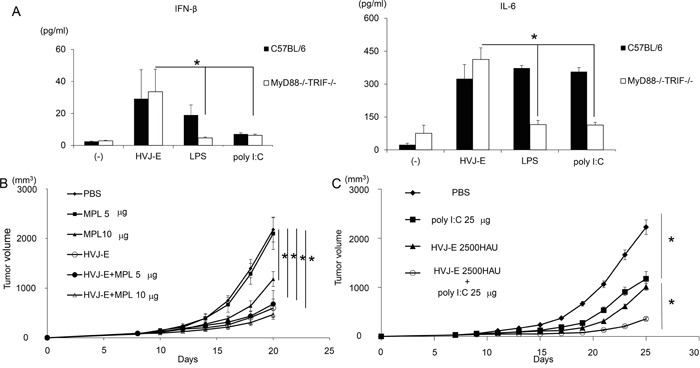
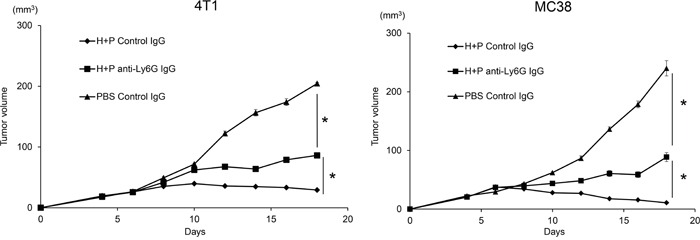
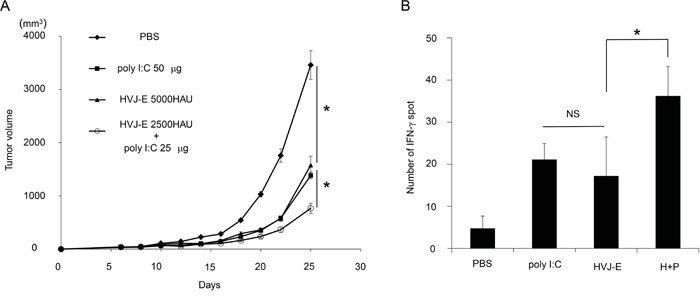
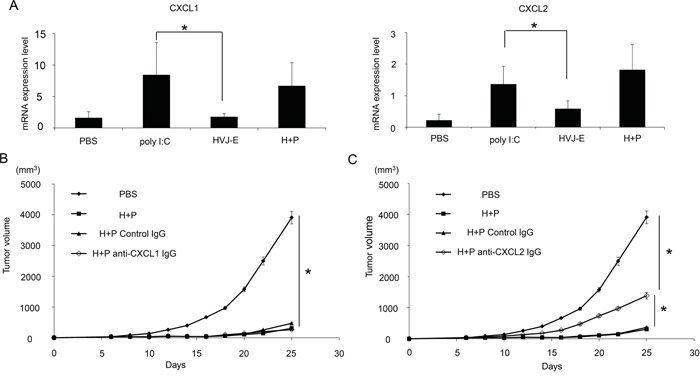
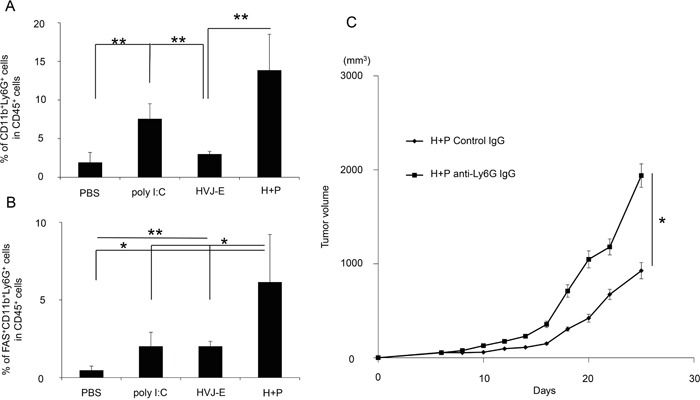
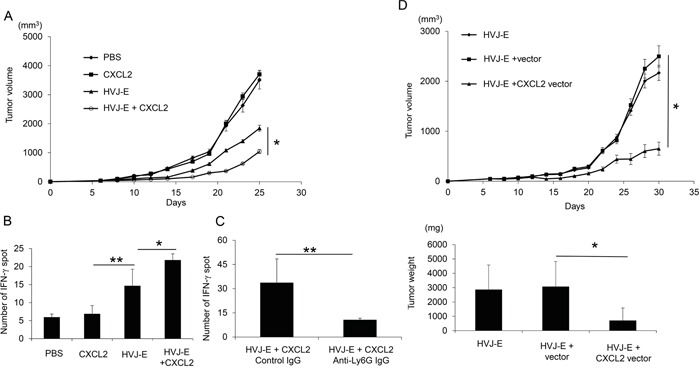
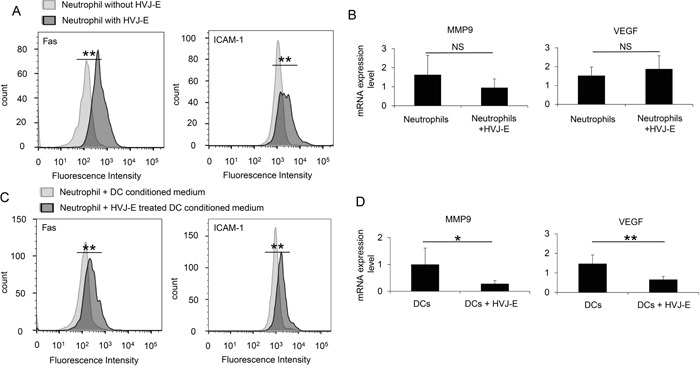
The tumor microenvironment (TME) fosters tumors by attenuating anti-tumor immunity, reinforcing tumor cell survival and increasing angiogenesis. Among the constituents of the TME, here, we focused on tumor-associated neutrophils (TANs). First, we found that the combination of poly I:C and inactivated Sendai virus particles (hemagglutinating virus of Japan envelope; HVJ-E) synergistically suppressed tumor growth in the B16-F10 melanoma mouse model. In this model, poly I:C contributed to the recruitment of CD11b+Ly6G+ neutrophils to the TME, and co-injection of poly I:C and HVJ-E increased CD11b+Ly6G+FAS+ TAN in the TME. Depletion of neutrophils abolished the synergistic anti-tumor effect of HVJ-E and poly I:C in B16-F10 tumors. We revealed that C-X-C motif chemokine ligand 2 (CXCL2) is produced in the TME by poly I:C, but HVJ-E enhanced neutrophil infiltration of the TME does not occur. An anti-CXCL2 antibody inhibited the tumor suppression by HVJ-E+poly I:C. HVJ-E in combination with recombinant CXCL2 protein or CXCL2 pDNA suppressed mouse melanoma by increasing cytotoxic T lymphocyte activity against B16-F10 melanoma, which was abolished by an anti-Ly6G antibody. HVJ-E directly and indirectly increased FAS and ICAM-1 expression in cultured bone marrow-derived naïve neutrophils. Thus, HVJ-E activates anti-tumor immunity via anti-tumorigenic neutrophils in the TME. An HVJ-E vector containing the CXCL2 gene may be applicable as a novel cancer gene therapy strategy.
肿瘤微环境(TME)通过削弱抗肿瘤免疫、增强肿瘤细胞存活和增加血管生成来促进肿瘤生长。在TME的组成成分中,我们在此聚焦于肿瘤相关中性粒细胞(TANs)。首先,我们发现聚肌胞苷酸(poly I:C)与灭活的仙台病毒颗粒(日本血凝病毒包膜;HVJ-E)联合使用可协同抑制B16-F10黑色素瘤小鼠模型中的肿瘤生长。在该模型中,poly I:C有助于将CD11b+Ly6G+中性粒细胞募集至TME,并且poly I:C与HVJ-E共同注射可增加TME中CD11b+Ly6G+FAS+ TAN的数量。中性粒细胞的耗竭消除了HVJ-E和poly I:C在B16-F10肿瘤中的协同抗肿瘤作用。我们发现poly I:C在TME中可产生C-X-C基序趋化因子配体2(CXCL2),但HVJ-E增强的TME中性粒细胞浸润并未发生。抗CXCL2抗体抑制了HVJ-E+poly I:C对肿瘤的抑制作用。HVJ-E与重组CXCL2蛋白或CXCL2 pDNA联合使用,通过增加针对B16-F10黑色素瘤的细胞毒性T淋巴细胞活性来抑制小鼠黑色素瘤,而抗Ly6G抗体可消除这种作用。HVJ-E可直接和间接增加培养的骨髓来源幼稚中性粒细胞中FAS和细胞间黏附分子-1(ICAM-1)的表达。因此,HVJ-E通过TME中的抗肿瘤中性粒细胞激活抗肿瘤免疫。含有CXCL2基因的HVJ-E载体可能作为一种新型癌症基因治疗策略具有应用价值。