Zhang Qianpeng, Wu Yanqiu, Wang Jing, Wu Guojun, Long Wenmin, Xue Zhengsheng, Wang Linghua, Zhang Xiaojun, Pang Xiaoyan, Zhao Yufeng, Zhao Liping, Zhang Chenhong
State Key Laboratory of Microbial Metabolism, School of Life Sciences and Biotechnology, Shanghai Jiao Tong University, Shanghai, PR China, 200240.
Ministry of Education Key Laboratory for Systems Biomedicine, Shanghai Centre for Systems Biomedicine, Shanghai Jiao Tong University, Shanghai, PR China, 200240.
Sci Rep. 2016 Jun 6;6:27572. doi: 10.1038/srep27572.
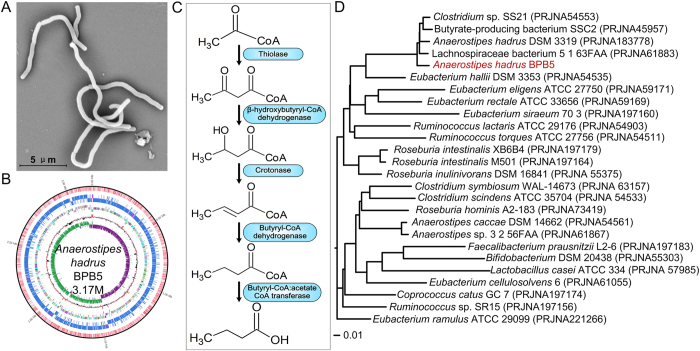
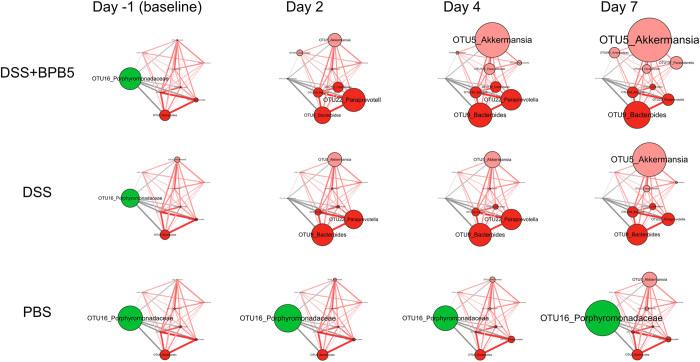
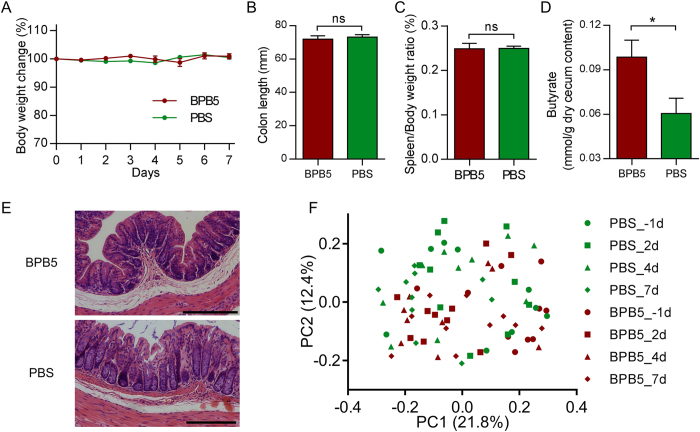
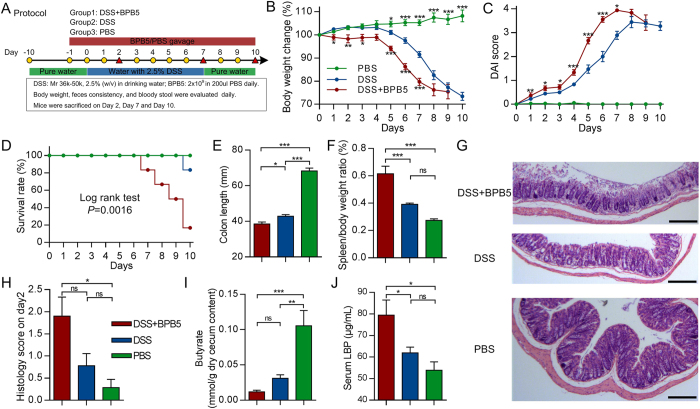
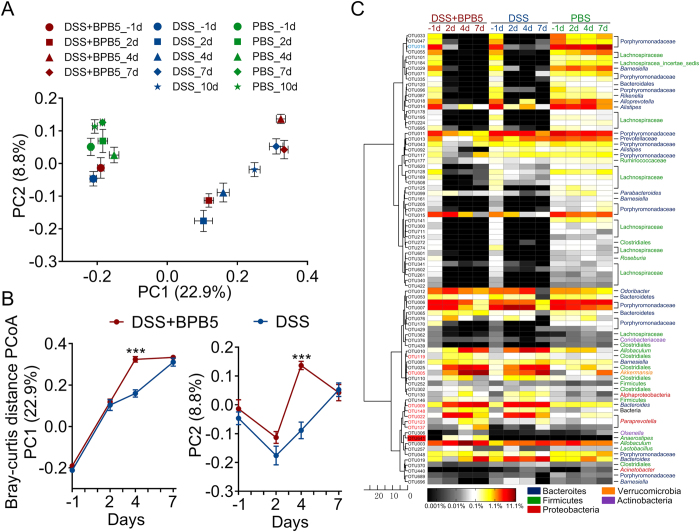
Butyrate-producing bacteria (BPB) are potential probiotic candidates for inflammatory bowel diseases as they are often depleted in the diseased gut microbiota. However, here we found that augmentation of a human-derived butyrate-producing strain, Anaerostipes hadrus BPB5, significantly aggravated colitis in dextran sulphate sodium (DSS)-treated mice while exerted no detrimental effect in healthy mice. We explored how the interaction between BPB5 and gut microbiota may contribute to this differential impact on the hosts. Butyrate production and severity of colitis were assessed in both healthy and DSS-treated mice, and gut microbiota structural changes were analysed using high-throughput sequencing. BPB5-inoculated healthy mice showed no signs of colitis, but increased butyrate content in the gut. In DSS-treated mice, BPB5 augmentation did not increase butyrate content, but induced significantly more severe disease activity index and much higher mortality. BPB5 didn't induce significant changes of gut microbiota in healthy hosts, but expedited the structural shifts 3 days earlier toward the disease phase in BPB5-augmented than DSS-treated animals. The differential response of gut microbiota in healthy and DSS-treated mice to the same potentially beneficial bacterium with drastically different health consequences suggest that animals with dysbiotic gut microbiota should also be employed for the safety assessment of probiotic candidates.
产生丁酸盐的细菌(BPB)是炎症性肠病潜在的益生菌候选菌株,因为在患病的肠道微生物群中它们的数量常常减少。然而,我们在此发现,增加一种源自人类的产丁酸盐菌株——哈氏厌氧棒状菌BPB5,会显著加重葡聚糖硫酸钠(DSS)处理的小鼠的结肠炎,而对健康小鼠没有不利影响。我们探究了BPB5与肠道微生物群之间的相互作用如何导致对宿主产生这种不同的影响。我们评估了健康小鼠和DSS处理的小鼠中丁酸盐的产生情况以及结肠炎的严重程度,并使用高通量测序分析了肠道微生物群的结构变化。接种BPB5的健康小鼠没有出现结肠炎的迹象,但肠道中丁酸盐含量增加。在DSS处理的小鼠中,增加BPB5并没有增加丁酸盐含量,但导致疾病活动指数显著更高,死亡率也高得多。BPB5在健康宿主中没有引起肠道微生物群的显著变化,但与DSS处理的动物相比,在增加BPB5的小鼠中,它使结构向疾病阶段的转变提前了3天。健康小鼠和DSS处理的小鼠的肠道微生物群对同一种潜在有益细菌的不同反应导致了截然不同的健康后果,这表明肠道微生物群失调的动物也应用于益生菌候选菌株的安全性评估。