Medic Nenad, Ziauddeen Hisham, Forwood Suzanna E, Davies Kirsty M, Ahern Amy L, Jebb Susan A, Marteau Theresa M, Fletcher Paul C
Department of Psychiatry, University of Cambridge, Cambridge CB2 0SZ, United Kingdom; Wellcome Trust-MRC Institute of Metabolic Science, University of Cambridge, Cambridge CB2 0QQ, United Kingdom.
Department of Psychiatry, University of Cambridge, Cambridge CB2 0SZ, United Kingdom; Wellcome Trust-MRC Institute of Metabolic Science, University of Cambridge, Cambridge CB2 0QQ, United Kingdom; Cambridgeshire & Peterborough NHS Foundation Trust, Cambridge CB21 5EF, United Kingdom.
eNeuro. 2016 Apr 29;3(2). doi: 10.1523/ENEURO.0025-16.2016. eCollection 2016 Mar-Apr.
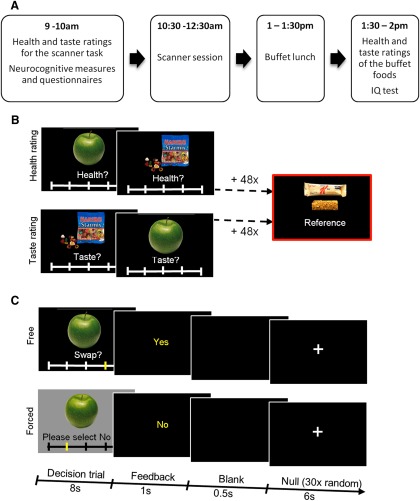
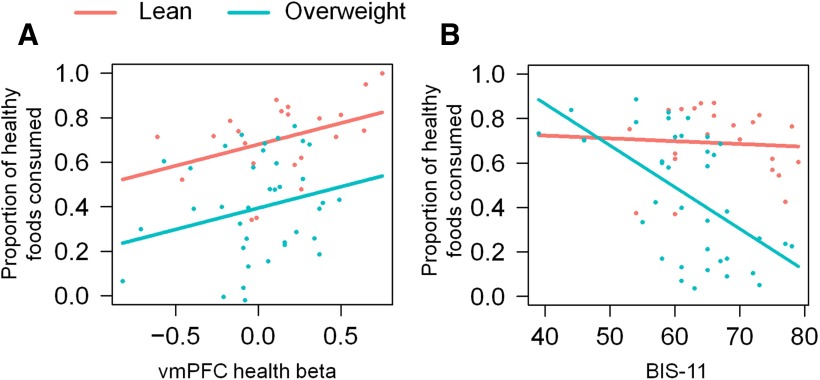
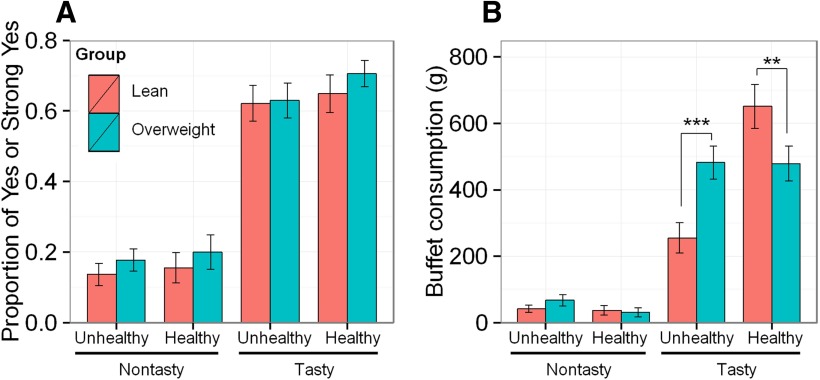
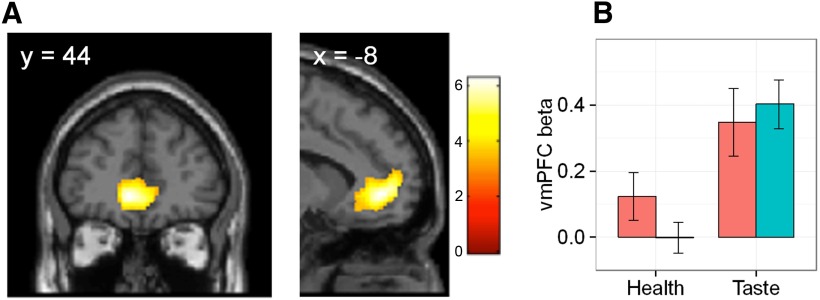
To develop more ecologically valid models of the neurobiology of obesity, it is critical to determine how the neural processes involved in food-related decision-making translate into real-world eating behaviors. We examined the relationship between goal-directed valuations of food images in the MRI scanner and food consumption at a subsequent ad libitum buffet meal. We observed that 23 lean and 40 overweight human participants showed similar patterns of value-based neural responses to health and taste attributes of foods. In both groups, these value-based responses in the ventromedial PFC were predictive of subsequent consumption at the buffet. However, overweight participants consumed a greater proportion of unhealthy foods. This was not predicted by in-scanner choices or neural response. Moreover, in overweight participants alone, impulsivity scores predicted greater consumption of unhealthy foods. Overall, our findings suggest that, while the hypothetical valuation of the health of foods is predictive of eating behavior in both lean and overweight people, it is only the real-world food choices that clearly distinguish them.
为了开发更符合生态学效度的肥胖神经生物学模型,关键在于确定与食物相关的决策过程中的神经活动是如何转化为现实世界中的饮食行为的。我们研究了MRI扫描仪中对食物图像的目标导向评估与随后自助餐时食物摄入量之间的关系。我们观察到,23名瘦人和40名超重的人类参与者对食物的健康和口味属性表现出相似的基于价值的神经反应模式。在两组中,腹内侧前额叶皮层中这些基于价值的反应都能预测随后自助餐时的食物摄入量。然而,超重参与者摄入了更大比例的不健康食物。这并非由扫描仪内的选择或神经反应所预测。此外,仅在超重参与者中,冲动性得分可预测不健康食物的摄入量更高。总体而言,我们的研究结果表明,虽然对食物健康程度的假设性评估在瘦人和超重人群中都能预测饮食行为,但只有现实世界中的食物选择才能明确区分二者。