Hároníková Lucia, Coufal Jan, Kejnovská Iva, Jagelská Eva B, Fojta Miroslav, Dvořáková Petra, Muller Petr, Vojtesek Borivoj, Brázda Václav
Institute of Biophysics, Academy of Sciences of the Czech Republic, Královopolská 135, 612 65, Brno, Czech Republic.
Department of Biochemistry, Faculty of Science, Masaryk University, Kotlarska 2, 61137, Brno, Czech Republic.
PLoS One. 2016 Jun 9;11(6):e0157156. doi: 10.1371/journal.pone.0157156. eCollection 2016.
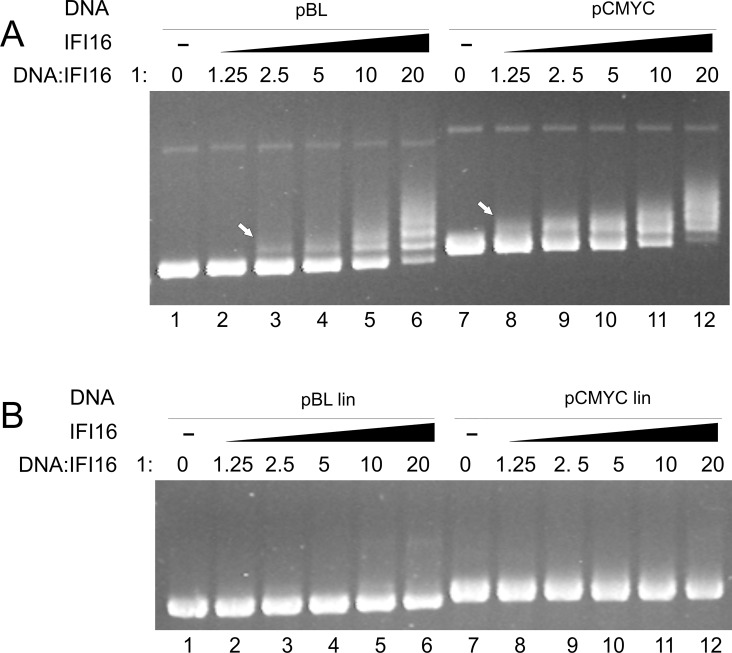
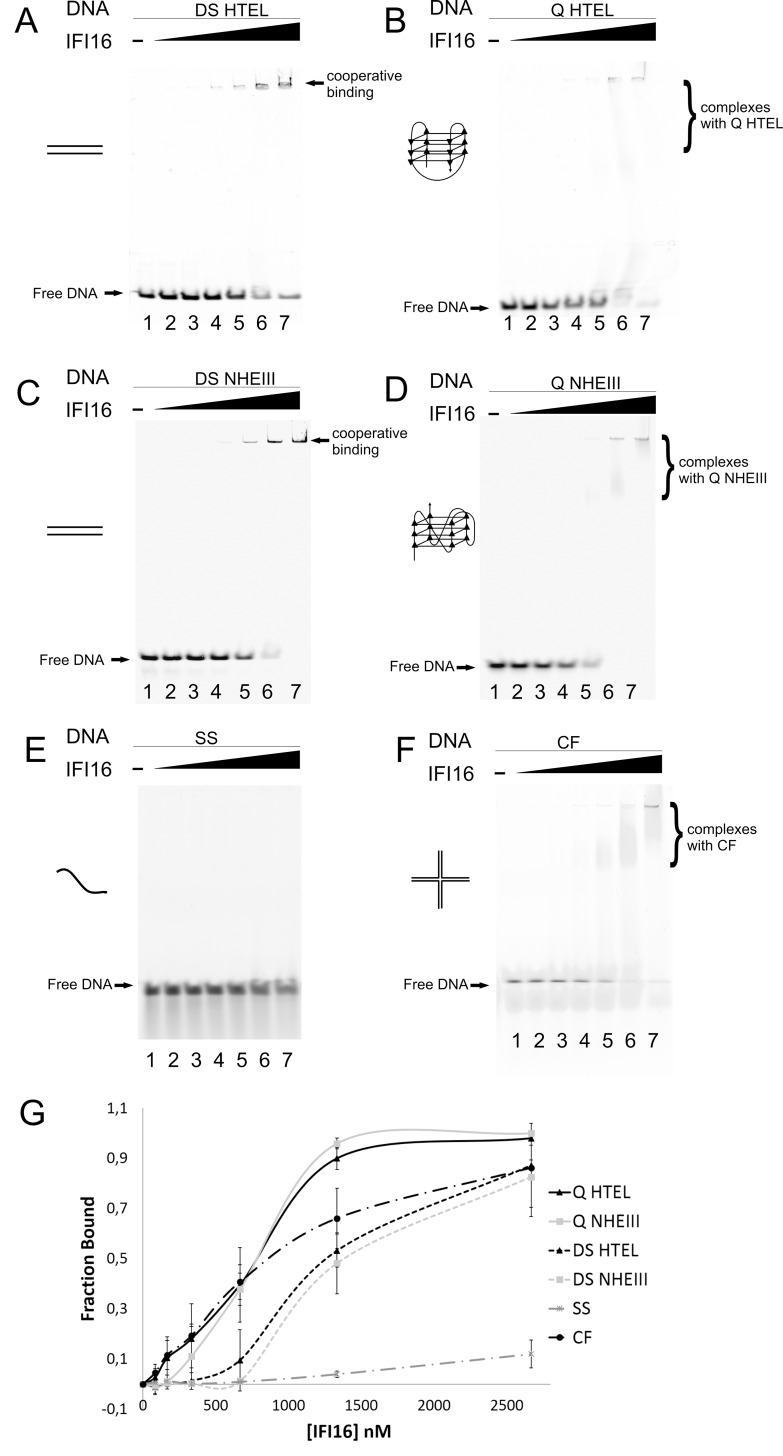
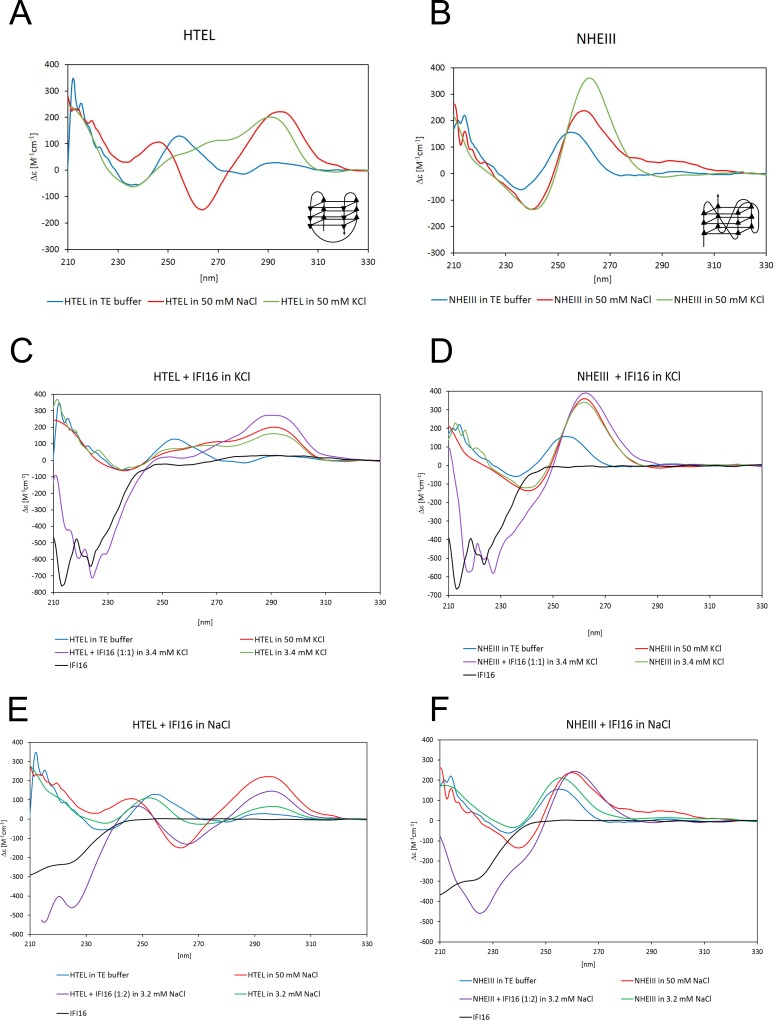
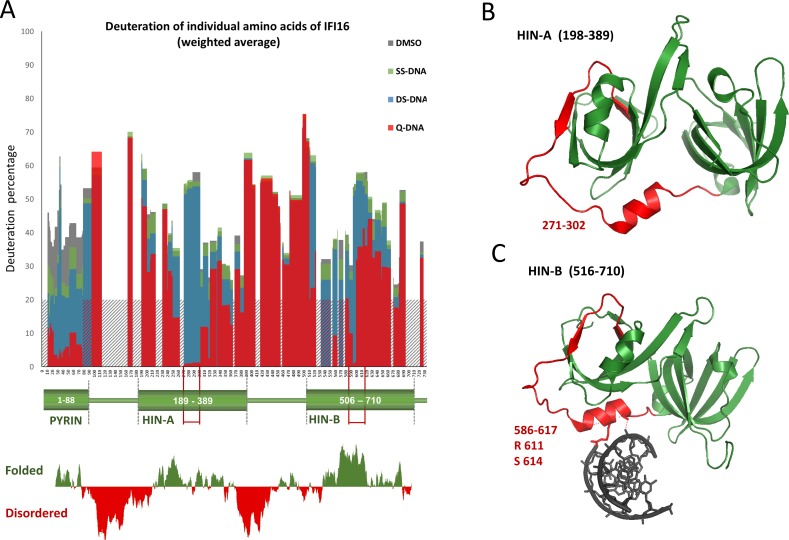
Interferon-inducible protein 16 (IFI16) is a member of the HIN-200 protein family, containing two HIN domains and one PYRIN domain. IFI16 acts as a sensor of viral and bacterial DNA and is important for innate immune responses. IFI16 binds DNA and binding has been described to be DNA length-dependent, but a preference for supercoiled DNA has also been demonstrated. Here we report a specific preference of IFI16 for binding to quadruplex DNA compared to other DNA structures. IFI16 binds to quadruplex DNA with significantly higher affinity than to the same sequence in double stranded DNA. By circular dichroism (CD) spectroscopy we also demonstrated the ability of IFI16 to stabilize quadruplex structures with quadruplex-forming oligonucleotides derived from human telomere (HTEL) sequences and the MYC promotor. A novel H/D exchange mass spectrometry approach was developed to assess protein interactions with quadruplex DNA. Quadruplex DNA changed the IFI16 deuteration profile in parts of the PYRIN domain (aa 0-80) and in structurally identical parts of both HIN domains (aa 271-302 and aa 586-617) compared to single stranded or double stranded DNAs, supporting the preferential affinity of IFI16 for structured DNA. Our results reveal the importance of quadruplex DNA structure in IFI16 binding and improve our understanding of how IFI16 senses DNA. IFI16 selectivity for quadruplex structure provides a mechanistic framework for IFI16 in immunity and cellular processes including DNA damage responses and cell proliferation.
干扰素诱导蛋白16(IFI16)是HIN-200蛋白家族的成员,包含两个HIN结构域和一个PYRIN结构域。IFI16作为病毒和细菌DNA的传感器,对先天免疫反应很重要。IFI16可结合DNA,且已表明这种结合具有DNA长度依赖性,但也已证明其对超螺旋DNA具有偏好性。在此,我们报告与其他DNA结构相比,IFI16对四链体DNA结合具有特定偏好性。IFI16与四链体DNA结合的亲和力明显高于与双链DNA中相同序列的结合亲和力。通过圆二色性(CD)光谱,我们还证明了IFI16能够与源自人类端粒(HTEL)序列和MYC启动子的四链体形成寡核苷酸一起稳定四链体结构。我们开发了一种新型的氢/氘交换质谱方法来评估蛋白质与四链体DNA的相互作用。与单链或双链DNA相比,四链体DNA改变了IFI16在PYRIN结构域部分(氨基酸0 - 80)以及两个HIN结构域结构相同部分(氨基酸271 - 302和氨基酸586 - 617)的氘代谱,支持了IFI16对结构化DNA的优先亲和力。我们的结果揭示了四链体DNA结构在IFI16结合中的重要性,并增进了我们对IFI16如何感知DNA的理解。IFI16对四链体结构的选择性为IFI16在免疫和细胞过程(包括DNA损伤反应和细胞增殖)中提供了一个机制框架。