Campbell Benjamin W, Hofstad Anna N, Sreekanta Suma, Fu Fengli, Kono Thomas J Y, O'Rourke Jamie A, Vance Carroll P, Muehlbauer Gary J, Stupar Robert M
Department of Agronomy and Plant Genetics, University of Minnesota, Saint Paul, MN, 55108, USA.
USDA-ARS, Corn Insects and Crop Genetics Research, Iowa State University, Ames, IA, 50011, USA.
Theor Appl Genet. 2016 Sep;129(9):1725-38. doi: 10.1007/s00122-016-2735-x. Epub 2016 Jun 9.
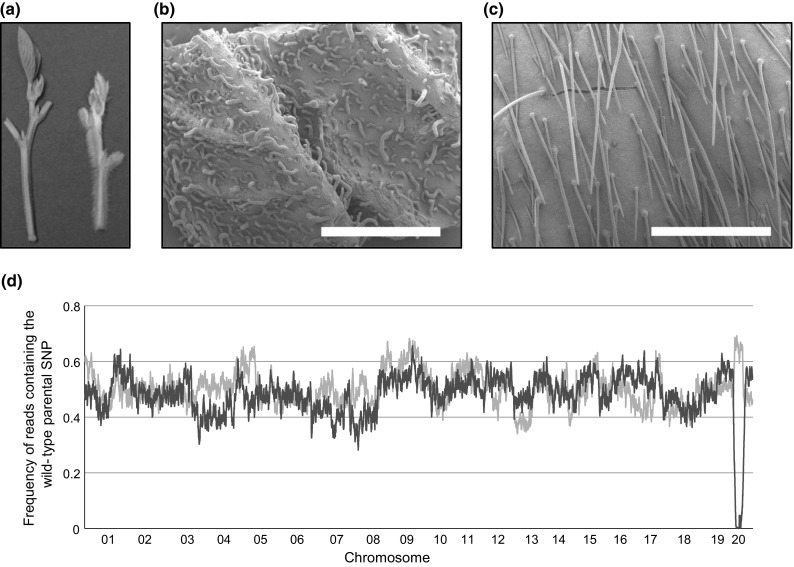
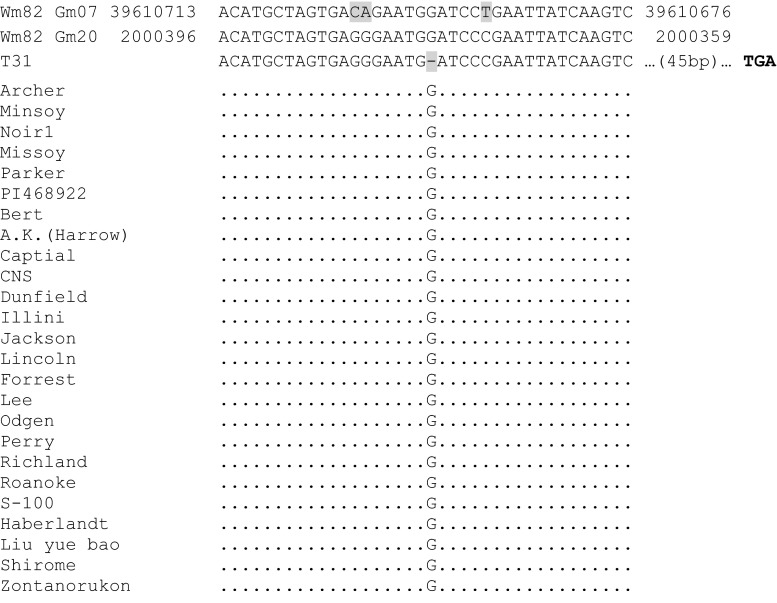
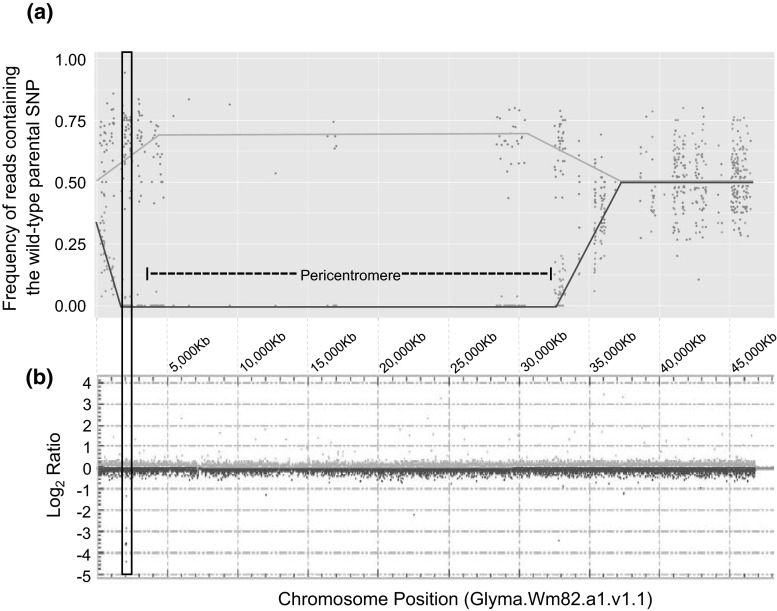
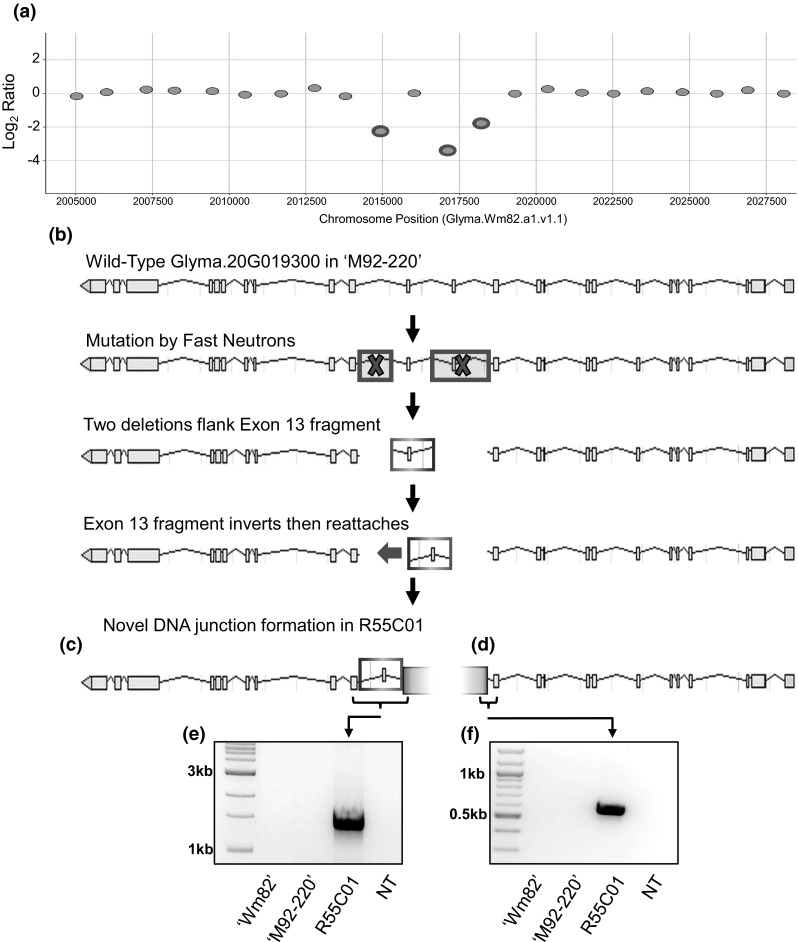
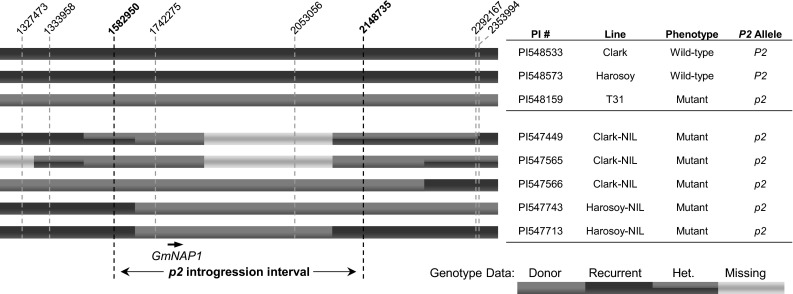
Three adjacent and distinct sequence rearrangements were identified at a NAP1 locus in a soybean mutant. Genetic dissection and validation revealed the function of this gene in soybean trichome development. A soybean (Glycine max (L.) Merr.) gnarled trichome mutant, exhibiting stunted trichomes compared to wild-type, was identified in a fast neutron mutant population. Genetic mapping using whole genome sequencing-based bulked segregant analysis identified a 26.6 megabase interval on chromosome 20 that co-segregated with the phenotype. Comparative genomic hybridization analysis of the mutant indicated that the chromosome 20 interval included a small structural variant within the coding region of a soybean ortholog (Glyma.20G019300) of Arabidopsis Nck-Associated Protein 1 (NAP1), a regulator of actin nucleation during trichome morphogenesis. Sequence analysis of the candidate allele revealed multiple rearrangements within the coding region, including two deletions (approximately 1-2 kb each), a translocation, and an inversion. Further analyses revealed that the mutant allele perfectly co-segregated with the phenotype, and a wild-type soybean NAP1 transgene functionally complemented an Arabidopsis nap1 mutant. In addition, mapping and exon sequencing of NAP1 in a spontaneous soybean gnarled trichome mutant (T31) identified a frame shift mutation resulting in a truncation of the coding region. These data indicate that the soybean NAP1 gene is essential for proper trichome development and show the utility of the soybean fast neutron population for forward genetic approaches for identifying genes.
在一个大豆突变体的NAP1基因座上鉴定出三个相邻且不同的序列重排。遗传剖析和验证揭示了该基因在大豆毛状体发育中的功能。在一个快中子突变体群体中鉴定出一个大豆(Glycine max (L.) Merr.)多节毛状体突变体,与野生型相比,其毛状体发育受阻。使用基于全基因组测序的混合分离群体分析法进行遗传定位,在20号染色体上确定了一个与该表型共分离的26.6兆碱基区间。对该突变体的比较基因组杂交分析表明,20号染色体区间包含拟南芥Nck相关蛋白1(NAP1,毛状体形态发生过程中肌动蛋白成核的调节因子)大豆直系同源基因(Glyma.20G019300)编码区内的一个小结构变异。对候选等位基因的序列分析揭示了编码区内的多个重排,包括两个缺失(每个约1 - 2 kb)、一个易位和一个倒位。进一步分析表明,突变等位基因与该表型完全共分离,并且野生型大豆NAP1转基因在功能上互补了拟南芥nap1突变体。此外,对一个自发的大豆多节毛状体突变体(T31)中NAP1的定位和外显子测序确定了一个移码突变,导致编码区截短。这些数据表明大豆NAP1基因对毛状体的正常发育至关重要,并展示了大豆快中子群体在正向遗传学方法鉴定基因方面的实用性。