Teng Songsong, Liu Chaoxu, Guenther Daniel, Omar Mohamed, Neunaber Claudia, Krettek Christian, Jagodzinski Michael
Department of Orthopedic Trauma, Hannover Medical School, 30625 Hannover, Germany.
Exp Ther Med. 2016 Jun;11(6):2086-2094. doi: 10.3892/etm.2016.3206. Epub 2016 Mar 30.
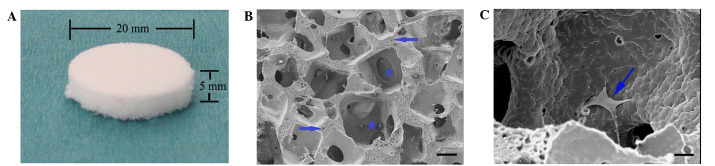
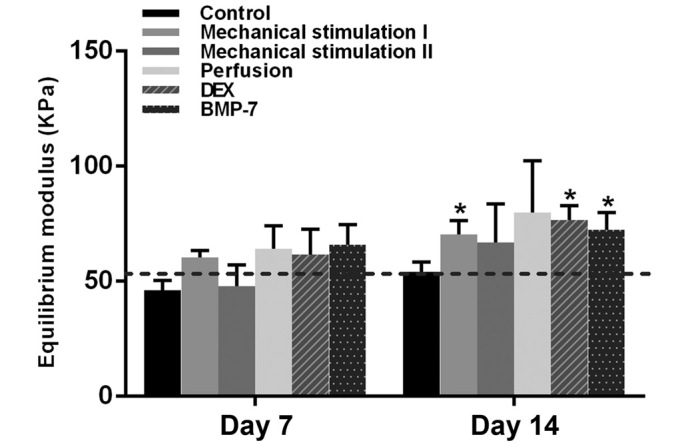
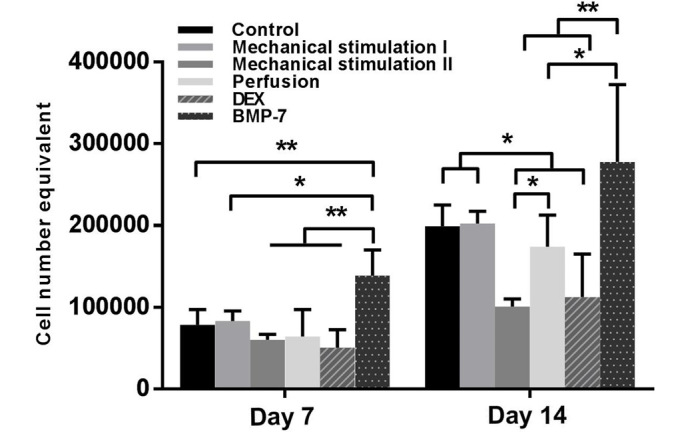
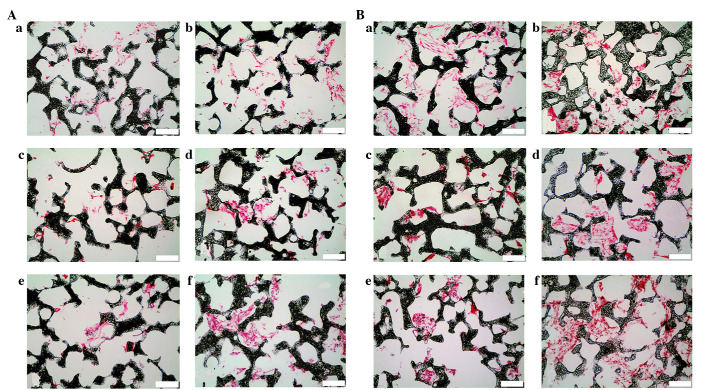
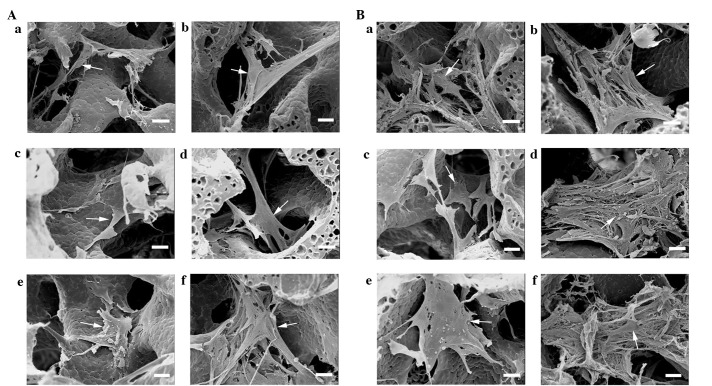
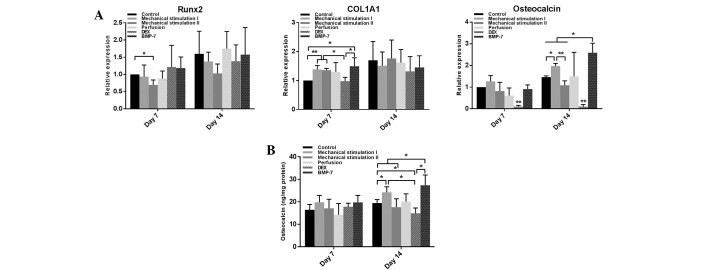
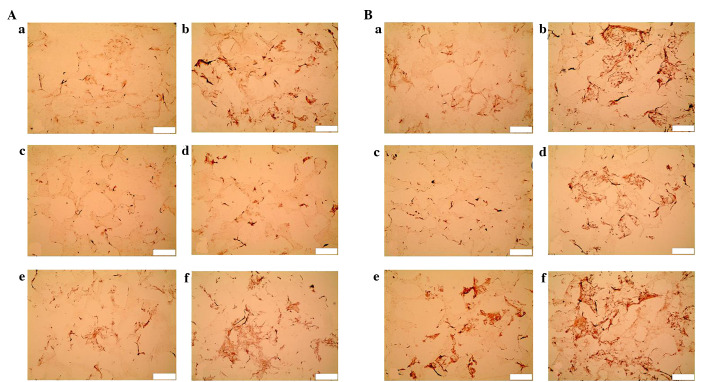
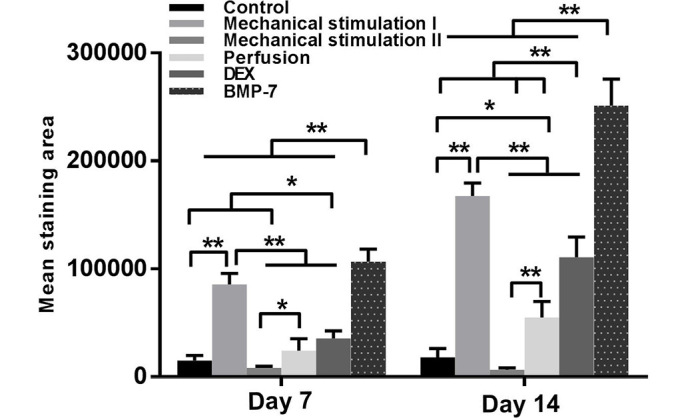
The aim of the present investigation was to compare the effects of cyclic compression, perfusion, dexamethasone (DEX) and bone morphogenetic protein-7 (BMP-7) on the proliferation and differentiation of human bone marrow stromal cells (hBMSCs) in polyurethane scaffolds in a perfusion bioreactor. Polyurethane scaffolds seeded with hBMSCs were cultured under six different conditions, as follows: 10% Cyclic compression at 0.5 and 5 Hz; 10 ml/min perfusion; 100 nM DEX; 100 ng/ml BMP-7; and 1 ml/min perfusion without mechanical and biochemical stimulation (control). On days 7 and 14, samples were tested for the following data: Cell proliferation; mRNA expression of Runx2, COL1A1 and osteocalcin; osteocalcin content; calcium deposition; and the equilibrium modulus of the tissue specimen. The results indicated that BMP-7 and 10 ml/min perfusion promoted cell proliferation, which was inhibited by 5 Hz cyclic compression and DEX. On day 7, the 5 Hz cyclic compression inhibited Runx2 expression, whereas the 0.5 Hz cyclic compression and BMP-7 upregulated the COL1A1 mRNA levels on day 7 and enhanced the osteocalcin expression on day 14. The DEX-treated hBMSCs exhibited downregulated osteocalcin expression. After 14 days, the BMP-7 group exhibited the highest calcium deposition, followed by the 0.5 Hz cyclic compression and the DEX groups. The equilibrium modulus of the engineered constructs significantly increased in the BMP-7, 0.5 Hz cyclic compression and DEX groups. In conclusion, the present results suggest that BMP-7 and perfusion enhance cell proliferation, whereas high frequency cyclic compression inhibits the proliferation and osteogenic differentiation of hBMSCs. Low frequency cyclic compression is more effective than DEX, but less effective compared with BMP-7 on the osteogenic differentiation of hBMSCs seeded on polyurethane scaffolds.
本研究的目的是比较循环压缩、灌注、地塞米松(DEX)和骨形态发生蛋白-7(BMP-7)对灌注生物反应器中聚氨酯支架内人骨髓基质细胞(hBMSC)增殖和分化的影响。接种了hBMSC的聚氨酯支架在六种不同条件下进行培养,具体如下:0.5 Hz和5 Hz的10%循环压缩;10 ml/min灌注;100 nM DEX;100 ng/ml BMP-7;以及1 ml/min灌注且无机械和生化刺激(对照)。在第7天和第14天,对样本进行以下数据检测:细胞增殖;Runx2、COL1A1和骨钙素的mRNA表达;骨钙素含量;钙沉积;以及组织样本的平衡模量。结果表明,BMP-7和10 ml/min灌注促进细胞增殖,而5 Hz循环压缩和DEX抑制细胞增殖。在第7天,5 Hz循环压缩抑制Runx2表达,而0.5 Hz循环压缩和BMP-7在第7天上调COL1A1 mRNA水平,并在第14天增强骨钙素表达。DEX处理的hBMSC表现出骨钙素表达下调。14天后,BMP-7组的钙沉积最高,其次是0.5 Hz循环压缩组和DEX组。在BMP-7、0.5 Hz循环压缩和DEX组中,工程构建体的平衡模量显著增加。总之,目前的结果表明,BMP-7和灌注可增强细胞增殖,而高频循环压缩抑制hBMSC的增殖和成骨分化。低频循环压缩比DEX更有效,但在聚氨酯支架上接种的hBMSC的成骨分化方面,与BMP-7相比效果较差。