Sannerud Ragna, Esselens Cary, Ejsmont Paulina, Mattera Rafael, Rochin Leila, Tharkeshwar Arun Kumar, De Baets Greet, De Wever Veerle, Habets Roger, Baert Veerle, Vermeire Wendy, Michiels Christine, Groot Arjan J, Wouters Rosanne, Dillen Katleen, Vints Katlijn, Baatsen Pieter, Munck Sebastian, Derua Rita, Waelkens Etienne, Basi Guriqbal S, Mercken Mark, Vooijs Marc, Bollen Mathieu, Schymkowitz Joost, Rousseau Frederic, Bonifacino Juan S, Van Niel Guillaume, De Strooper Bart, Annaert Wim
VIB Center for the Biology of Disease, KU Leuven, 3000 Leuven, Belgium; Department of Human Genetics, KU Leuven, 3000 Leuven, Belgium.
Cell Biology and Neurobiology Branch, NICHD, NIH, Bethesda, MD 20892, USA.
Cell. 2016 Jun 30;166(1):193-208. doi: 10.1016/j.cell.2016.05.020. Epub 2016 Jun 9.
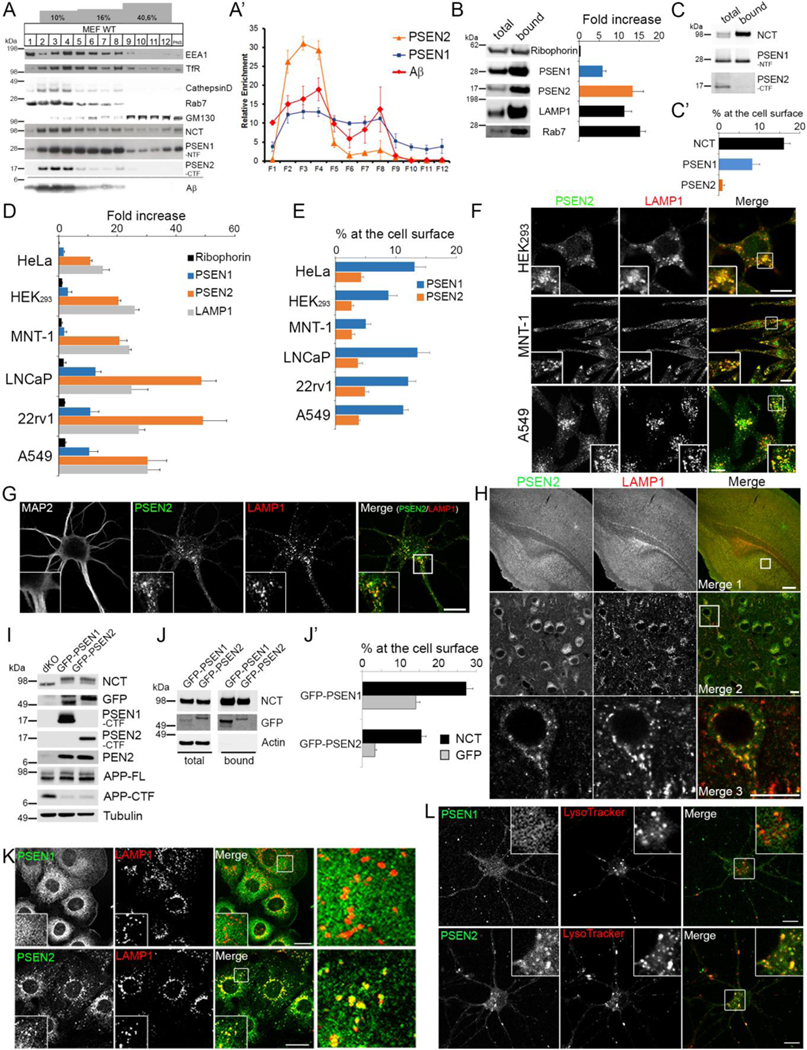
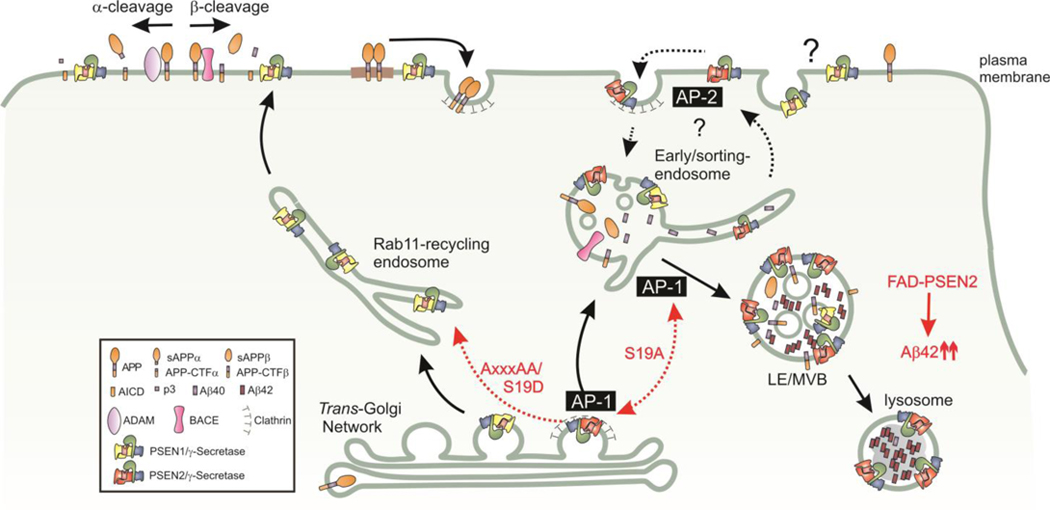
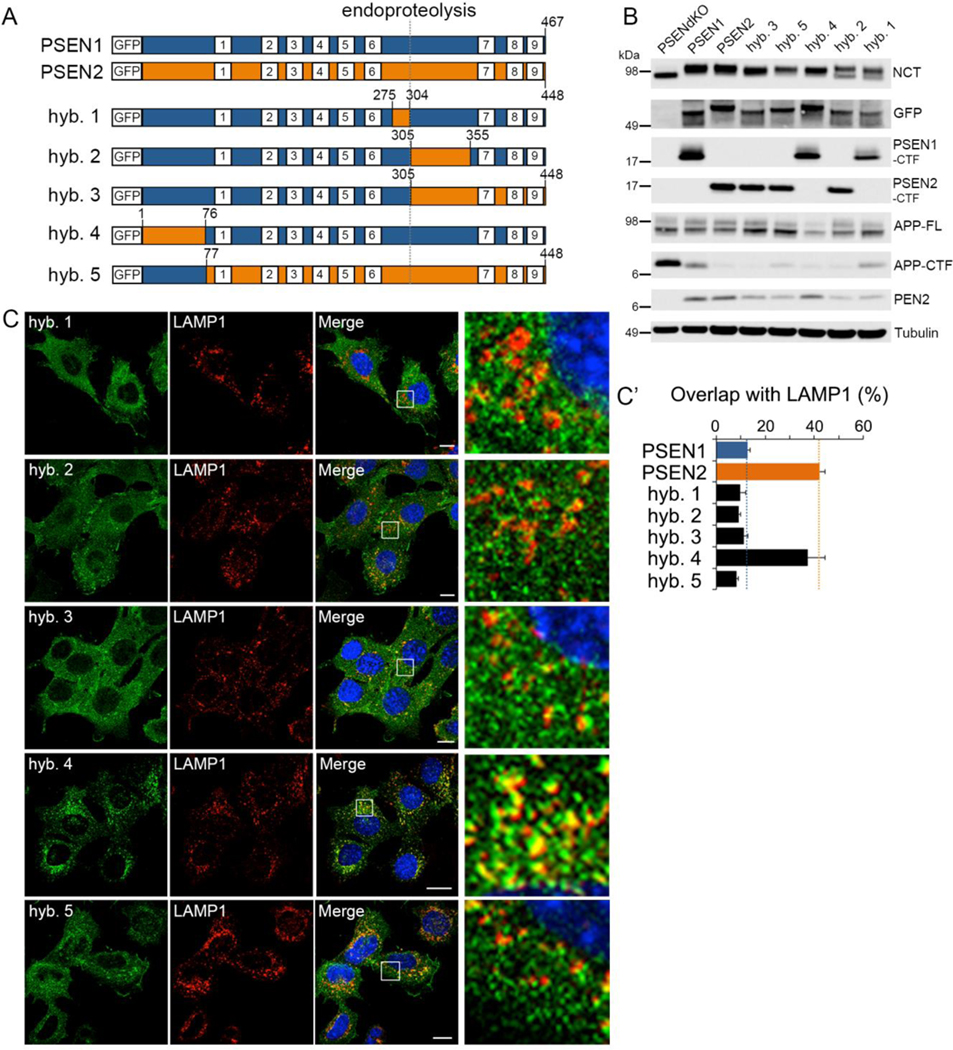
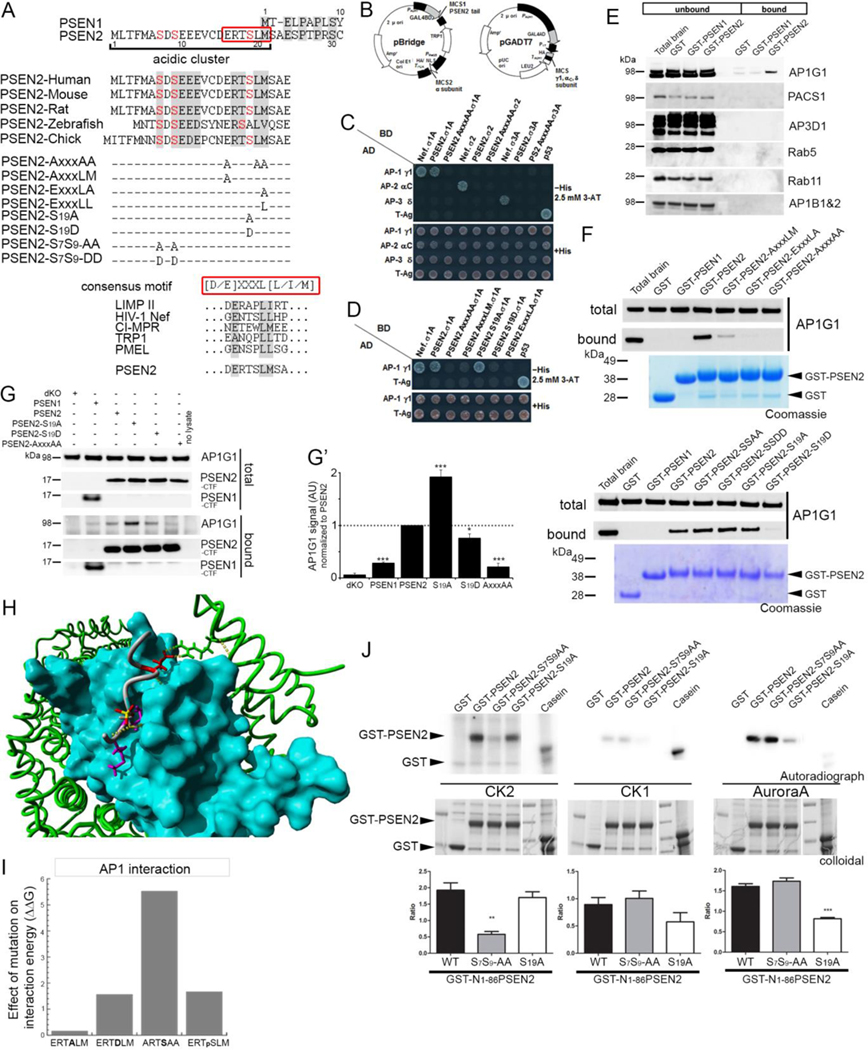
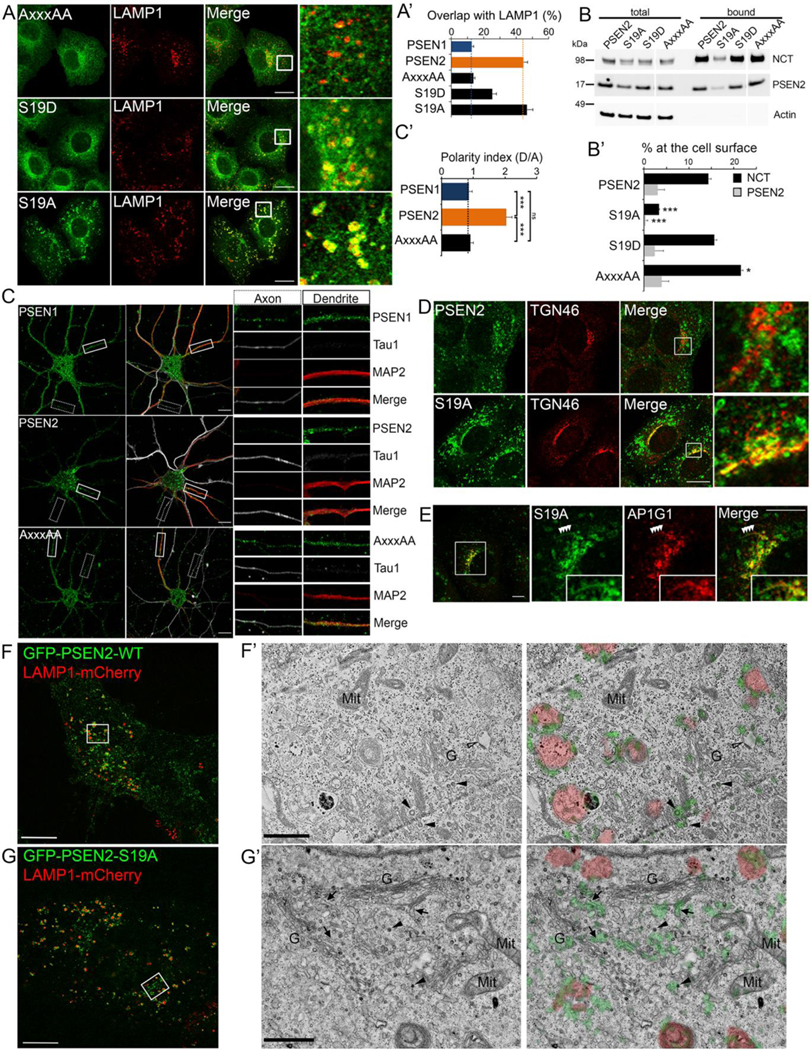
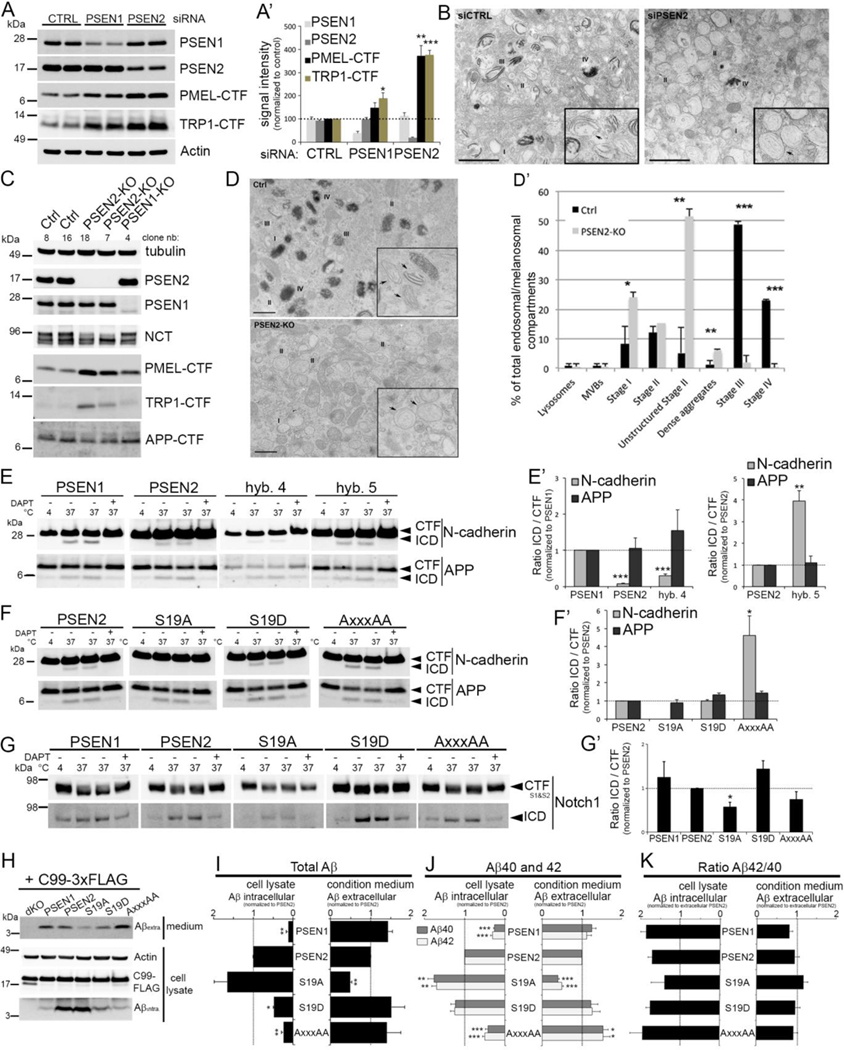
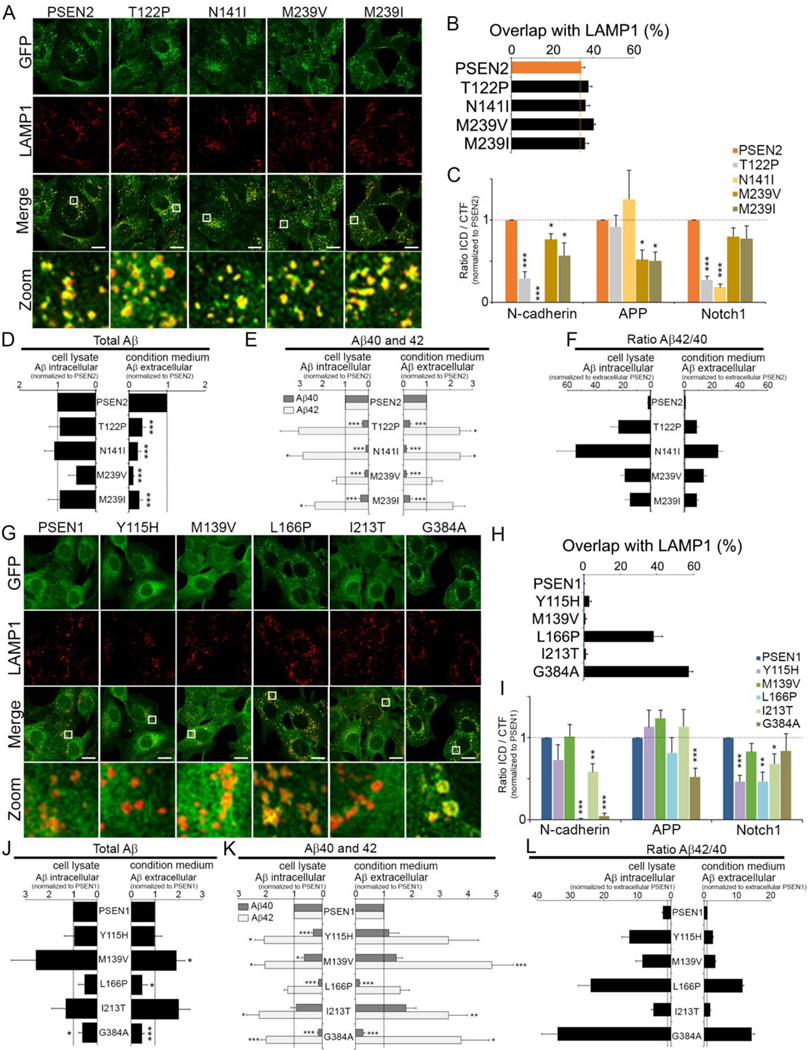
γ-Secretases are a family of intramembrane-cleaving proteases involved in various signaling pathways and diseases, including Alzheimer's disease (AD). Cells co-express differing γ-secretase complexes, including two homologous presenilins (PSENs). We examined the significance of this heterogeneity and identified a unique motif in PSEN2 that directs this γ-secretase to late endosomes/lysosomes via a phosphorylation-dependent interaction with the AP-1 adaptor complex. Accordingly, PSEN2 selectively cleaves late endosomal/lysosomal localized substrates and generates the prominent pool of intracellular Aβ that contains longer Aβ; familial AD (FAD)-associated mutations in PSEN2 increased the levels of longer Aβ further. Moreover, a subset of FAD mutants in PSEN1, normally more broadly distributed in the cell, phenocopies PSEN2 and shifts its localization to late endosomes/lysosomes. Thus, localization of γ-secretases determines substrate specificity, while FAD-causing mutations strongly enhance accumulation of aggregation-prone Aβ42 in intracellular acidic compartments. The findings reveal potentially important roles for specific intracellular, localized reactions contributing to AD pathogenesis.
γ-分泌酶是一类膜内裂解蛋白酶家族,参与多种信号通路及包括阿尔茨海默病(AD)在内的多种疾病。细胞共表达不同的γ-分泌酶复合物,包括两种同源的早老素(PSENs)。我们研究了这种异质性的重要性,并在PSEN2中鉴定出一个独特的基序,该基序通过与AP-1衔接蛋白复合物的磷酸化依赖性相互作用将这种γ-分泌酶导向晚期内体/溶酶体。因此,PSEN2选择性地切割晚期内体/溶酶体定位的底物,并产生大量含有更长Aβ的细胞内Aβ;PSEN2中的家族性AD(FAD)相关突变进一步增加了更长Aβ的水平。此外,PSEN1中的一部分FAD突变体通常在细胞中分布更广泛,模拟PSEN2的作用并将其定位转移至晚期内体/溶酶体。因此,γ-分泌酶的定位决定底物特异性,而导致FAD的突变强烈增强易于聚集的Aβ42在细胞内酸性区室中的积累。这些发现揭示了特定细胞内定位反应在AD发病机制中潜在的重要作用。