Castanera Raúl, López-Varas Leticia, Borgognone Alessandra, LaButti Kurt, Lapidus Alla, Schmutz Jeremy, Grimwood Jane, Pérez Gúmer, Pisabarro Antonio G, Grigoriev Igor V, Stajich Jason E, Ramírez Lucía
Genetics and Microbiology Research Group, Department of Agrarian Production, Public University of Navarre, Pamplona, Navarre, Spain.
U.S. Department of Energy Joint Genome Institute, Walnut Creek, California, United States of America.
PLoS Genet. 2016 Jun 13;12(6):e1006108. doi: 10.1371/journal.pgen.1006108. eCollection 2016 Jun.
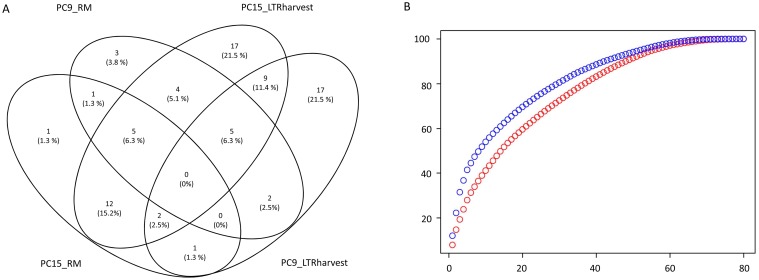
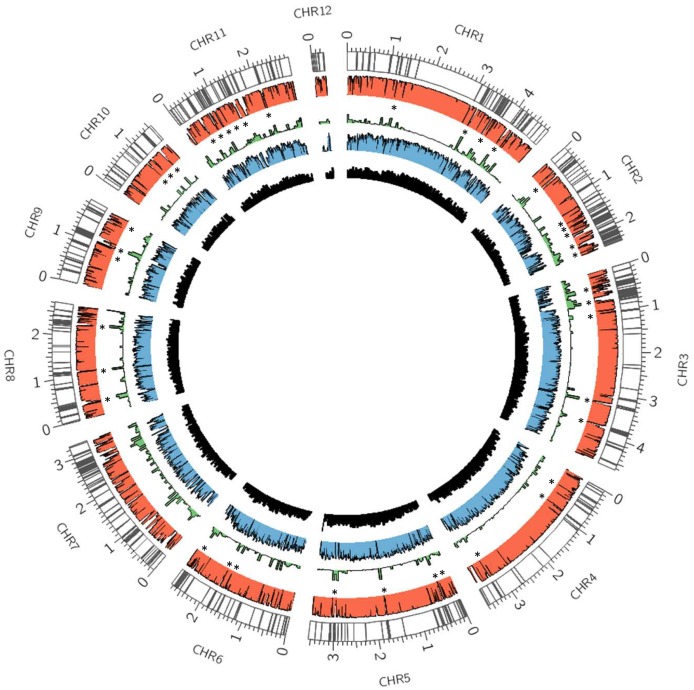
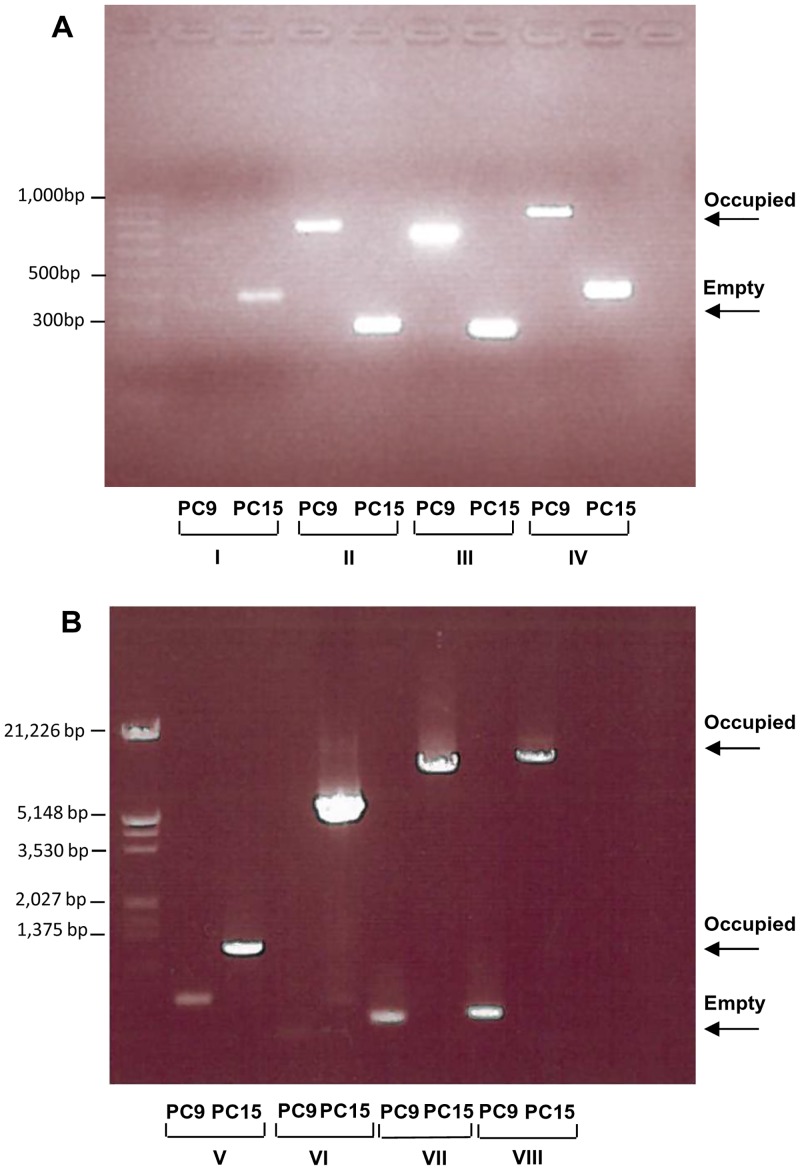
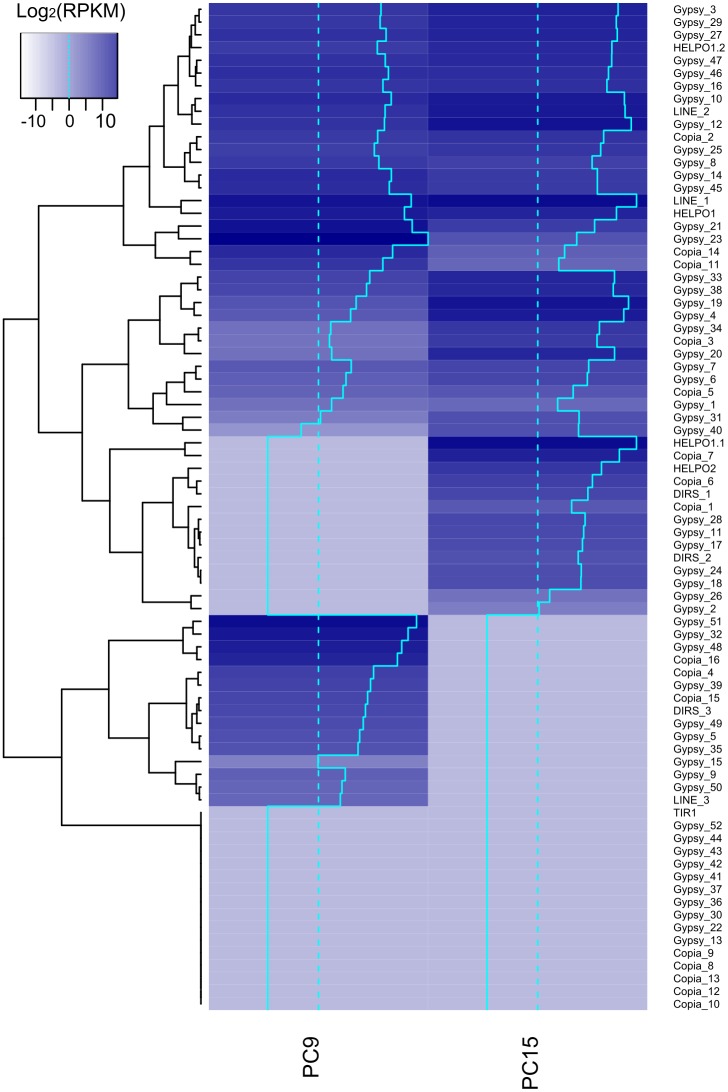
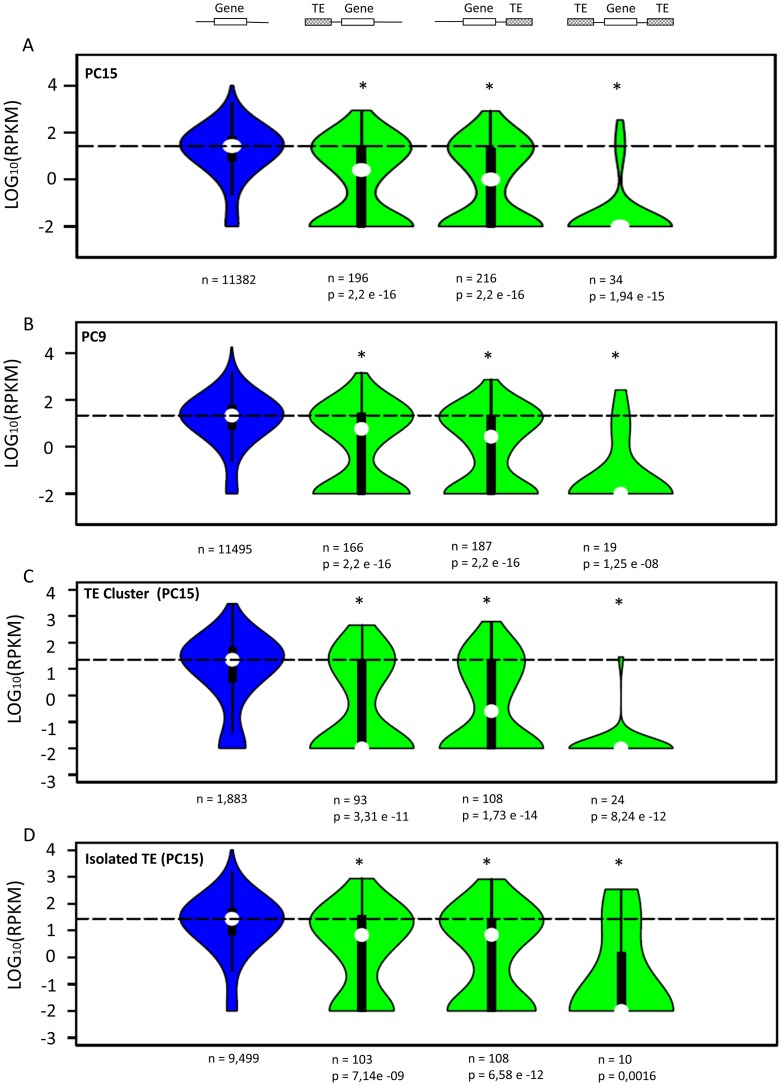
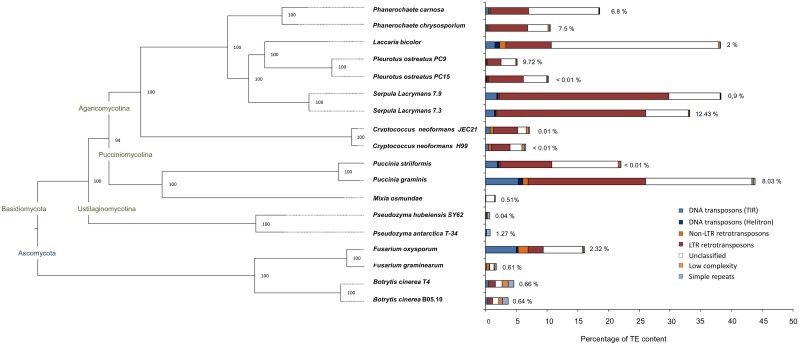
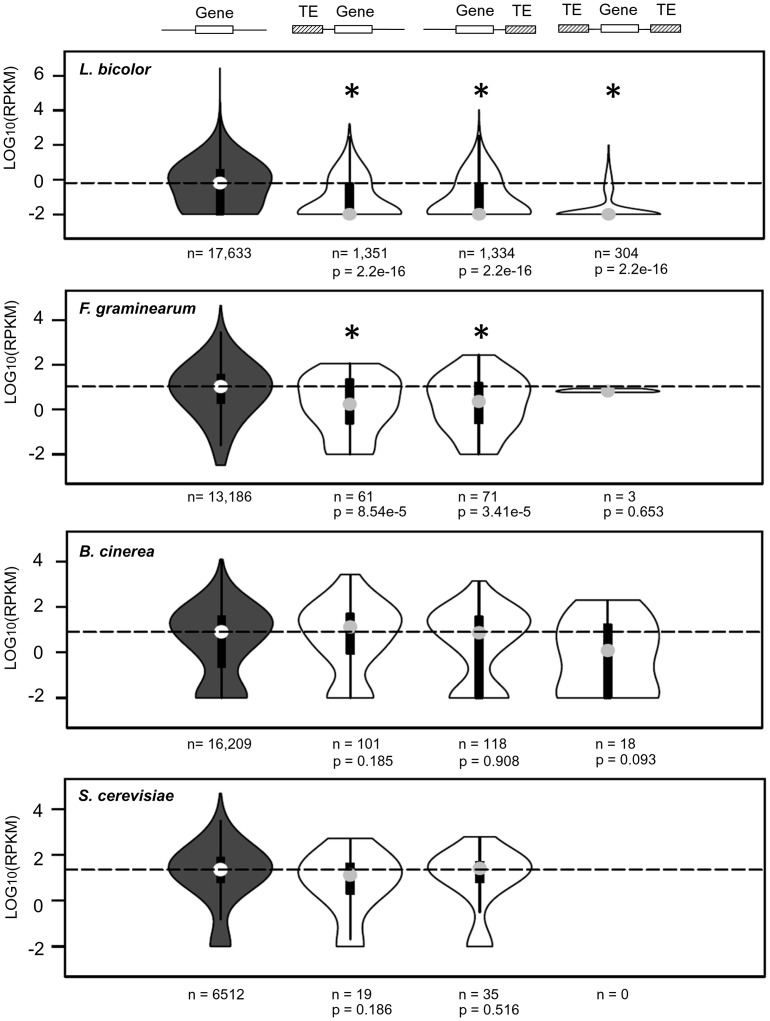
Transposable elements (TEs) are exceptional contributors to eukaryotic genome diversity. Their ubiquitous presence impacts the genomes of nearly all species and mediates genome evolution by causing mutations and chromosomal rearrangements and by modulating gene expression. We performed an exhaustive analysis of the TE content in 18 fungal genomes, including strains of the same species and species of the same genera. Our results depicted a scenario of exceptional variability, with species having 0.02 to 29.8% of their genome consisting of transposable elements. A detailed analysis performed on two strains of Pleurotus ostreatus uncovered a genome that is populated mainly by Class I elements, especially LTR-retrotransposons amplified in recent bursts from 0 to 2 million years (My) ago. The preferential accumulation of TEs in clusters led to the presence of genomic regions that lacked intra- and inter-specific conservation. In addition, we investigated the effect of TE insertions on the expression of their nearby upstream and downstream genes. Our results showed that an important number of genes under TE influence are significantly repressed, with stronger repression when genes are localized within transposon clusters. Our transcriptional analysis performed in four additional fungal models revealed that this TE-mediated silencing was present only in species with active cytosine methylation machinery. We hypothesize that this phenomenon is related to epigenetic defense mechanisms that are aimed to suppress TE expression and control their proliferation.
转座元件(TEs)是真核生物基因组多样性的特殊贡献者。它们的普遍存在影响了几乎所有物种的基因组,并通过引起突变和染色体重排以及调节基因表达来介导基因组进化。我们对18个真菌基因组中的TE含量进行了详尽分析,包括同一物种的菌株和同一属的物种。我们的结果描绘了一个异常多变的情况,即物种基因组中0.02%至29.8%由转座元件组成。对平菇的两个菌株进行的详细分析发现,其基因组主要由I类元件组成,特别是在最近0至200万年前爆发中扩增的LTR反转录转座子。TEs在簇中的优先积累导致了缺乏种内和种间保守性的基因组区域的存在。此外,我们研究了TE插入对其附近上游和下游基因表达的影响。我们的结果表明,受TE影响的大量基因被显著抑制,当基因位于转座子簇内时抑制作用更强。我们在另外四个真菌模型中进行的转录分析表明,这种TE介导的沉默仅存在于具有活跃胞嘧啶甲基化机制的物种中。我们推测这种现象与旨在抑制TE表达并控制其增殖扩散的表观遗传防御机制有关。