Cater Rosemary J, Vandenberg Robert J, Ryan Renae M
Discipline of Pharmacology, Sydney Medical School, University of Sydney, Sydney, NSW 2006, Australia.
Discipline of Pharmacology, Sydney Medical School, University of Sydney, Sydney, NSW 2006, Australia
J Gen Physiol. 2016 Jul;148(1):13-24. doi: 10.1085/jgp.201511556. Epub 2016 Jun 13.
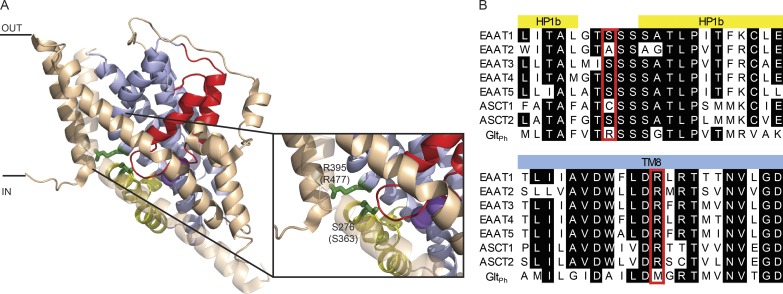
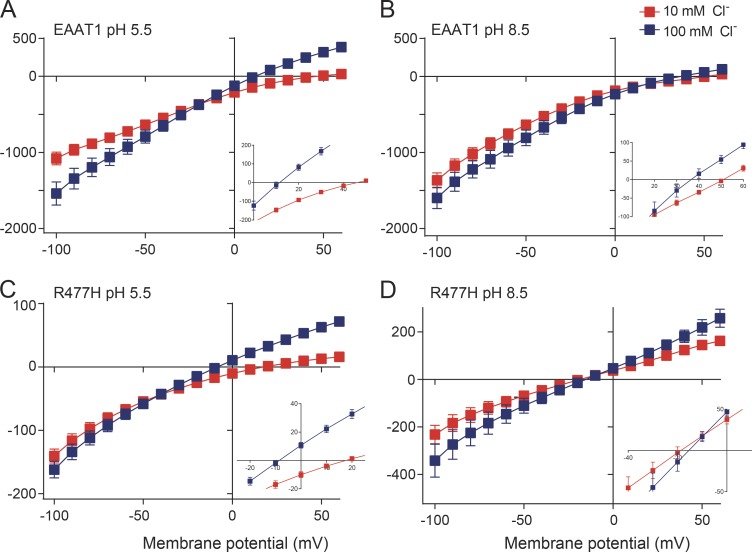
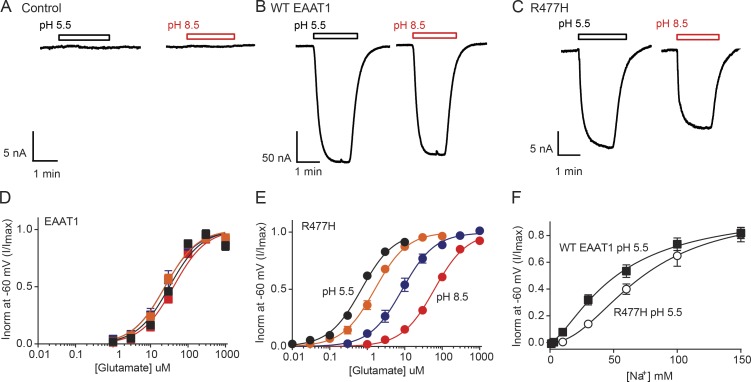
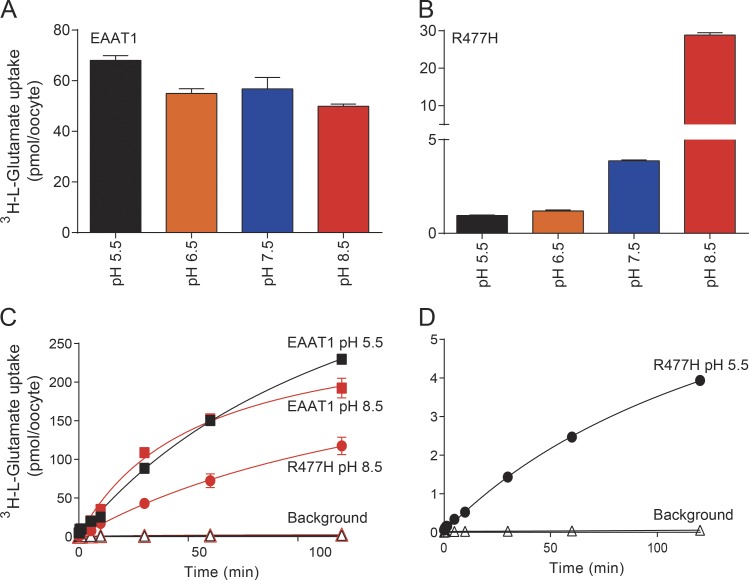
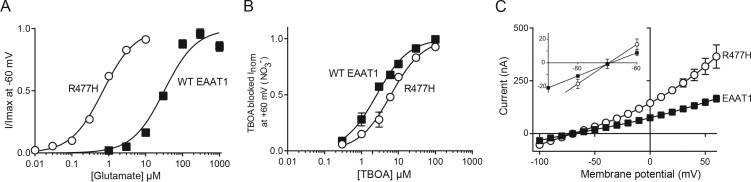
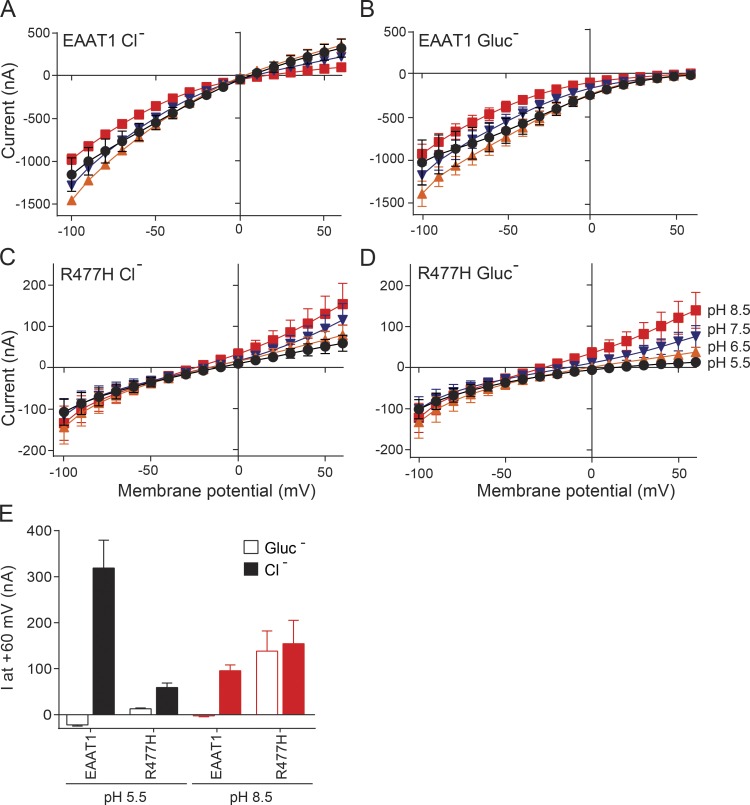
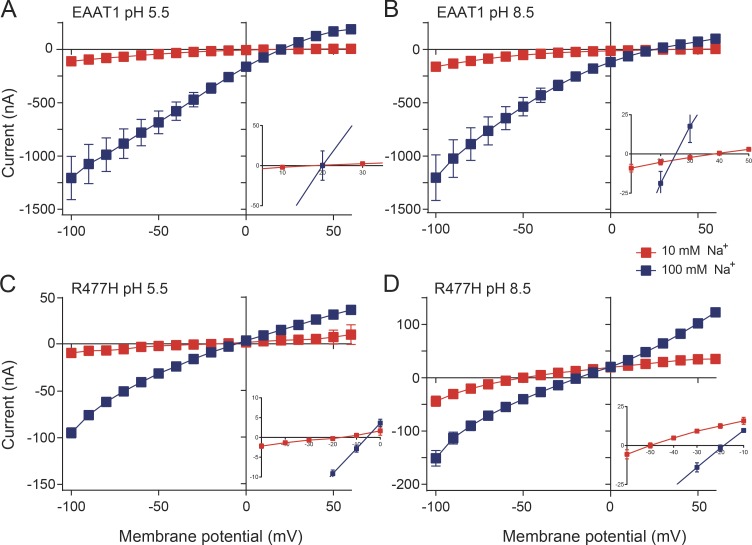
The concentration of glutamate within a glutamatergic synapse is tightly regulated by excitatory amino acid transporters (EAATs). In addition to their primary role in clearing extracellular glutamate, the EAATs also possess a thermodynamically uncoupled Cl(-) conductance. This conductance is activated by the binding of substrate and Na(+), but the direction of Cl(-) flux is independent of the rate or direction of substrate transport; thus, the two processes are thermodynamically uncoupled. A recent molecular dynamics study of the archaeal EAAT homologue GltPh (an aspartate transporter from Pyrococcus horikoshii) identified an aqueous pore at the interface of the transport and trimerization domains, through which anions could permeate, and it was suggested that an arginine residue at the most restricted part of this pathway might play a role in determining anion selectivity. In this study, we mutate this arginine to a histidine in the human glutamate transporter EAAT1 and investigate the role of the protonation state of this residue on anion selectivity and transporter function. Our results demonstrate that a positive charge at this position is crucial for determining anion versus cation selectivity of the uncoupled conductance of EAAT1. In addition, because the nature of this residue influences the turnover rate of EAAT1, we reveal an intrinsic link between the elevator movement of the transport domain and the Cl(-) channel.
谷氨酸能突触内的谷氨酸浓度由兴奋性氨基酸转运体(EAATs)严格调控。除了在清除细胞外谷氨酸方面的主要作用外,EAATs还具有一种热力学解偶联的Cl(-)电导。这种电导由底物和Na(+)的结合激活,但Cl(-)通量的方向与底物转运的速率或方向无关;因此,这两个过程在热力学上是解偶联的。最近对古细菌EAAT同源物GltPh(来自嗜热栖热菌的天冬氨酸转运体)的分子动力学研究在转运和三聚化结构域的界面处发现了一个水通道,阴离子可通过该通道渗透,并且有人提出该通道最狭窄部分的一个精氨酸残基可能在决定阴离子选择性方面起作用。在本研究中,我们将人谷氨酸转运体EAAT1中的这个精氨酸突变为组氨酸,并研究该残基质子化状态对阴离子选择性和转运体功能的作用。我们的结果表明,该位置的正电荷对于决定EAAT1解偶联电导的阴离子与阳离子选择性至关重要。此外,由于该残基的性质影响EAAT1的周转速率,我们揭示了转运结构域的升降运动与Cl(-)通道之间的内在联系。