Masek Pavel, Keene Alex C
a Department of Biology , Binghamton University , Binghamton , NY , USA ;
b Department of Biological Sciences , Florida Atlantic University , Jupiter , FL , USA.
J Neurogenet. 2016 Jun;30(2):112-21. doi: 10.1080/01677063.2016.1185104.
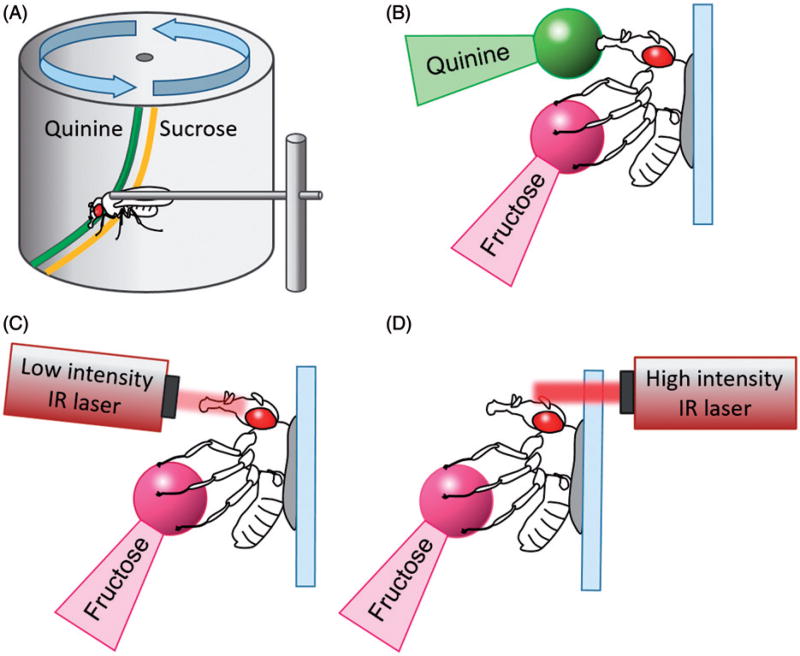
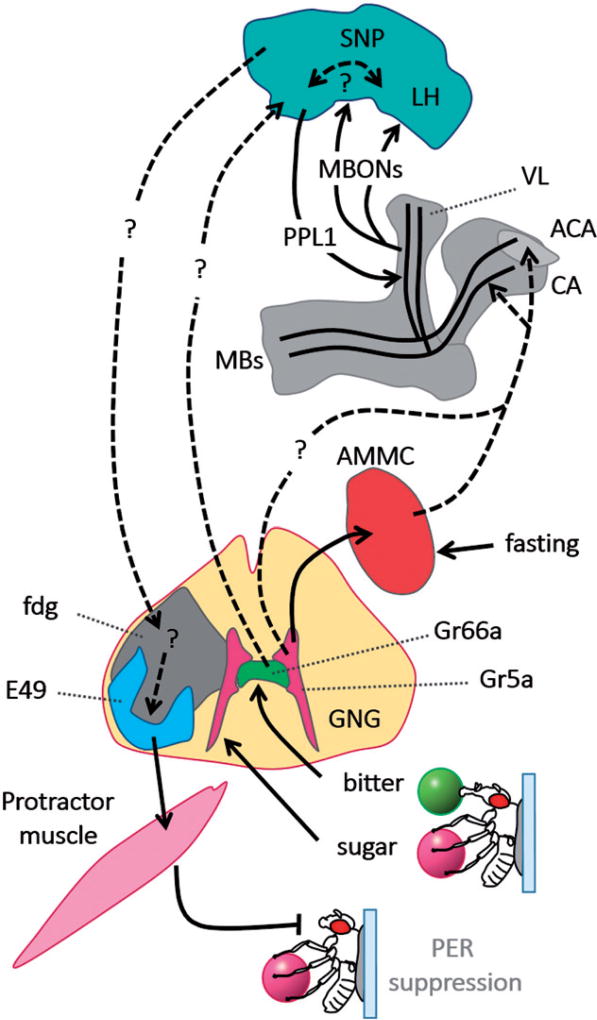
Taste allows animals to discriminate the value and potential toxicity of food prior to ingestion. Many tastants elicit an innate attractive or avoidance response that is modifiable with nutritional state and prior experience. A powerful genetic tool kit, well-characterized gustatory system, and standardized behavioral assays make the fruit fly, Drosophila melanogaster, an excellent system for investigating taste processing and memory. Recent studies have used this system to identify the neural basis for acquired taste preference. These studies have revealed a role for dopamine-mediated plasticity of the mushroom bodies that modulate the threshold of response to appetitive tastants. The identification of neural circuitry regulating taste memory provides a system to study the genetic and physiological processes that govern plasticity within a defined memory circuit.
味觉使动物能够在摄入食物之前辨别食物的价值和潜在毒性。许多味觉刺激会引发一种与生俱来的吸引或回避反应,这种反应会随着营养状态和先前经验而改变。强大的基因工具包、特征明确的味觉系统以及标准化的行为分析方法,使得果蝇成为研究味觉处理和记忆的优秀系统。最近的研究利用这个系统来确定后天味觉偏好的神经基础。这些研究揭示了多巴胺介导的蘑菇体可塑性在调节对美味味觉刺激的反应阈值方面所起的作用。对调节味觉记忆的神经回路的识别提供了一个系统,用于研究在特定记忆回路中控制可塑性的遗传和生理过程。