Roman Joe, Nevins John, Altabet Mark, Koopman Heather, McCarthy James
Gund Institute for Ecological Economics, University of Vermont, Burlington, Vermont, United States of America.
Department of Organismic and Evolutionary Biology, Harvard University, Cambridge, Massachusetts, United States of America.
PLoS One. 2016 Jun 22;11(6):e0156553. doi: 10.1371/journal.pone.0156553. eCollection 2016.
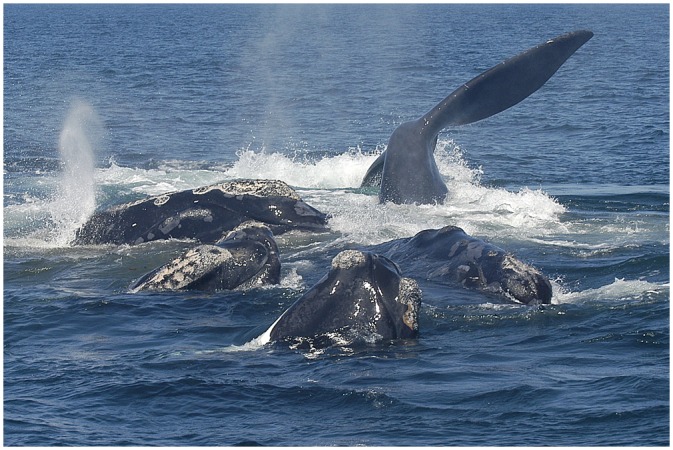
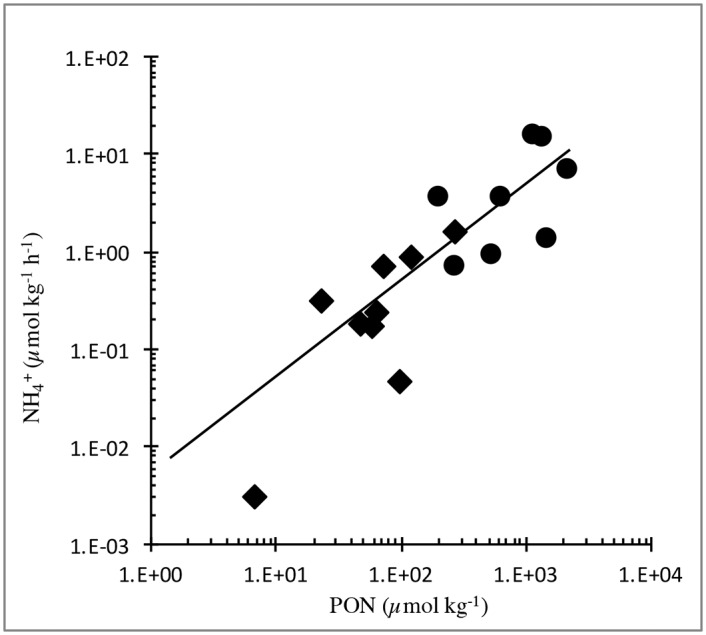
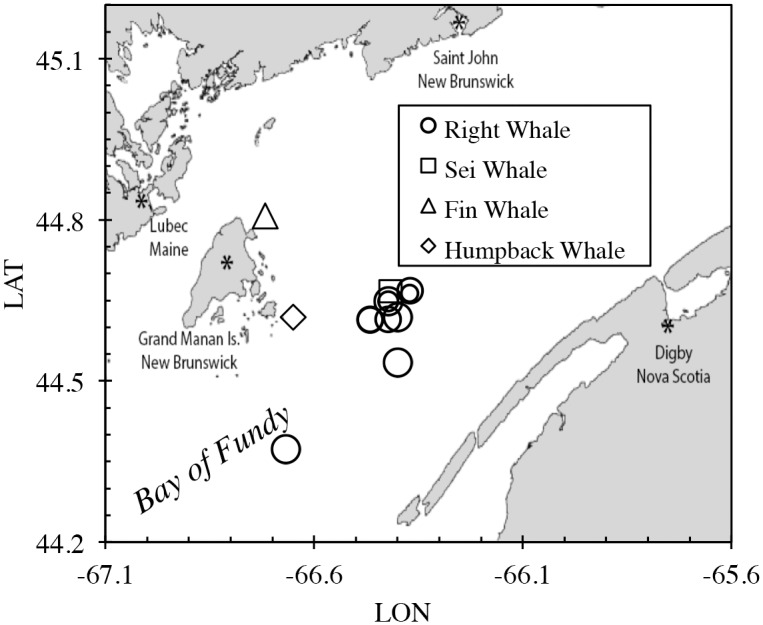
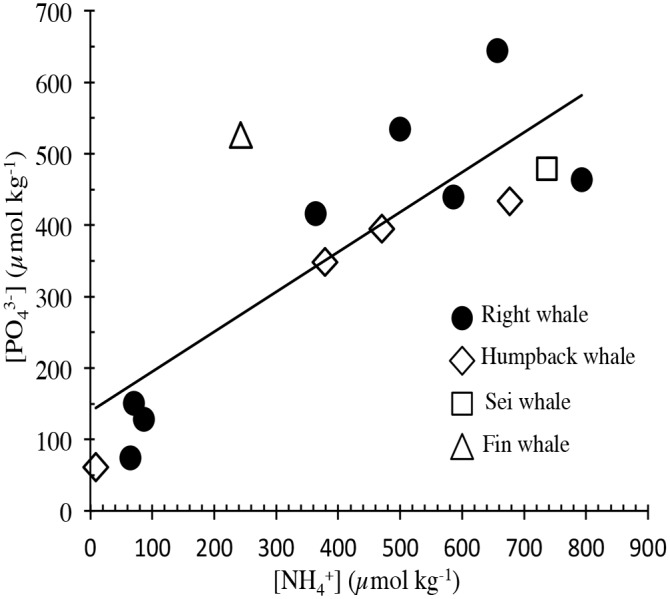
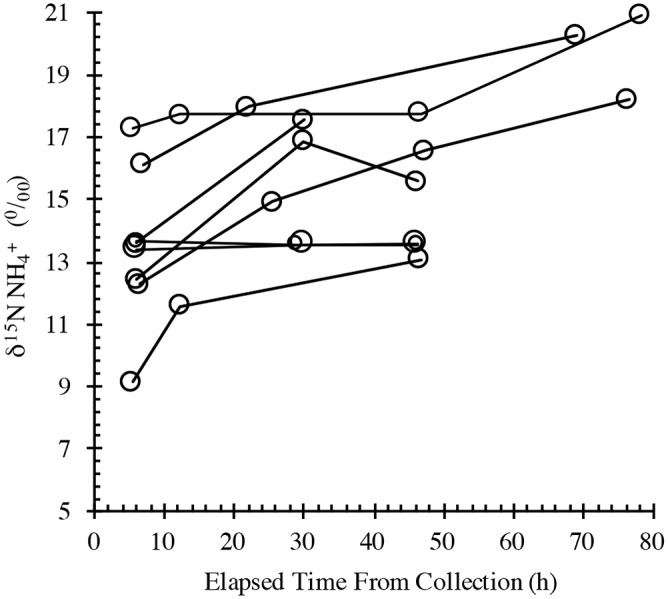
Marine mammals have recently been documented as important facilitators of rapid and efficient nutrient recycling in coastal and offshore waters. Whales enhance phytoplankton nutrition by releasing fecal plumes near the surface after feeding and by migrating from highly productive, high-latitude feeding areas to low-latitude nutrient-poor calving areas. In this study, we measured NH4+ and PO43- release rates from the feces of North Atlantic right whales (Eubalaena glacialis), a highly endangered baleen whale. Samples for this species were primarily collected by locating aggregations of whales in surface-active groups (SAGs), which typically consist of a central female surrounded by males competing for sexual activity. When freshly collected feces were incubated in seawater, high initial rates of N release were generally observed, which decreased to near zero within 24 hours of sampling, a pattern that is consistent with the active role of gut microflora on fecal particles. We estimate that at least 10% of particulate N in whale feces becomes available as NH4+ within 24 hours of defecation. Phosphorous was also abundant in fecal samples: initial release rates of PO43- were higher than for NH4+, yielding low N/P nutrient ratios over the course of our experiments. The rate of PO43- release was thus more than sufficient to preclude the possibility that nitrogenous nutrients supplied by whales would lead to phytoplankton production limited by P availability. Phytoplankton growth experiments indicated that NH4+ released from whale feces enhance productivity, as would be expected, with no evidence that fecal metabolites suppress growth. Although North Atlantic right whales are currently rare (approximately 450 individuals), they once numbered about 14,000 and likely played a substantial role in recycling nutrients in areas where they gathered to feed and mate. Even though the NH4+ released from fresh whale fecal material is a small fraction of total whale fecal nitrogen, and recognizing the fact that the additional nitrogen released in whale urine would be difficult to measure in a field study, the results of this study support the idea that the distinctive isotopic signature of the released NH4+ could be used to provide a conservative estimate of the contribution of the whale pump to primary productivity in coastal regions where whales congregate.
最近有文献记载,海洋哺乳动物是沿海和近海海域快速高效营养物质循环的重要促进者。鲸鱼通过进食后在海面附近释放粪便羽流,以及从高生产力、高纬度的觅食区迁徙到低纬度营养匮乏的繁殖区,来增强浮游植物的营养。在本研究中,我们测量了北大西洋露脊鲸(Eubalaena glacialis)粪便中NH4+和PO43-的释放速率,北大西洋露脊鲸是一种极度濒危的须鲸。该物种的样本主要是通过定位在表面活跃群体(SAGs)中的鲸鱼聚集区收集的,表面活跃群体通常由一只中心雌鲸和周围争夺交配机会的雄鲸组成。当新鲜收集的粪便在海水中孵育时,通常会观察到较高的初始氮释放速率,在取样后24小时内降至接近零,这种模式与肠道微生物群对粪便颗粒的积极作用一致。我们估计,在排便后24小时内,鲸鱼粪便中至少10%的颗粒态氮会以NH4+的形式释放出来。粪便样本中磷的含量也很丰富:PO43-的初始释放速率高于NH4+,在我们的实验过程中产生了较低的氮磷营养比。因此,PO43-的释放速率足以排除鲸鱼提供的含氮营养物质导致浮游植物生长受磷可用性限制的可能性。浮游植物生长实验表明,如预期的那样,鲸鱼粪便释放的NH4+提高了生产力,没有证据表明粪便代谢产物会抑制生长。尽管目前北大西洋露脊鲸数量稀少(约450头),但它们曾经约有14000头,可能在它们聚集觅食和交配的区域的营养物质循环中发挥了重要作用。尽管新鲜鲸鱼粪便物质释放的NH4+只是鲸鱼粪便总氮的一小部分,并且认识到在实地研究中很难测量鲸鱼尿液中释放的额外氮,但本研究结果支持这样一种观点,即释放的NH4+独特的同位素特征可用于保守估计鲸鱼泵对鲸鱼聚集的沿海地区初级生产力的贡献。