Yamamoto Hirotaka, Morino Katsutaro, Mengistu Lemecha, Ishibashi Taishi, Kiriyama Kohei, Ikami Takao, Maegawa Hiroshi
Institute for Health Science, MIKI Corporation, 3-12-4, Naruohama, Nishinomiya, Hyogo 663-8142, Japan; Department of Medicine, Division of Endocrinology and Metabolism, Shiga University of Medical Science, Tsukinowa, Seta, Otsu, Shiga 520-2192, Japan.
Department of Medicine, Division of Endocrinology and Metabolism, Shiga University of Medical Science, Tsukinowa, Seta, Otsu, Shiga 520-2192, Japan.
Oxid Med Cell Longev. 2016;2016:1735841. doi: 10.1155/2016/1735841. Epub 2016 Jun 2.
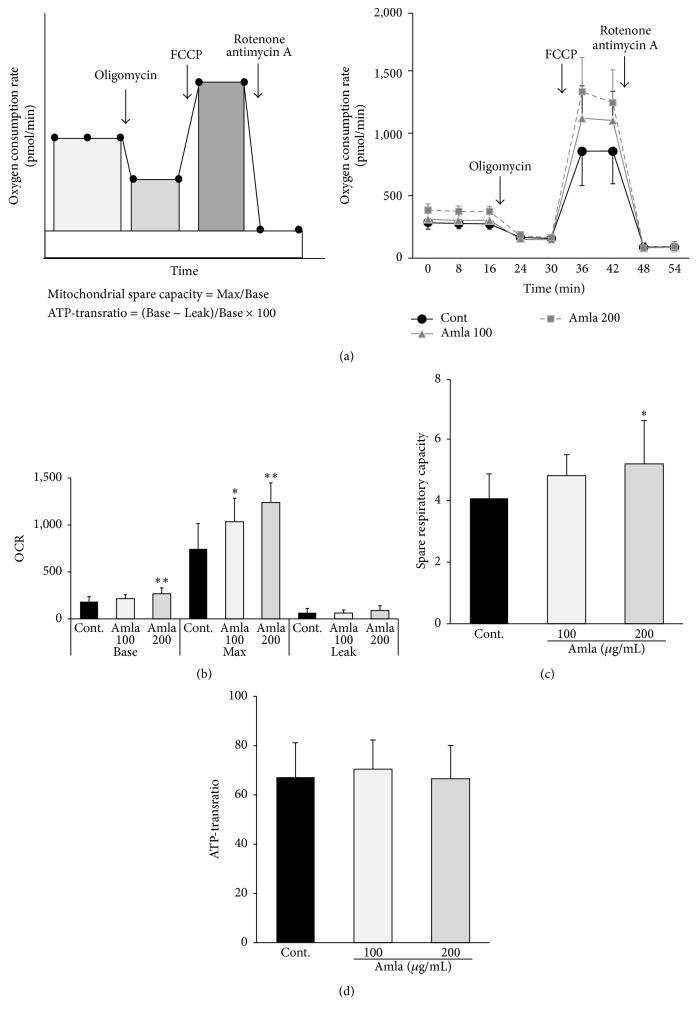
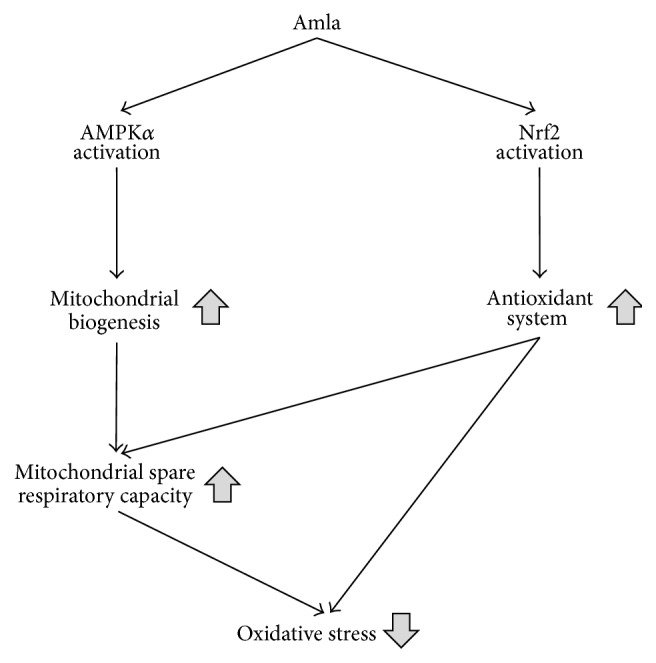
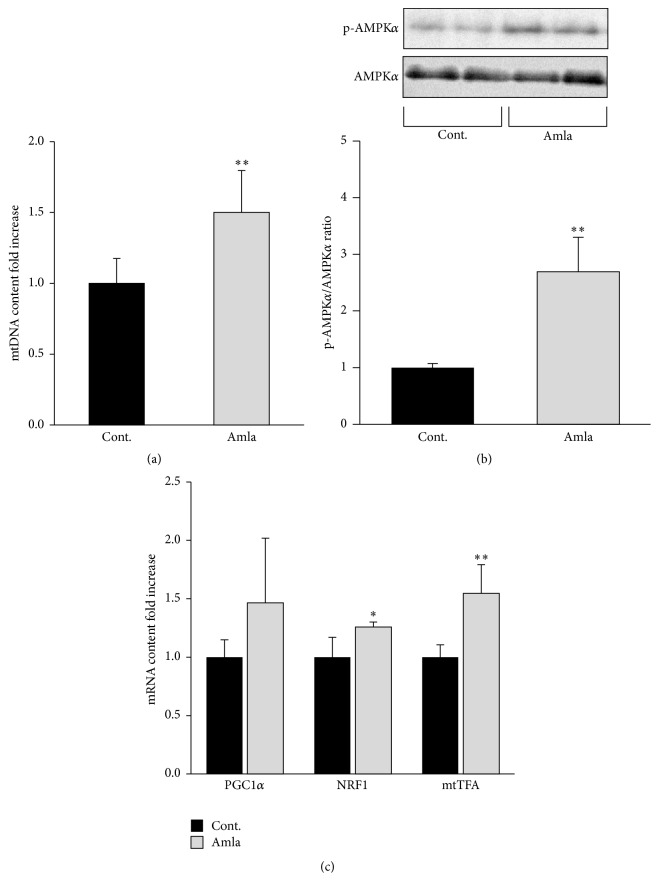
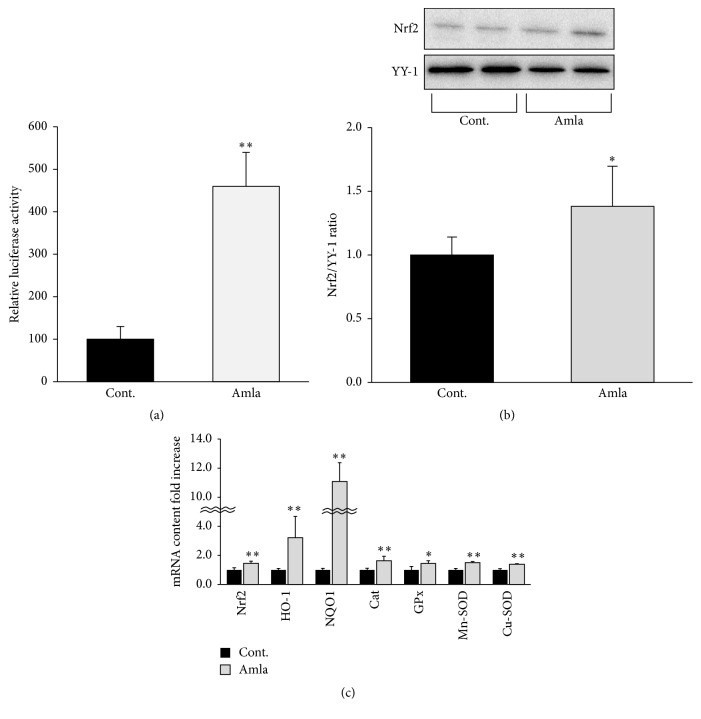
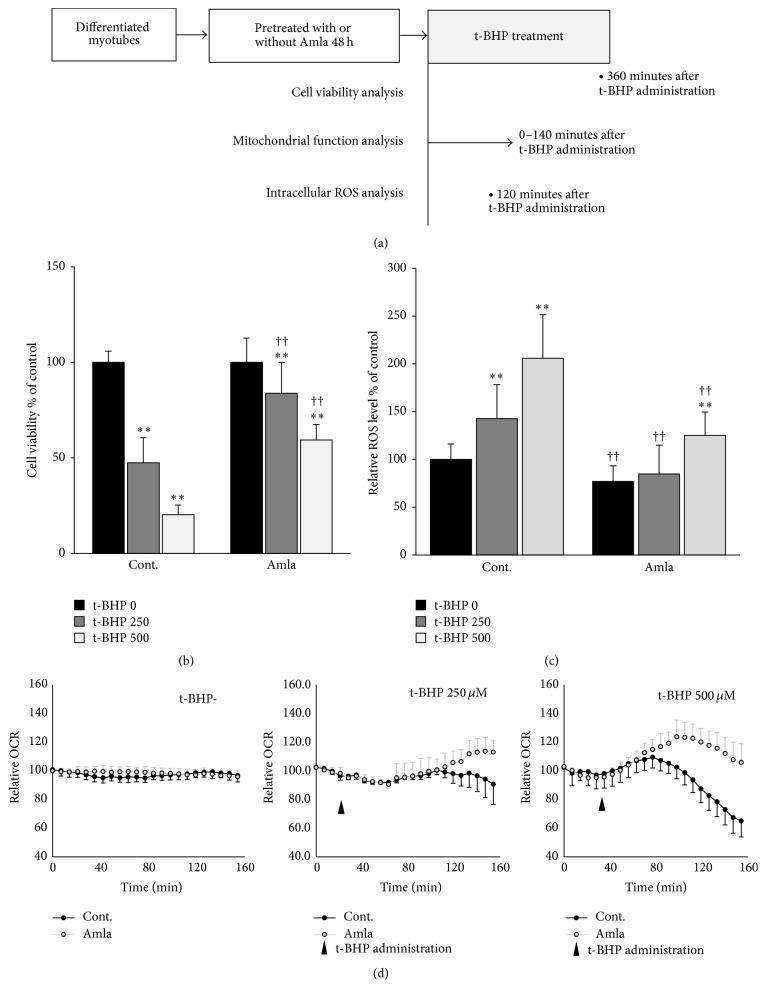
Amla is one of the most important plants in Indian traditional medicine and has been shown to improve various age-related disorders while decreasing oxidative stress. Mitochondrial dysfunction is a proposed cause of aging through elevated oxidative stress. In this study, we investigated the effects of Amla on mitochondrial function in C2C12 myotubes, a murine skeletal muscle cell model with abundant mitochondria. Based on cell flux analysis, treatment with an extract of Amla fruit enhanced mitochondrial spare respiratory capacity, which enables cells to overcome various stresses. To further explore the mechanisms underlying these effects on mitochondrial function, we analyzed mitochondrial biogenesis and antioxidant systems, both proposed regulators of mitochondrial spare respiratory capacity. We found that Amla treatment stimulated both systems accompanied by AMPK and Nrf2 activation. Furthermore, we found that Amla treatment exhibited cytoprotective effects and lowered reactive oxygen species (ROS) levels in cells subjected to t-BHP-induced oxidative stress. These effects were accompanied by increased oxygen consumption, suggesting that Amla protected cells against oxidative stress by using enhanced spare respiratory capacity to produce more energy. Thus we identified protective effects of Amla, involving activation of mitochondrial function, which potentially explain its various effects on age-related disorders.
余甘子是印度传统医学中最重要的植物之一,已被证明可改善各种与年龄相关的疾病,同时降低氧化应激。线粒体功能障碍是通过氧化应激升高导致衰老的一个原因。在本研究中,我们研究了余甘子对C2C12肌管线粒体功能的影响,C2C12肌管是一种线粒体丰富的小鼠骨骼肌细胞模型。基于细胞通量分析,用余甘子果实提取物处理可增强线粒体备用呼吸能力,使细胞能够克服各种应激。为了进一步探索这些对线粒体功能影响的潜在机制,我们分析了线粒体生物发生和抗氧化系统,这两者都是线粒体备用呼吸能力的潜在调节因子。我们发现余甘子处理可刺激这两个系统,并伴有AMPK和Nrf2的激活。此外,我们发现余甘子处理在叔丁基过氧化氢诱导的氧化应激细胞中表现出细胞保护作用并降低活性氧(ROS)水平。这些作用伴随着耗氧量增加,表明余甘子通过利用增强的备用呼吸能力产生更多能量来保护细胞免受氧化应激。因此,我们确定了余甘子的保护作用,包括激活线粒体功能,这可能解释了它对与年龄相关疾病的各种影响。