Vornhagen Jay, Quach Phoenicia, Boldenow Erica, Merillat Sean, Whidbey Christopher, Ngo Lisa Y, Adams Waldorf K M, Rajagopal Lakshmi
Department of Global Health, University of Washington, Seattle, Washington, USA Seattle Children's Research Institute, Seattle, Washington, USA.
Seattle Children's Research Institute, Seattle, Washington, USA.
mBio. 2016 Jun 28;7(3):e00781-16. doi: 10.1128/mBio.00781-16.
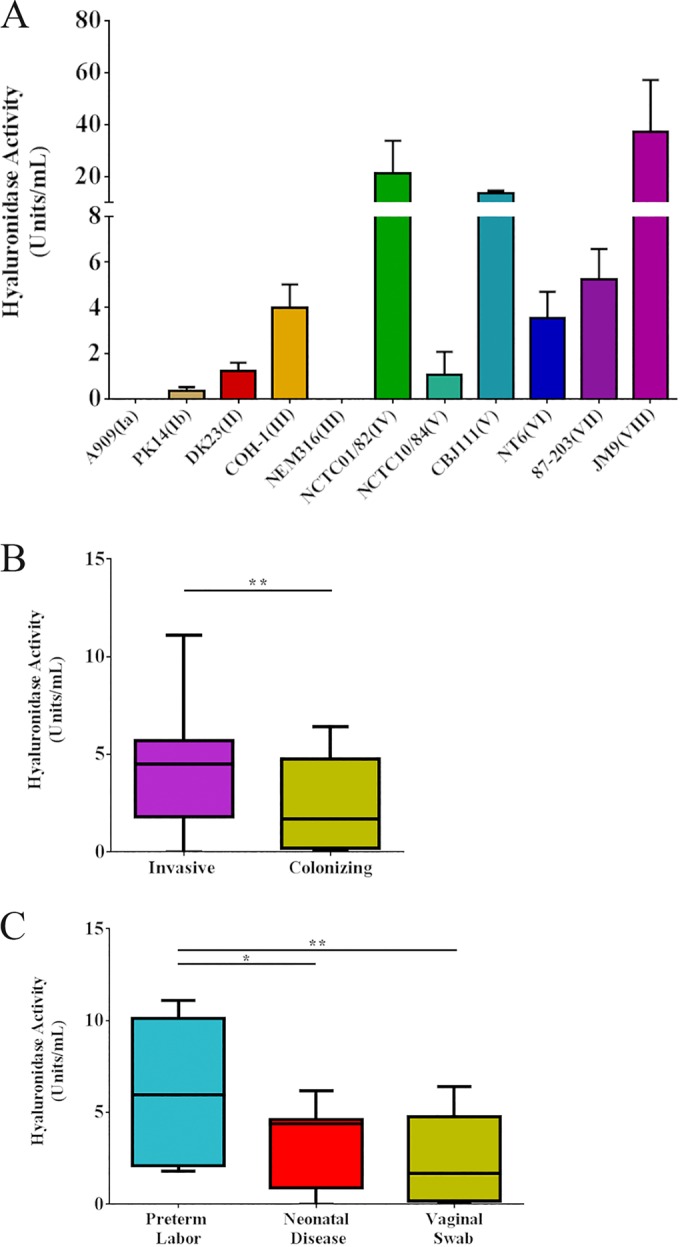
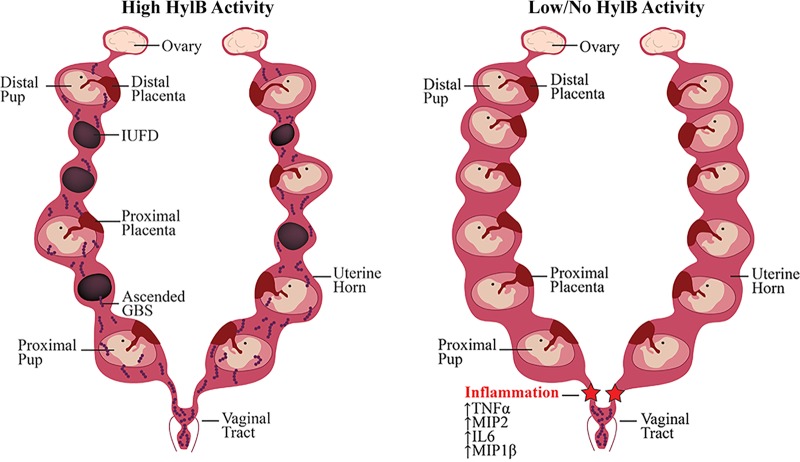
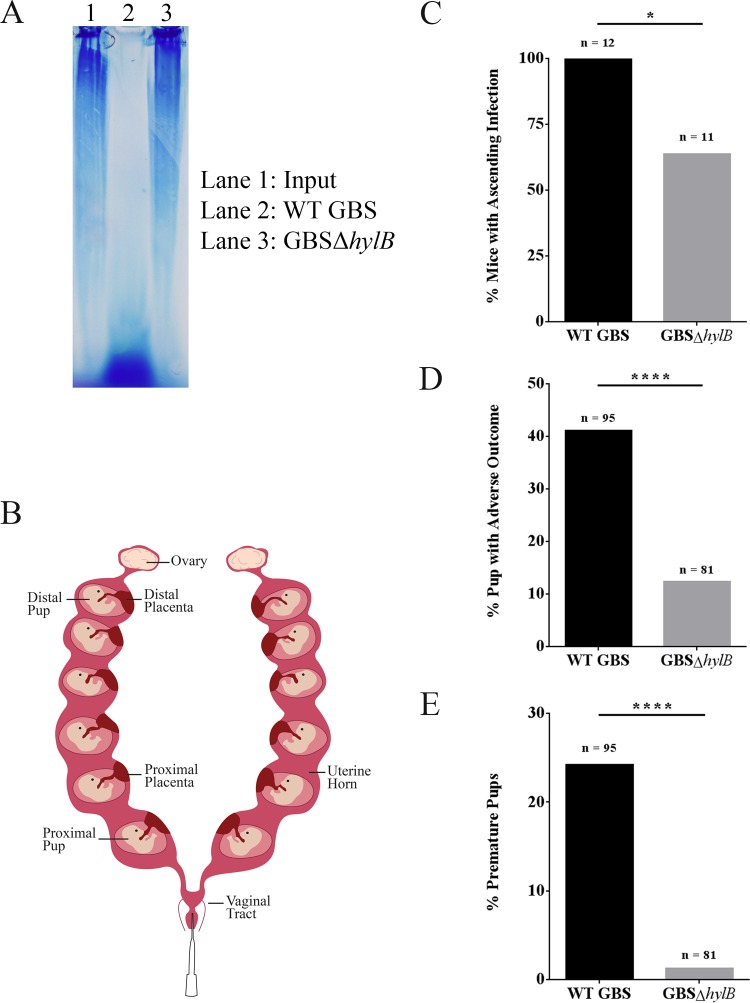
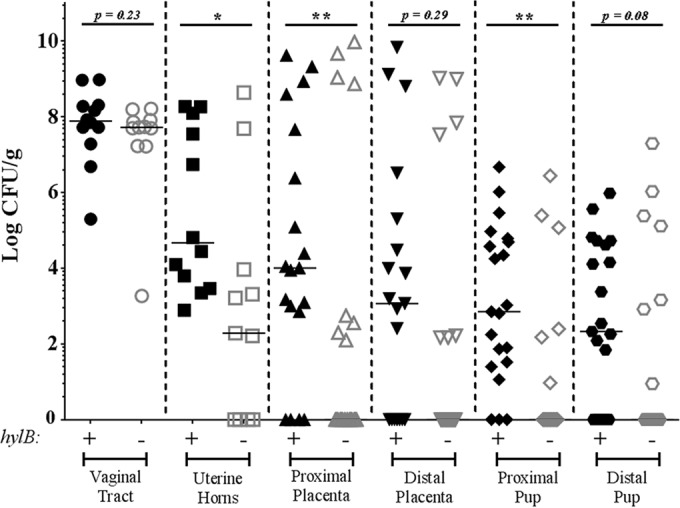
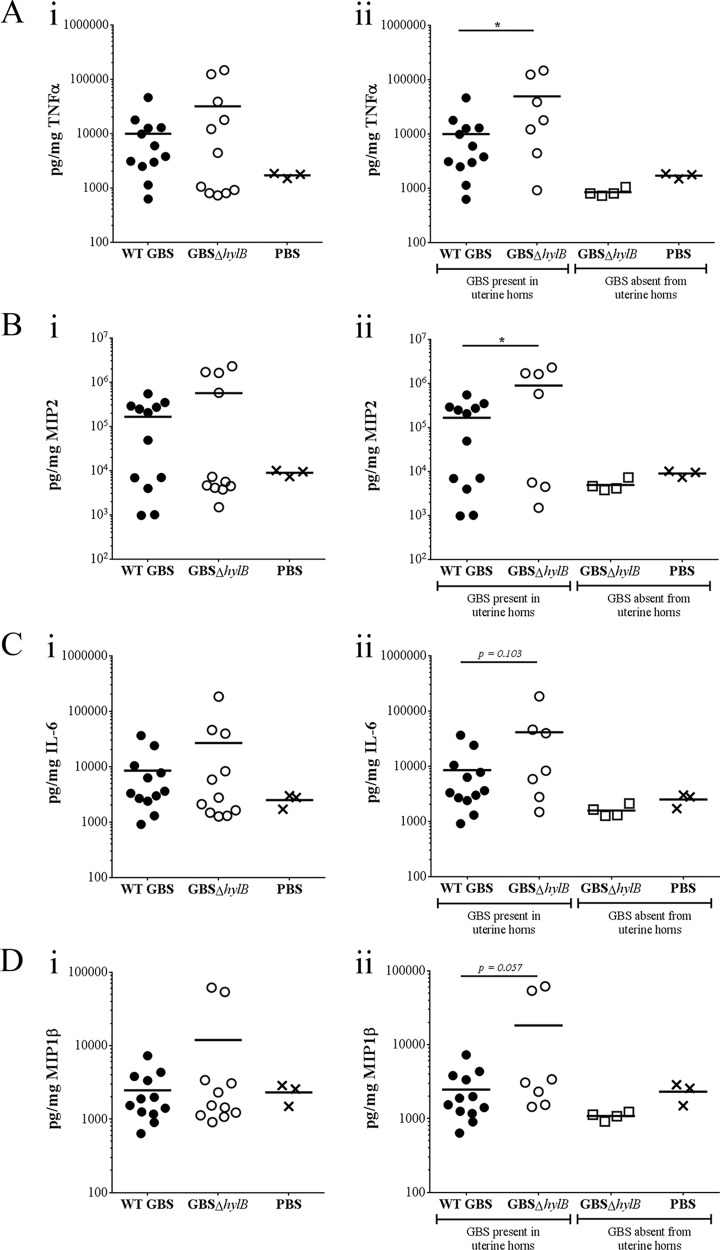
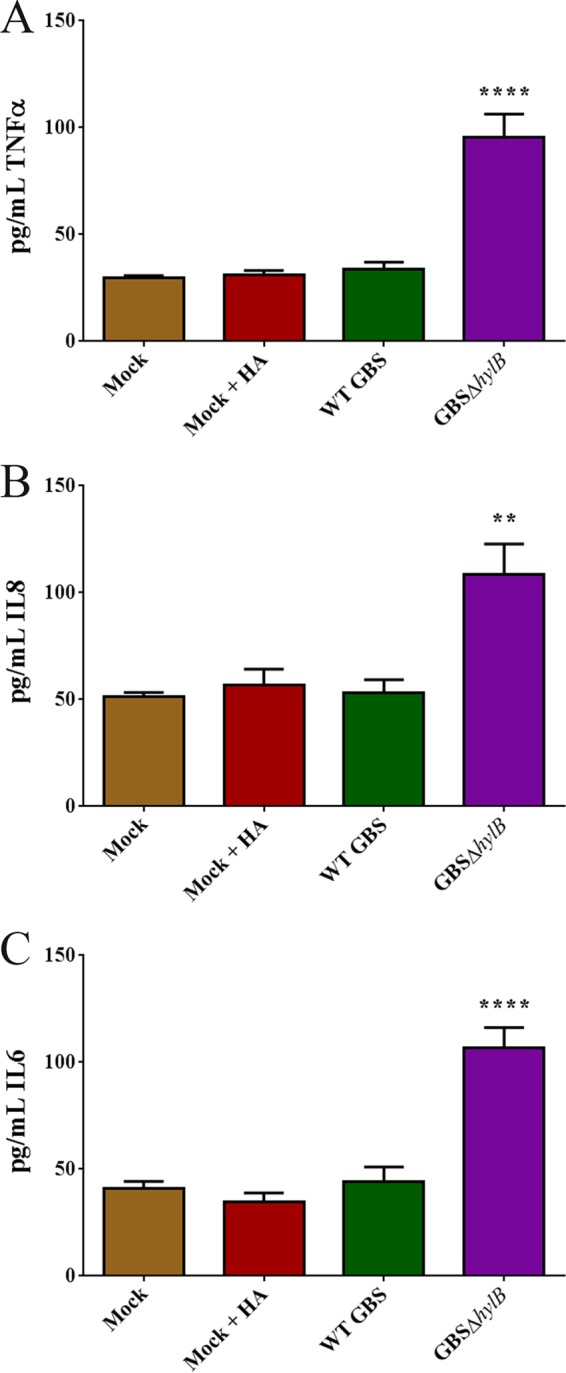
Preterm birth increases the risk of adverse birth outcomes and is the leading cause of neonatal mortality. A significant cause of preterm birth is in utero infection with vaginal microorganisms. These vaginal microorganisms are often recovered from the amniotic fluid of preterm birth cases. A vaginal microorganism frequently associated with preterm birth is group B streptococcus (GBS), or Streptococcus agalactiae However, the molecular mechanisms underlying GBS ascension are poorly understood. Here, we describe the role of the GBS hyaluronidase in ascending infection and preterm birth. We show that clinical GBS strains associated with preterm labor or neonatal infections have increased hyaluronidase activity compared to commensal strains obtained from rectovaginal swabs of healthy women. Using a murine model of ascending infection, we show that hyaluronidase activity was associated with increased ascending GBS infection, preterm birth, and fetal demise. Interestingly, hyaluronidase activity reduced uterine inflammation but did not impact placental or fetal inflammation. Our study shows that hyaluronidase activity enables GBS to subvert uterine immune responses, leading to increased rates of ascending infection and preterm birth. These findings have important implications for the development of therapies to prevent in utero infection and preterm birth.
GBS are a family of bacteria that frequently colonize the vagina of pregnant women. In some cases, GBS ascend from the vagina into the uterine space, leading to fetal injury and preterm birth. Unfortunately, little is known about the mechanisms underlying ascending GBS infection. In this study, we show that a GBS virulence factor, HylB, shows higher activity in strains isolated from cases of preterm birth than those isolates from rectovaginal swabs of healthy women. We discovered that GBS rely on HylB to avoid immune detection in uterine tissue, but not placental tissue, which leads to increased rates of fetal injury and preterm birth. These studies provide novel insight into the underlying mechanisms of ascending infection.
早产会增加不良分娩结局的风险,是新生儿死亡的主要原因。早产的一个重要原因是子宫内受到阴道微生物感染。这些阴道微生物常从早产病例的羊水样本中检出。一种经常与早产相关的阴道微生物是B族链球菌(GBS),即无乳链球菌。然而,GBS上行感染的分子机制尚不清楚。在此,我们描述了GBS透明质酸酶在上行感染和早产中的作用。我们发现,与从健康女性直肠阴道拭子中获得的共生菌株相比,与早产或新生儿感染相关的临床GBS菌株的透明质酸酶活性更高。利用上行感染的小鼠模型,我们发现透明质酸酶活性与GBS上行感染增加、早产和胎儿死亡有关。有趣的是,透明质酸酶活性可减轻子宫炎症,但不影响胎盘或胎儿炎症。我们的研究表明,透明质酸酶活性使GBS能够颠覆子宫免疫反应,导致上行感染率和早产率增加。这些发现对预防子宫内感染和早产的治疗方法的开发具有重要意义。
GBS是一类经常定植于孕妇阴道的细菌。在某些情况下,GBS会从阴道上行至子宫腔,导致胎儿损伤和早产。不幸的是,关于GBS上行感染的潜在机制知之甚少。在本研究中,我们发现GBS的一种毒力因子HylB在从早产病例中分离出的菌株中比从健康女性直肠阴道拭子中分离出的菌株具有更高的活性。我们发现GBS依靠HylB在子宫组织而非胎盘组织中逃避免疫检测,这导致胎儿损伤和早产率增加。这些研究为上行感染的潜在机制提供了新的见解。