Li Pengcui, Deng Jin, Wei Xiaochun, Jayasuriya Chathuraka T, Zhou Jingming, Chen Qian, Zhang Jianzhong, Wei Lei, Wei Fangyuan
Department of Orthopaedics, The Second Hospital of Shanxi Medical University, Shanxi Key Laboratory of Bone and Soft Tissue Injury Repair, Taiyuan, Shanxi 030001, P.R. China.
Department of Emergency, The Affiliated Hospital of Guizhou Medical University, Guiyang, Guizhou 550004, P.R. China.
Mol Med Rep. 2016 Aug;14(2):1475-82. doi: 10.3892/mmr.2016.5419. Epub 2016 Jun 21.
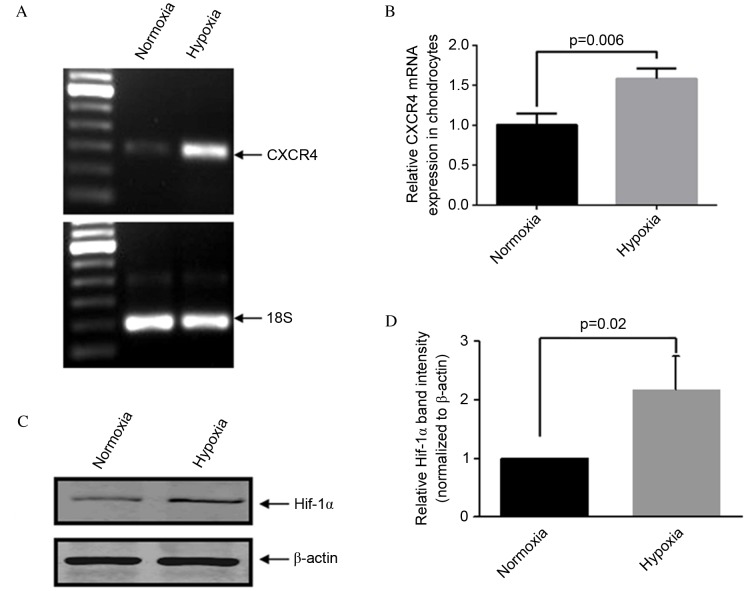
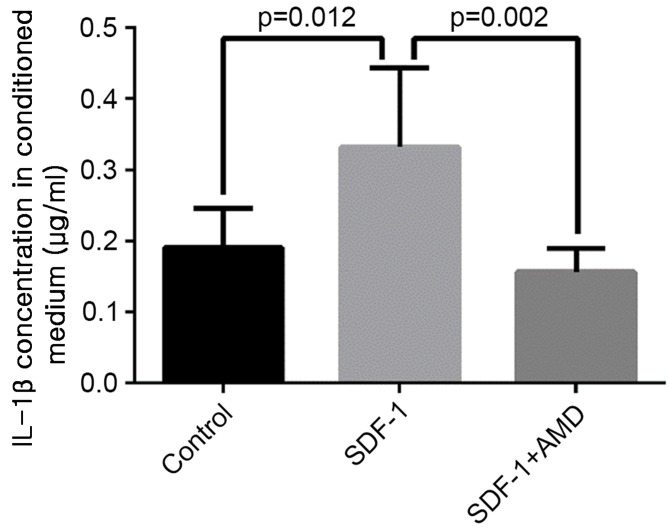
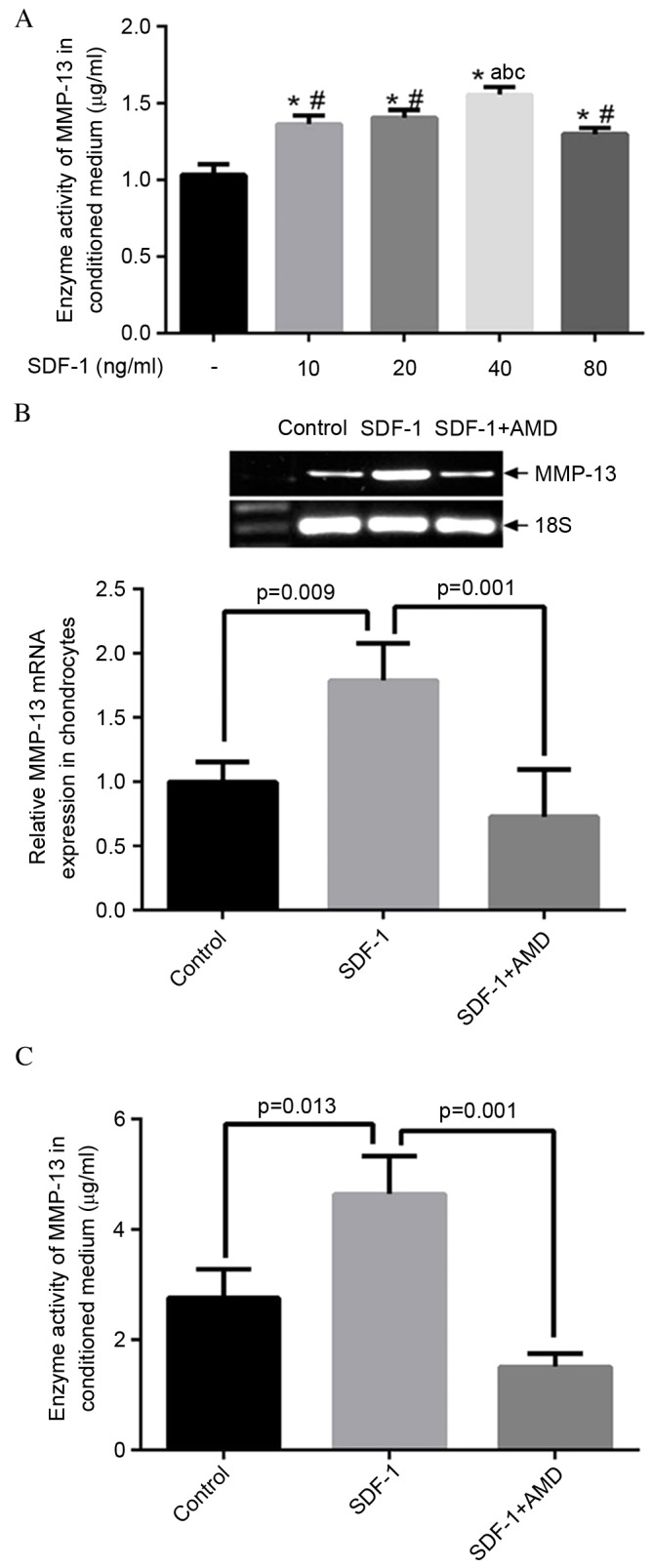
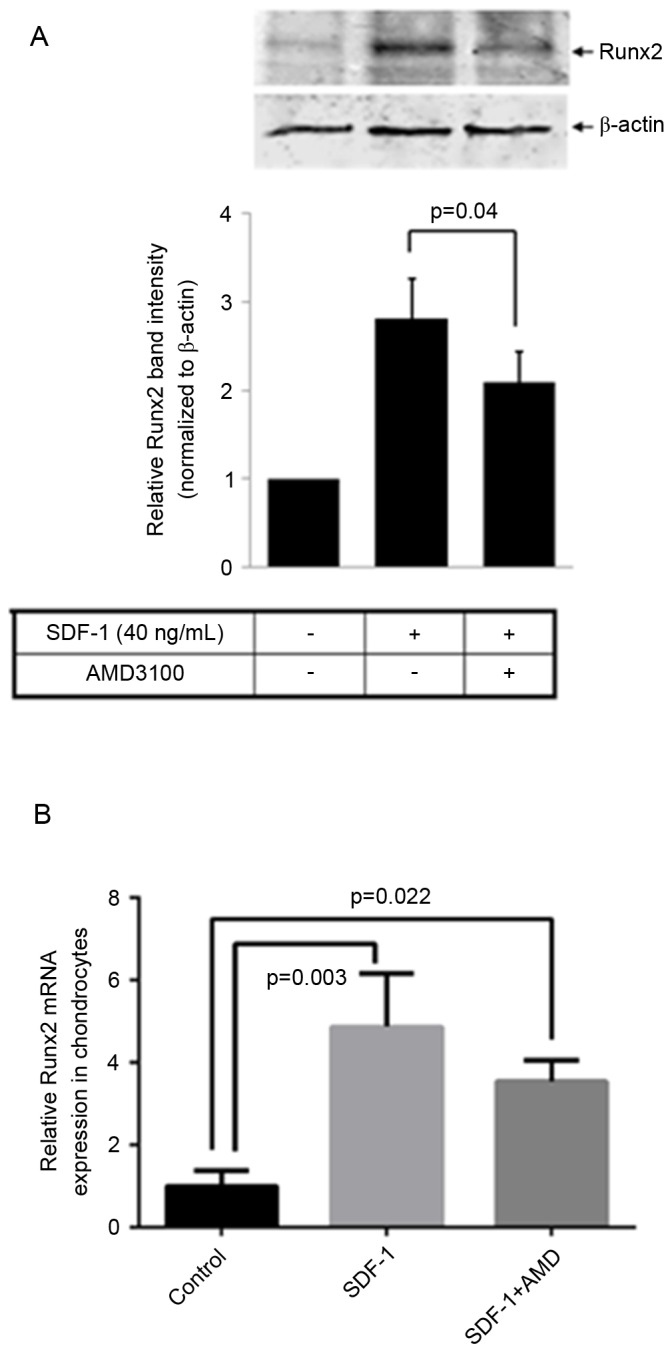
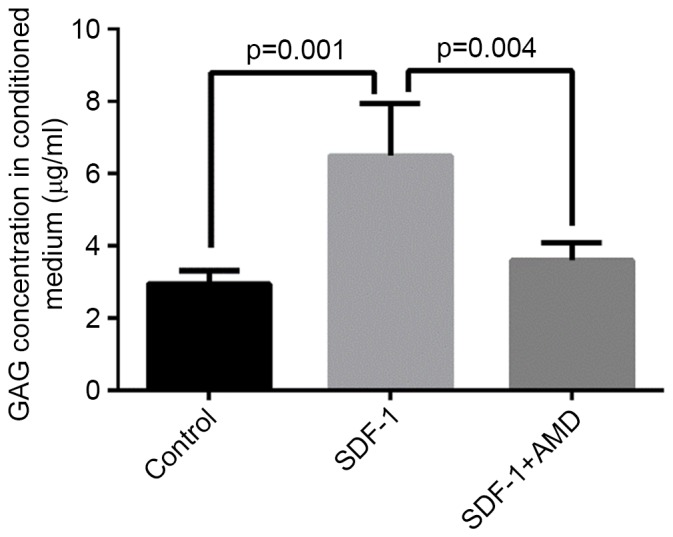
Binding of the chemokine stromal cell-derived factor-1 (SDF-1) to its receptor C-X-C chemokine receptor type 4 (CXCR4) results in receptor activation and the subsequent release of matrix metalloproteinases (MMPs) that contribute to osteoarthritis (OA) cartilage degradation. As hypoxia is a defining feature of the chondrocyte microenvironment, the present study investigated the possible mechanism through which SDF‑1 induces cartilage degradation under hypoxic conditions. To do this, OA chondrocyte cultures and patient tissue explants pretreated with the CXCR4 inhibitor, AMD3100 were incubated with SDF‑1. It was identified that hypoxic conditions significantly elevated the expression of CXCR4 in osteoarthritic chondrocytes relative to normoxic conditions. Furthermore, SDF‑1 elevated MMP‑13 mRNA levels and proteinase activity. It also elevated the mRNA and protein levels of runt‑related transcription factor 2, and induced the release of glycosaminoglycans and the inflammatory cytokine, interleukin‑1β. By contrast, such changes did not occur to an appreciable degree in cells that were pretreated with AMD3100. The results of the present study demonstrate that even under hypoxic conditions, where CXCR4 expression is significantly elevated in chondrocytes, AMD3100 effectively blocks this receptor and protects chondrocytes from OA‑induced catabolism, suggesting that the successful inhibition of CXCR4 may be an effective approach for OA treatment.
趋化因子基质细胞衍生因子-1(SDF-1)与其受体C-X-C趋化因子受体4型(CXCR4)结合会导致受体激活,随后释放基质金属蛋白酶(MMPs),这些酶会导致骨关节炎(OA)软骨降解。由于缺氧是软骨细胞微环境的一个决定性特征,本研究调查了SDF-1在缺氧条件下诱导软骨降解的可能机制。为此,用CXCR4抑制剂AMD3100预处理的OA软骨细胞培养物和患者组织外植体与SDF-1一起孵育。研究发现,与常氧条件相比,缺氧条件显著提高了骨关节炎软骨细胞中CXCR4的表达。此外,SDF-1提高了MMP-13的mRNA水平和蛋白酶活性。它还提高了与 runt 相关转录因子2的mRNA和蛋白质水平,并诱导了糖胺聚糖和炎性细胞因子白细胞介素-1β的释放。相比之下,在用AMD3100预处理的细胞中,这些变化没有明显发生。本研究结果表明,即使在软骨细胞中CXCR4表达显著升高的缺氧条件下,AMD3100也能有效阻断该受体,并保护软骨细胞免受OA诱导的分解代谢,这表明成功抑制CXCR4可能是一种有效的OA治疗方法。