Alrabeah Ghada O, Knowles Jonathan C, Petridis Haralampos
Division of Biomaterials and Tissue Engineering, UCL Eastman Dental Institute, University College London, London, UK.
Prosthodontic Unit, Department of Restorative Dentistry, UCL Eastman Dental Institute, University College London, London, UK.
Int J Oral Sci. 2016 Jun 30;8(2):117-25. doi: 10.1038/ijos.2016.5.
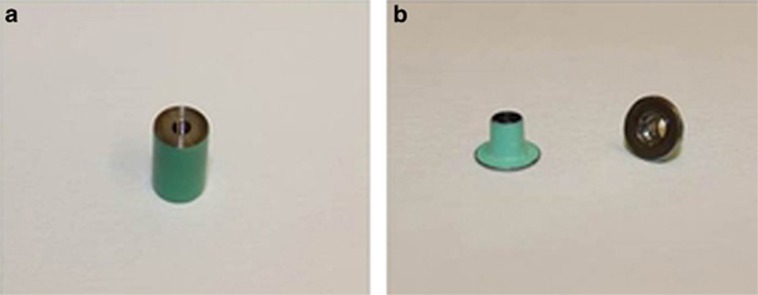
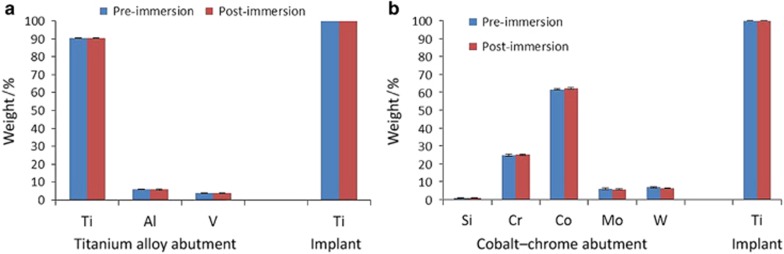
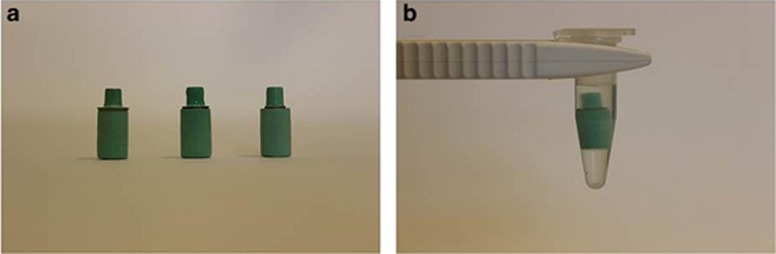
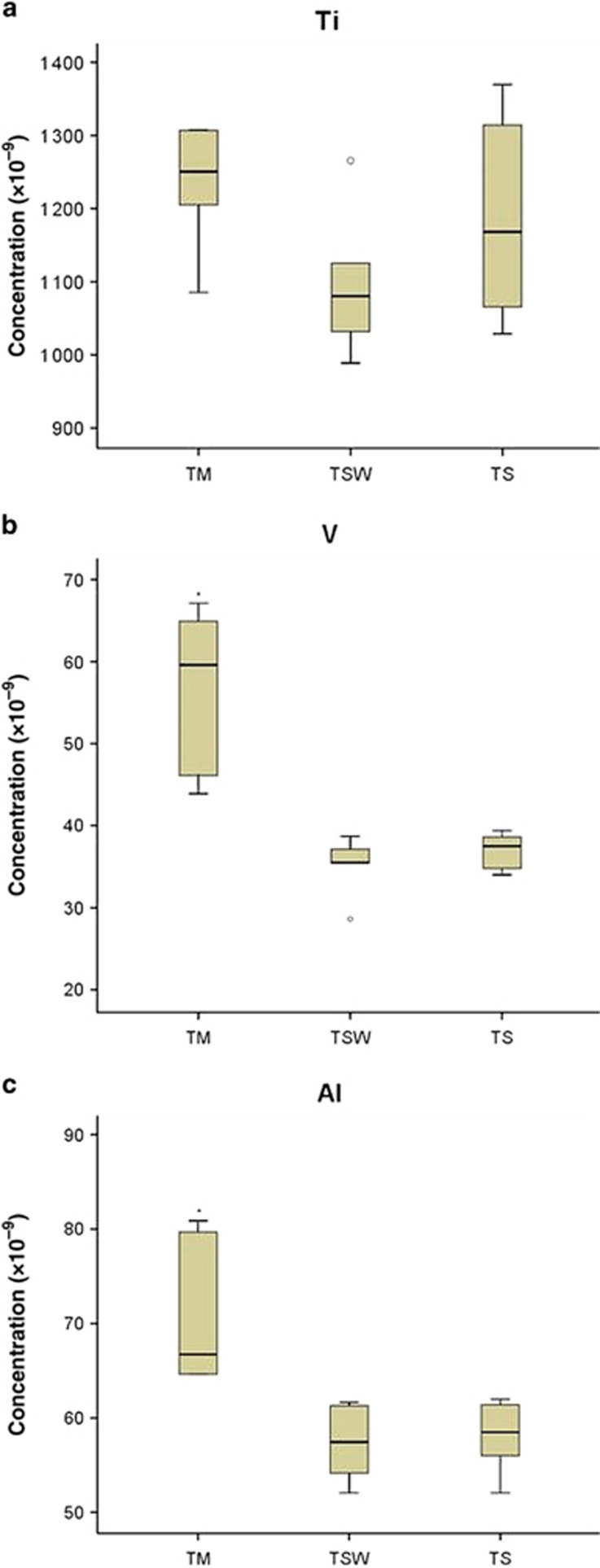
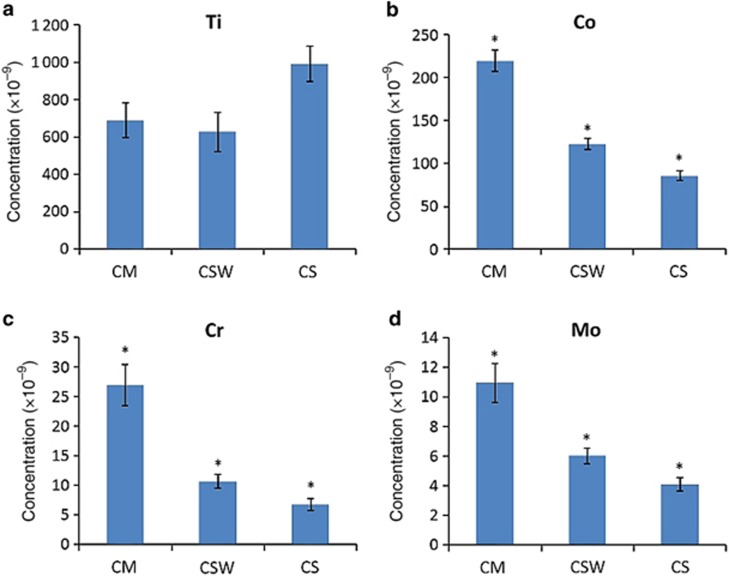
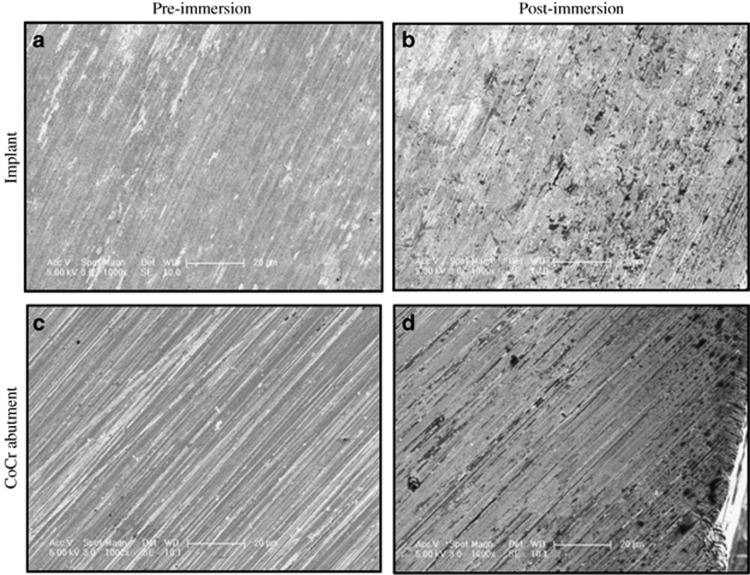
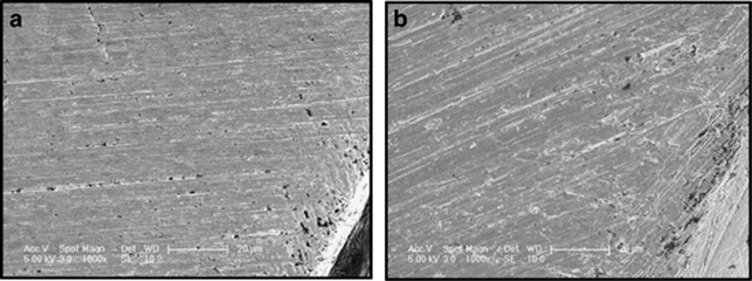
The improved peri-implant bone response demonstrated by platform switching may be the result of reduced amounts of metal ions released to the surrounding tissues. The aim of this study was to compare the levels of metal ions released from platform-matched and platform-switched implant-abutment couples as a result of accelerated corrosion. Thirty-six titanium alloy (Ti-6Al-4V) and cobalt-chrome alloy abutments were coupled with titanium cylinders forming either platform-switched or platform-matched groups (n=6). In addition, 18 unconnected samples served as controls. The specimens were subjected to accelerated corrosion by static immersion in 1% lactic acid for 1 week. The amount of metal ions ion of each test tube was measured using inductively coupled plasma mass spectrometry. Scanning electron microscope (SEM) images and energy dispersive spectroscopy X-ray analyses were performed pre- and post-immersion to assess corrosion at the interface. The platform-matched groups demonstrated higher ion release for vanadium, aluminium, cobalt, chrome, and molybdenum compared with the platform-switched groups (P<0.05). Titanium was the highest element to be released regardless of abutment size or connection (P<0.05). SEM images showed pitting corrosion prominent on the outer borders of the implant and abutment platform surfaces. In conclusion, implant-abutment couples underwent an active corrosion process resulting in metal ions release into the surrounding environment. The highest amount of metal ions released was recorded for the platform-matched groups, suggesting that platform-switching concept has a positive effect in reducing the levels of metal ion release from the implant-abutment couples.
平台转换所展示的种植体周围骨反应的改善,可能是由于释放到周围组织中的金属离子量减少所致。本研究的目的是比较因加速腐蚀而从平台匹配和平台转换的种植体-基台组合中释放的金属离子水平。三十六颗钛合金(Ti-6Al-4V)和钴铬合金基台与钛圆柱体相连,形成平台转换组或平台匹配组(n = 6)。此外,18个未连接的样本作为对照。通过将标本静态浸泡在1%的乳酸中1周来进行加速腐蚀。使用电感耦合等离子体质谱法测量每个试管中的金属离子量。在浸泡前后进行扫描电子显微镜(SEM)图像和能量色散光谱X射线分析,以评估界面处的腐蚀情况。与平台转换组相比,平台匹配组在钒、铝、钴、铬和钼的离子释放方面更高(P<0.05)。无论基台尺寸或连接方式如何,钛都是释放量最高的元素(P<0.05)。SEM图像显示,种植体和基台平台表面的外边缘出现明显的点蚀。总之,种植体-基台组合经历了一个活跃的腐蚀过程,导致金属离子释放到周围环境中。平台匹配组记录的金属离子释放量最高,这表明平台转换概念在降低种植体-基台组合的金属离子释放水平方面具有积极作用。