Faulk Christopher, Kim Jung H, Jones Tamara R, McEachin Richard C, Nahar Muna S, Dolinoy Dana C, Sartor Maureen A
Department of Environmental Health Sciences, University of Michigan, Ann Arbor, MI, USA 48109; Department of Animal Science, University of Minnesota, Minneapolis, MN, USA 55108.
Department of Environmental Health Sciences, University of Michigan, Ann Arbor, MI, USA 48109; Department of Computational Medicine and Bioinformatics, Medical School, University of Michigan, Ann Arbor, MI, USA 48109.
Environ Epigenet. 2015 Dec;1(1). doi: 10.1093/eep/dvv006. Epub 2015 Jan 1.
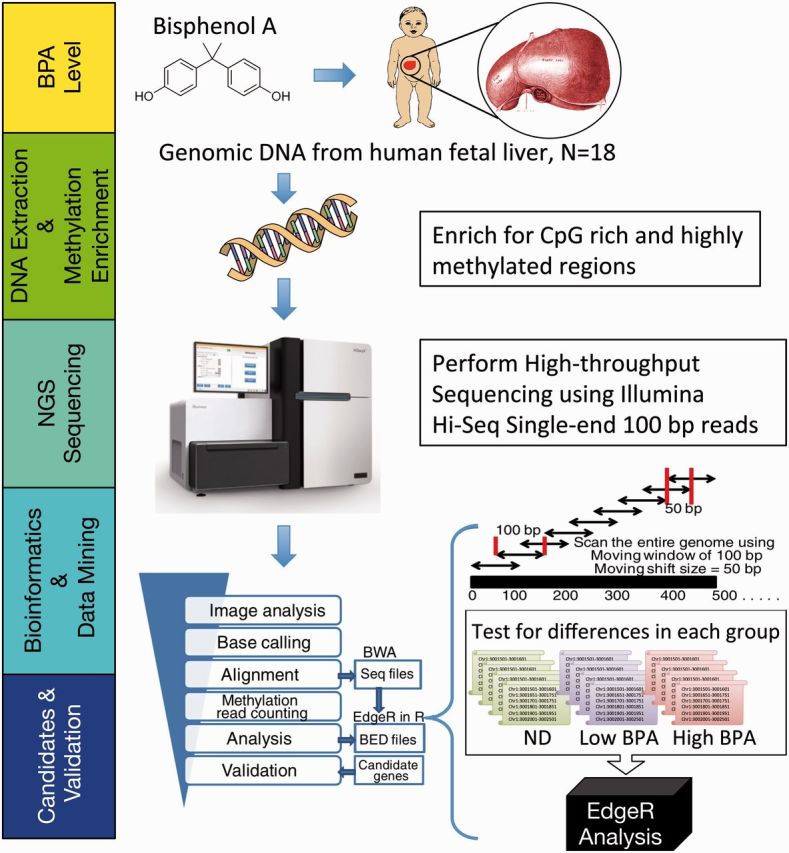
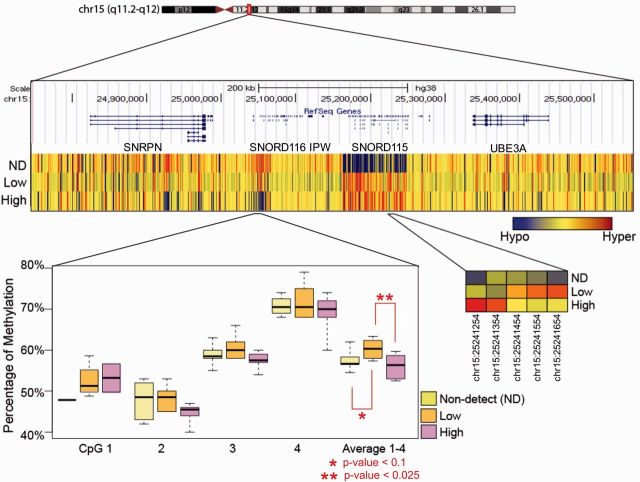
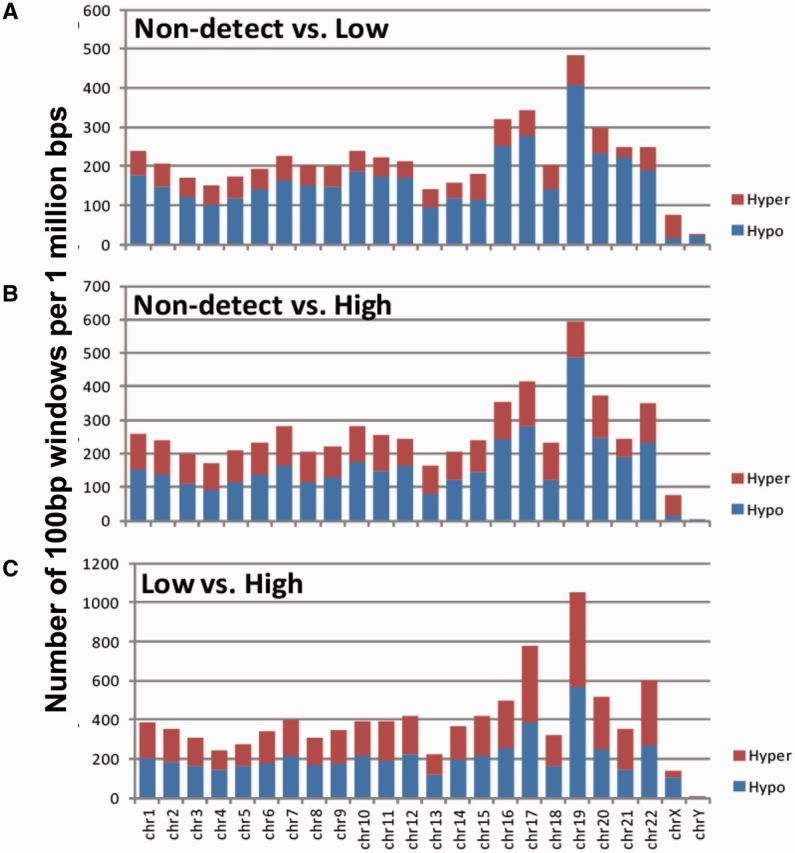
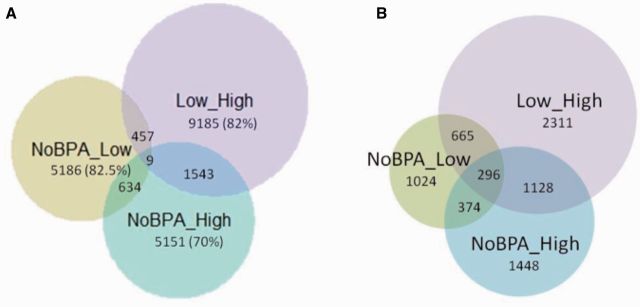
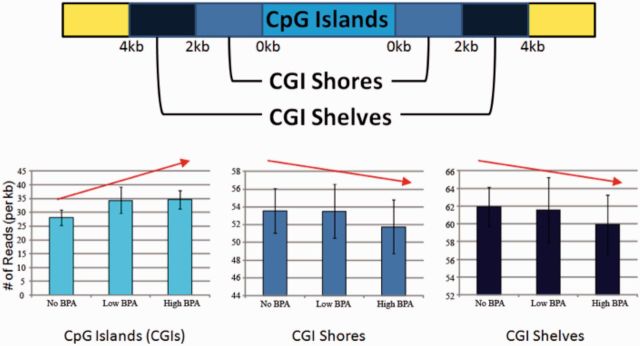
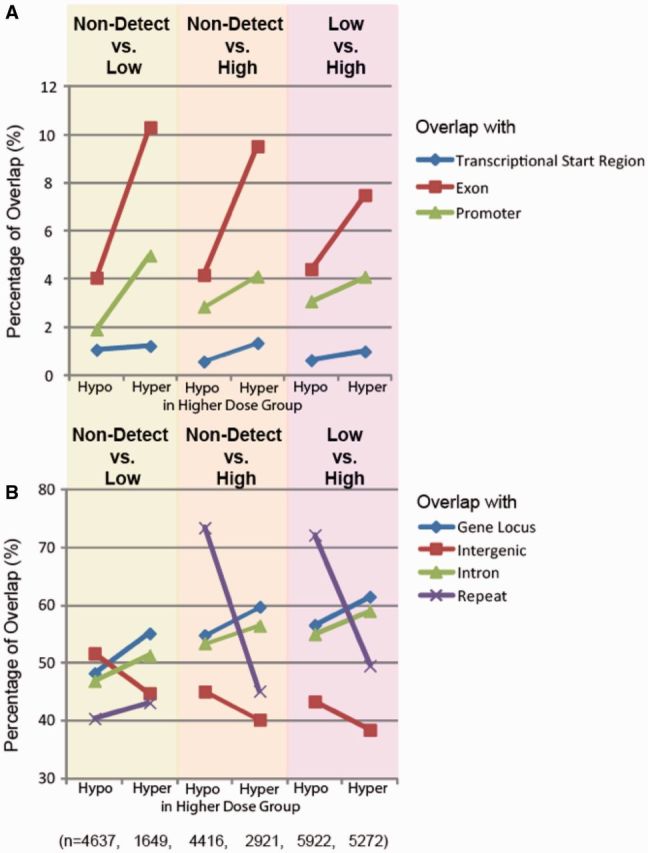
Bisphenol A (BPA), a high production volume chemical widely used in consumer products, is an endocrine active compound associated with complex epigenetic responses in animal models and humans. Developmental BPA exposure in mice previously revealed widespread changes in the mouse liver methylome. Here, we undertake the first epigenome-wide analysis of the effect of BPA concentration on human fetal liver DNA methylation. Enzymatic enrichment of genomic DNA for high CG density and methylation followed by next-generation sequencing yielded data for positional methylation across the genome. Comparing three groups of BPA-exposed subjects (=18; 6 per group), high (35.44-96.76 ng/g), low (3.50 to 5.79 ng/g), and non-detect (<0.83 ng/g), revealed regions of altered methylation. Similar numbers of regions of altered methylations were detected in pairwise comparisons; however, their genomic locations were distinct between the non-detect and low or high BPA groups. In general, BPA levels were positively associated with methylation in CpG islands and negatively associated with methylation in CpG shores, shelves, and repetitive regions. DNA methylation at the SNORD imprinted cluster (15q11q13) illustrated both linear and non-monotonic associations with BPA levels. Integrated methylation and RNA-sequencing gene expression analysis revealed differential regulation of transcription at low BPA levels, as well as expression changes in RNA for ligand-binding proteins as BPA levels increase. BPA levels in human fetal liver tissue are associated with complex linear and non-monotonic as well as sequence-dependent alterations in DNA methylation. Future longitudinal studies are needed to link these changes with altered health risks.
双酚A(BPA)是一种产量高且广泛应用于消费品的化学品,是一种内分泌活性化合物,与动物模型和人类的复杂表观遗传反应有关。先前对小鼠发育过程中双酚A暴露的研究揭示了小鼠肝脏甲基化组的广泛变化。在此,我们首次对双酚A浓度对人类胎儿肝脏DNA甲基化的影响进行全表观基因组分析。通过酶促富集高CG密度和甲基化的基因组DNA,然后进行下一代测序,获得了全基因组位置甲基化的数据。比较三组双酚A暴露受试者(每组 = 18人;每组6人),高暴露组(35.44 - 96.76 ng/g)、低暴露组(3.50至5.79 ng/g)和未检测到组(<0.83 ng/g),发现了甲基化改变的区域。在两两比较中检测到的甲基化改变区域数量相似;然而,它们在基因组中的位置在未检测到组与低或高双酚A组之间是不同的。总体而言,双酚A水平与CpG岛中的甲基化呈正相关,与CpG岸、陆架和重复区域中的甲基化呈负相关。SNORD印记簇(15q11q13)处的DNA甲基化显示出与双酚A水平的线性和非单调关联。综合甲基化和RNA测序基因表达分析揭示了低双酚A水平下转录的差异调节,以及随着双酚A水平升高,配体结合蛋白RNA的表达变化。人类胎儿肝脏组织中的双酚A水平与DNA甲基化的复杂线性和非单调以及序列依赖性改变有关。未来需要进行纵向研究,将这些变化与健康风险改变联系起来。