Shah Khyati H, Varia Sapna N, Cook Laura A, Herman Paul K
Department of Molecular Genetics, The Ohio State University, Columbus, Ohio 43210, United States of America.
PLoS One. 2016 Jun 30;11(6):e0158776. doi: 10.1371/journal.pone.0158776. eCollection 2016.
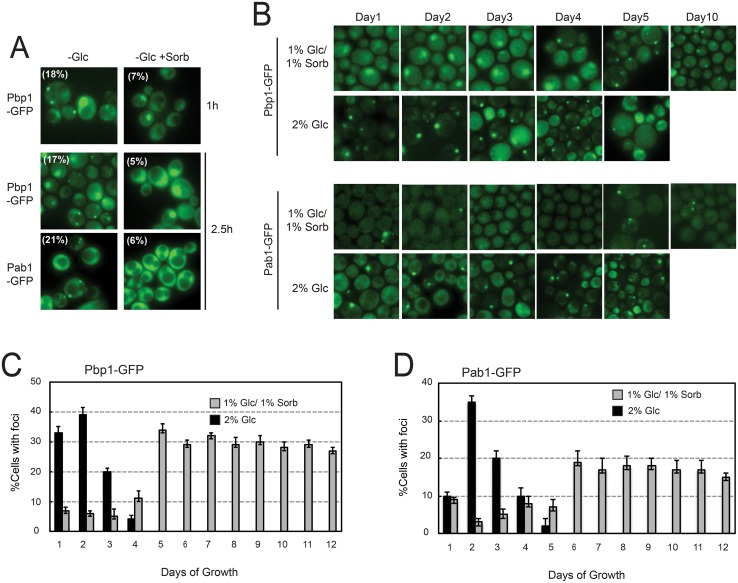
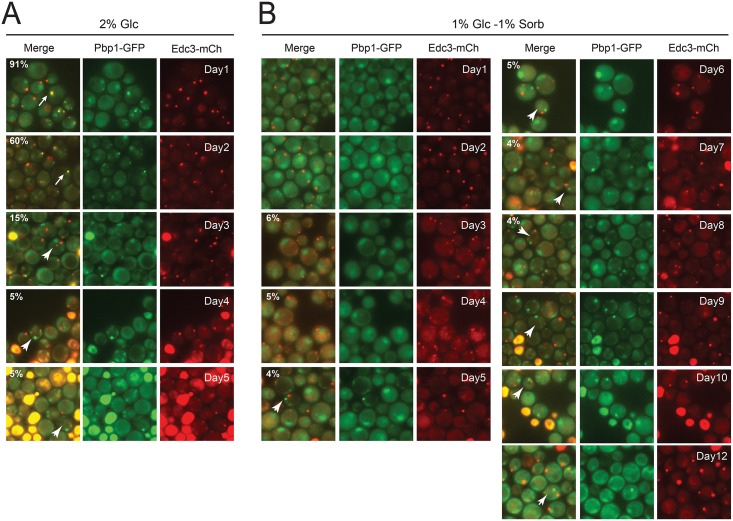
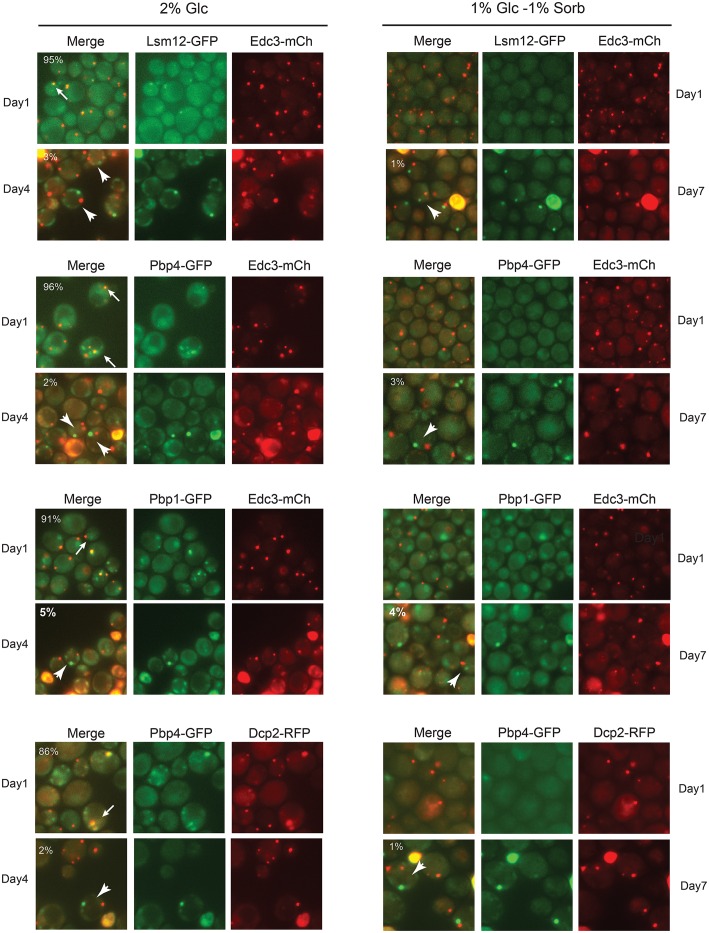
The cytoplasm of the eukaryotic cell is a highly compartmentalized space that contains a variety of ribonucleoprotein (RNP) granules in addition to its complement of membrane-bound organelles. These RNP granules contain specific sets of proteins and mRNAs and form in response to particular environmental and developmental stimuli. Two of the better-characterized of these RNP structures are the stress granule and Processing-body (P-body) that have been conserved from yeast to humans. In this report, we examined the cues regulating stress granule assembly and the relationship between stress granule and P-body foci. These two RNP structures are generally thought to be independent entities in eukaryotic cells. However, we found here that stress granule and P-body proteins were localized to a common or merged granule specifically in response to a hypoosmotic stress. Interestingly, these hybrid-bodies were found to be transient structures that were resolved with time into separate P-body and stress granule foci. In all, these data suggest that the identity of an RNP granule is not absolute and that it can vary depending upon the nature of the induction conditions. Since the activities of a granule are likely influenced by its protein constituency, these observations are consistent with the possibility of RNP granules having distinct functions in different cellular contexts.
真核细胞的细胞质是一个高度区室化的空间,除了有膜结合细胞器外,还含有多种核糖核蛋白(RNP)颗粒。这些RNP颗粒含有特定的蛋白质和mRNA组合,并在特定的环境和发育刺激下形成。这些RNP结构中两个特征较明显的是应激颗粒和加工小体(P小体),它们从酵母到人类都保守存在。在本报告中,我们研究了调节应激颗粒组装的线索以及应激颗粒与P小体焦点之间的关系。这两种RNP结构通常被认为是真核细胞中的独立实体。然而,我们在此发现,应激颗粒和P小体蛋白会特异性地定位到一个共同的或合并的颗粒中,以响应低渗应激。有趣的是,这些杂交体被发现是短暂的结构,会随着时间分解为单独的P小体和应激颗粒焦点。总之,这些数据表明RNP颗粒的身份不是绝对的,它可能会根据诱导条件的性质而变化。由于颗粒的活性可能受其蛋白质组成的影响,这些观察结果与RNP颗粒在不同细胞环境中具有不同功能的可能性一致。