Sankar T Sabari, Wastuwidyaningtyas Brigitta D, Dong Yuexin, Lewis Sarah A, Wang Jue D
Nature. 2016 Jul 7;535(7610):178-81. doi: 10.1038/nature18316. Epub 2016 Jun 29.
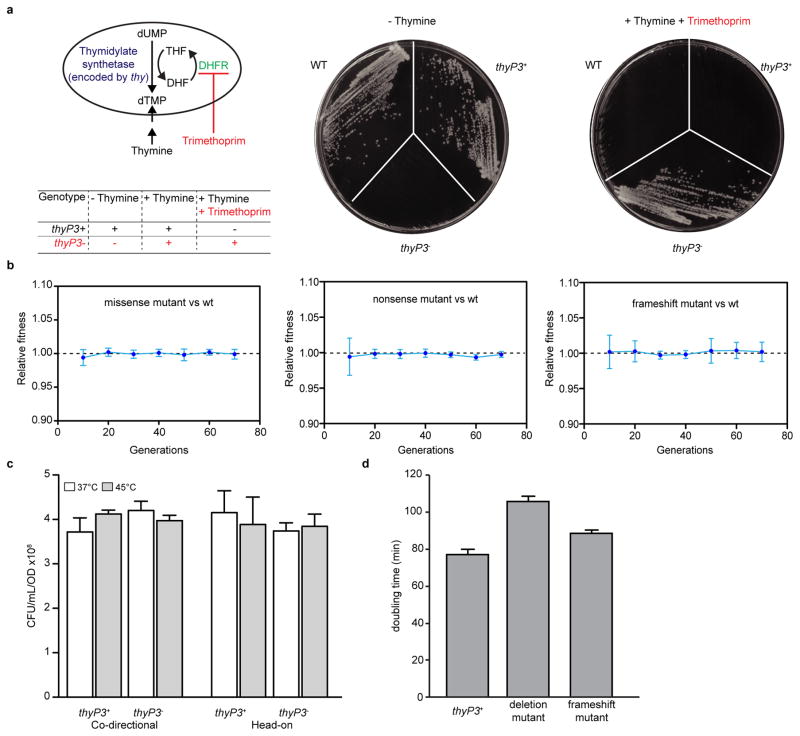
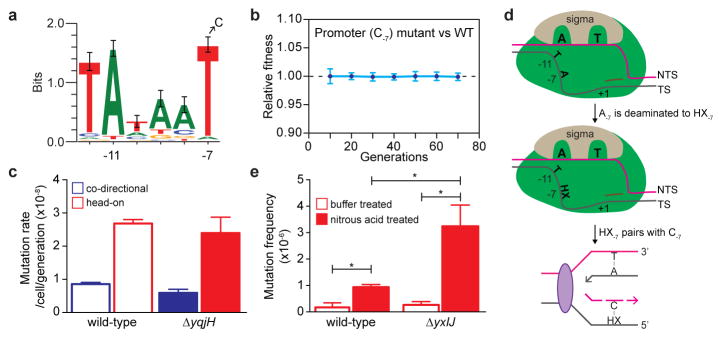
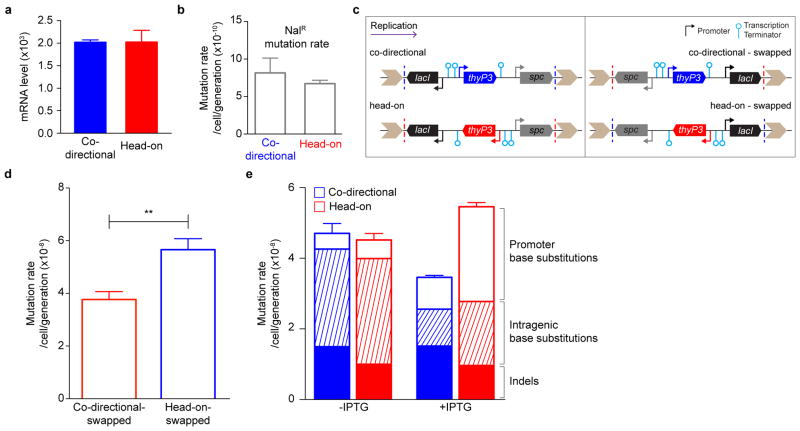
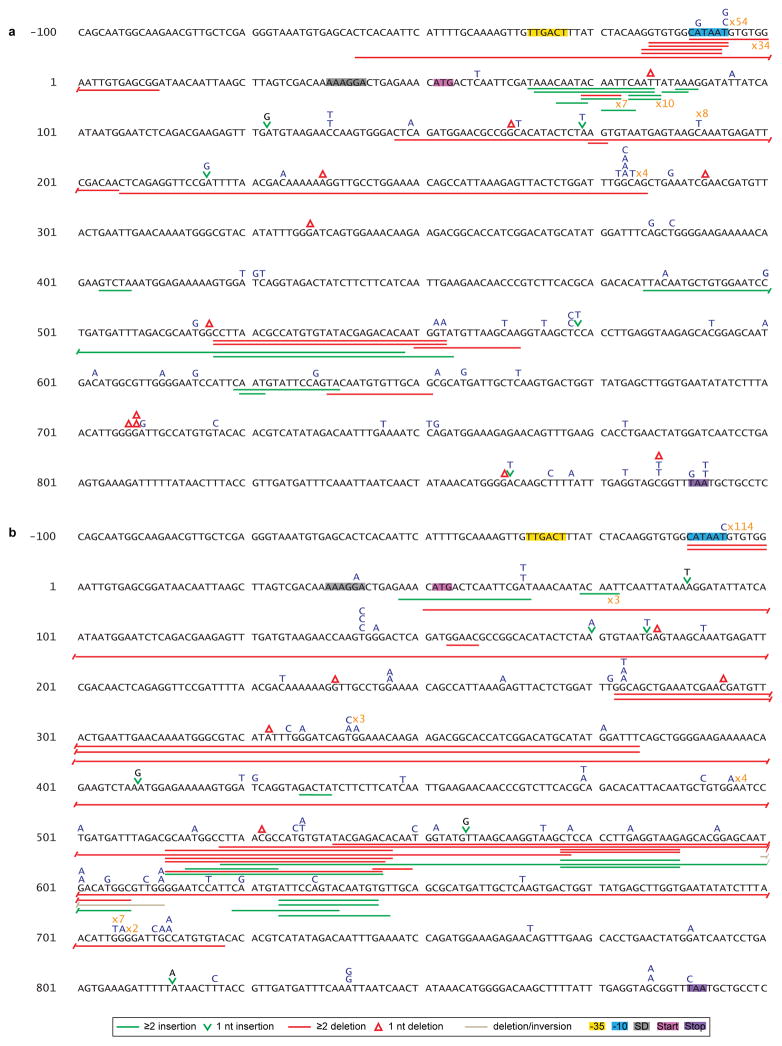
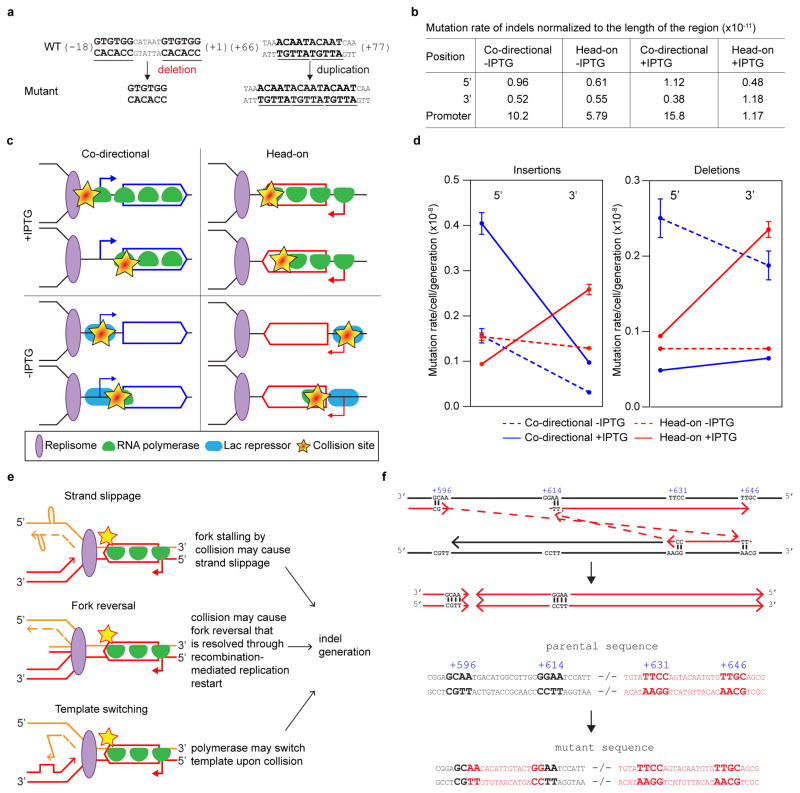
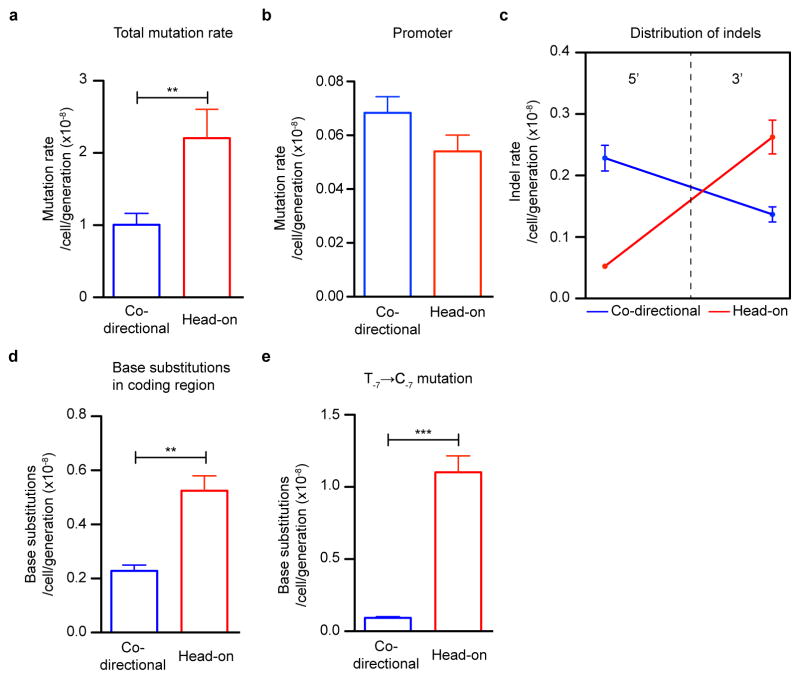
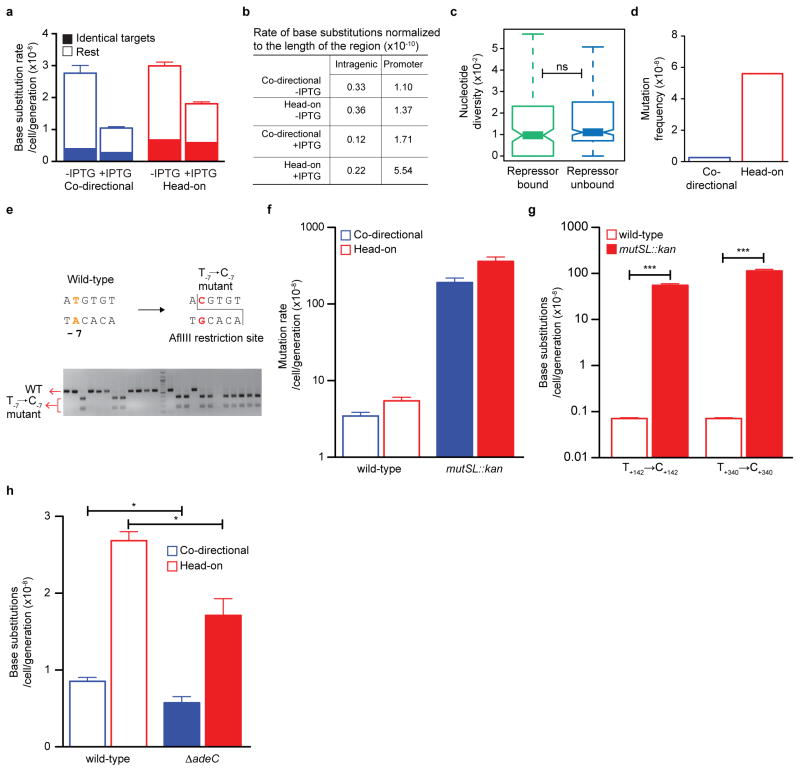
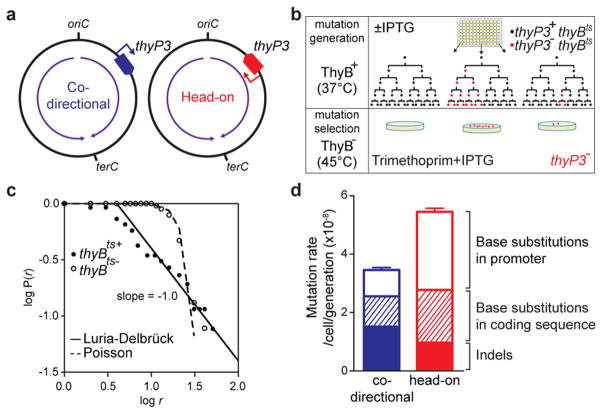
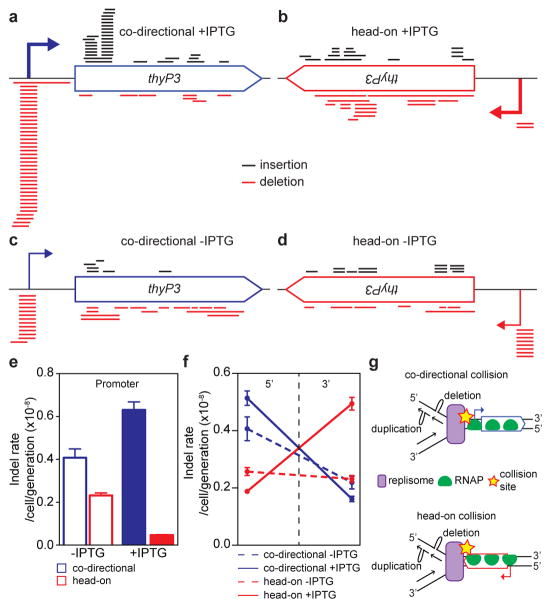
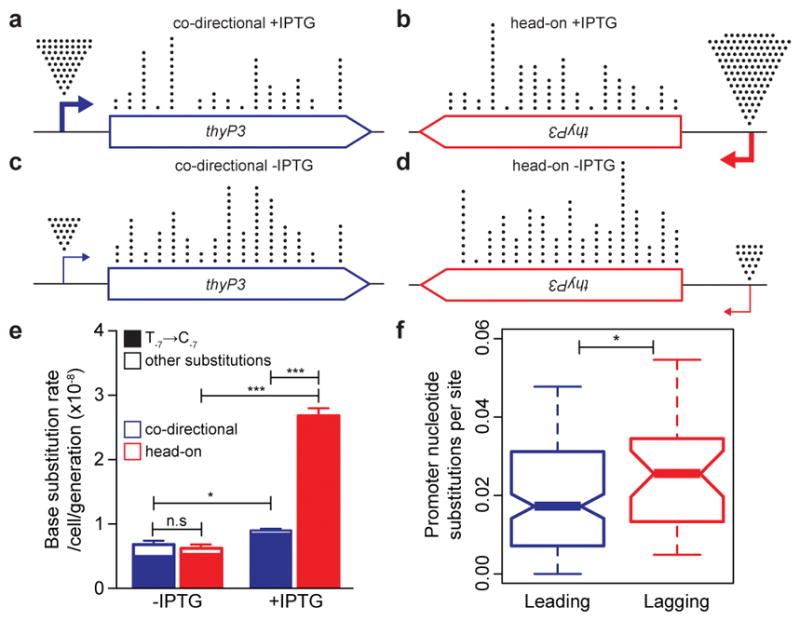
The DNA replication and transcription machineries share a common DNA template and thus can collide with each other co-directionally or head-on. Replication–transcription collisions can cause replication fork arrest, premature transcription termination, DNA breaks, and recombination intermediates threatening genome integrity. Collisions may also trigger mutations, which are major contributors to genetic disease and evolution. However, the nature and mechanisms of collision-induced mutagenesis remain poorly understood. Here we reveal the genetic consequences of replication–transcription collisions in actively dividing bacteria to be two classes of mutations: duplications/deletions and base substitutions in promoters. Both signatures are highly deleterious but are distinct from the previously well-characterized base substitutions in the coding sequence. Duplications/deletions are probably caused by replication stalling events that are triggered by collisions; their distribution patterns are consistent with where the fork first encounters a transcription complex upon entering a transcription unit. Promoter substitutions result mostly from head-on collisions and frequently occur at a nucleotide that is conserved in promoters recognized by the major σ factor in bacteria. This substitution is generated via adenine deamination on the template strand in the promoter open complex, as a consequence of head-on replication perturbing transcription initiation. We conclude that replication–transcription collisions induce distinct mutation signatures by antagonizing replication and transcription, not only in coding sequences but also in gene regulatory elements.
DNA复制和转录机制共享一个共同的DNA模板,因此可能会同向或迎面相互碰撞。复制-转录碰撞可导致复制叉停滞、转录提前终止、DNA断裂以及威胁基因组完整性的重组中间体。碰撞还可能引发突变,而突变是导致遗传疾病和进化的主要因素。然而,碰撞诱导诱变的本质和机制仍知之甚少。在这里,我们揭示了在活跃分裂的细菌中复制-转录碰撞的遗传后果是两类突变:启动子中的重复/缺失和碱基替换。这两种特征都具有高度有害性,但与编码序列中先前已充分表征的碱基替换不同。重复/缺失可能是由碰撞引发的复制停滞事件导致的;它们的分布模式与复制叉进入转录单元时首次遇到转录复合物的位置一致。启动子替换主要由迎面碰撞引起,并且经常发生在细菌中主要σ因子识别的启动子中保守的核苷酸处。这种替换是通过启动子开放复合物中模板链上的腺嘌呤脱氨产生的,这是迎面复制干扰转录起始的结果。我们得出结论,复制-转录碰撞通过拮抗复制和转录诱导不同的突变特征,不仅在编码序列中,而且在基因调控元件中也是如此。