Heidari Maryam, Sattarahmady Naghmeh, Javadpour Sirus, Azarpira Negar, Heli Hossein, Mehdizadeh Alireza, Rajaei Amirhossein, Zare Tahereh
Department of Medical Physics, School of Medicine, Shiraz University of Medical Sciences, Shiraz, Iran; Student Research Committee, Shiraz University of Medical Sciences, Shiraz, Iran.
Department of Medical Physics, School of Medicine, Shiraz University of Medical Sciences, Shiraz, Iran; Nanomedicine and Nanobiology Research Center, School of Medicine, Shiraz University of Medical Sciences, Shiraz, Iran.
Iran J Med Sci. 2016 Jul;41(4):314-21.
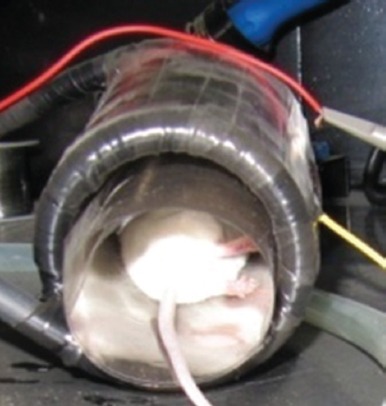
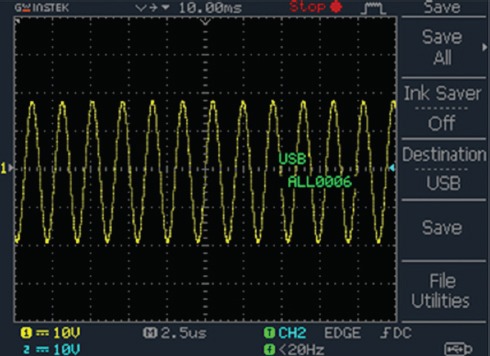
Nowadays, magnetic nanoparticles (MNPs) have received much attention because of their enormous potentials in many fields such as magnetic fluid hyperthermia (MFH). The goal of hyperthermia is to increase the temperature of malignant cells to destroy them without any lethal effect on normal tissues. To investigate the effectiveness of cancer therapy by magnetic fluid hyperthermia, Fe0.5Zn0.5Fe2O4 nanoparticles (FNPs) were used to undergo external magnetic field (f=515 kHz, H=100 G) in mice bearing implanted tumor.
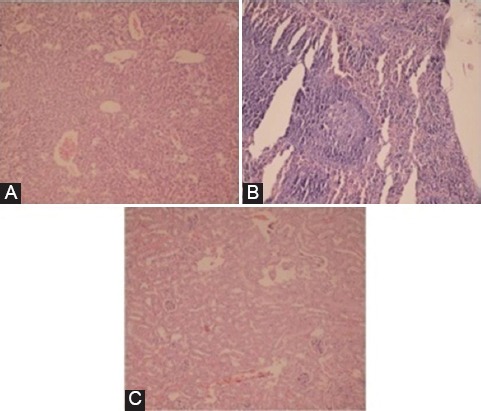
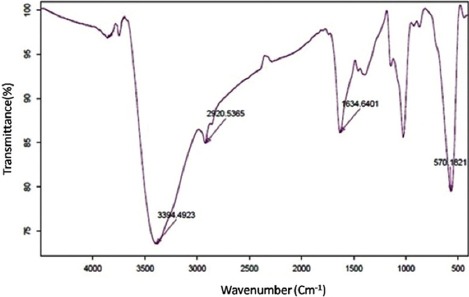
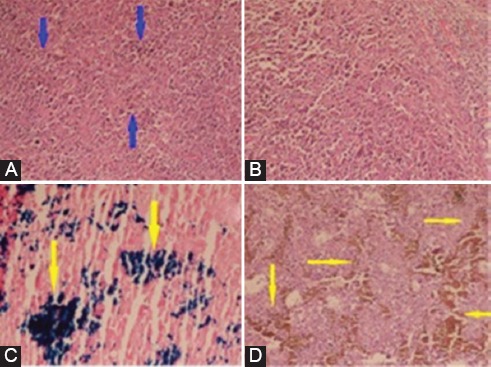
FNPs were synthesized via precipitation and characterized using transmission electron microscopy (TEM), vibrating sample magnetometer, and Fourier transform infrared. For in vivo study, the mice bearing implanted tumor were divided into four groups (two mice per group), namely, control group, AMF group, MNPs group, and MNPs&AMF group. After 24 hours, the mice were sacrificed and each tumor specimen was prepared for histological analyses. The necrotic surface area was estimated by using graticule (Olympus, Japan) on tumor slides.
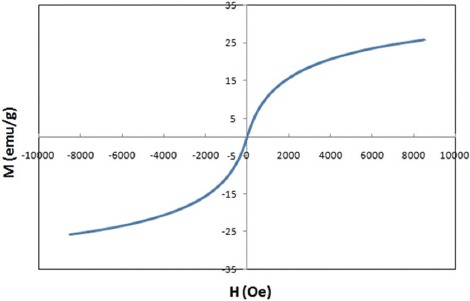
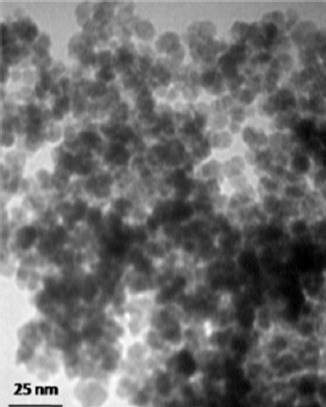
The mean diameter of FNPs was estimated around 9 nm by TEM image and M versus H curve indicates that this particle is among superparamagnetic materials. According to histological analyses, no significant difference in necrosis extent was observed among the four groups.
FNPs are biocompatible and have a good size for biomedical applications. However, for MFH approach, larger diameters especially in the range of ferromagnetic particles due to hysteresis loss can induce efficient heat in the target region.
如今,磁性纳米颗粒(MNPs)因其在磁流体热疗(MFH)等众多领域的巨大潜力而备受关注。热疗的目标是提高恶性细胞的温度以将其破坏,同时对正常组织无任何致死作用。为了研究磁流体热疗对癌症治疗的有效性,使用Fe0.5Zn0.5Fe2O4纳米颗粒(FNPs)在荷瘤小鼠体内施加外部磁场(频率f = 515 kHz,磁场强度H = 100 G)。
通过沉淀法合成FNPs,并使用透射电子显微镜(TEM)、振动样品磁强计和傅里叶变换红外光谱对其进行表征。对于体内研究,将荷瘤小鼠分为四组(每组两只小鼠),即对照组、交变磁场(AMF)组、MNPs组和MNPs&AMF组。24小时后,处死小鼠并制备每个肿瘤标本用于组织学分析。使用肿瘤切片上的目镜测微尺(日本奥林巴斯)估计坏死表面积。
通过TEM图像估计FNPs的平均直径约为9 nm,M-H曲线表明该颗粒属于超顺磁性材料。根据组织学分析,四组之间在坏死程度上未观察到显著差异。
FNPs具有生物相容性,且尺寸适合生物医学应用。然而,对于磁流体热疗方法,由于磁滞损耗,较大直径尤其是铁磁颗粒范围内的直径可在目标区域诱导产生有效热量。