Lee In-Chul, Ko Je-Won, Park Sung-Hyeuk, Lim Je-Oh, Shin In-Sik, Moon Changjong, Kim Sung-Hwan, Heo Jeong-Doo, Kim Jong-Choon
College of Veterinary Medicine BK21 Plus Project Team, Chonnam National University, Gwangju, Republic of Korea.
Jeonbuk Department of Inhalation Research, Korea Institute of Toxicology, Jeongeup, Republic of Korea.
Int J Nanomedicine. 2016 Jun 16;11:2883-900. doi: 10.2147/IJN.S106346. eCollection 2016.
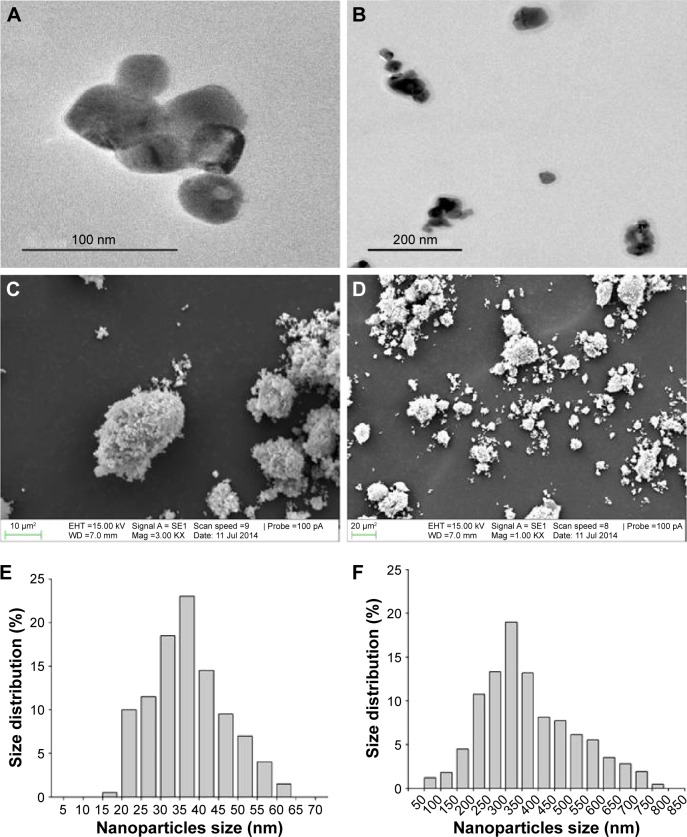
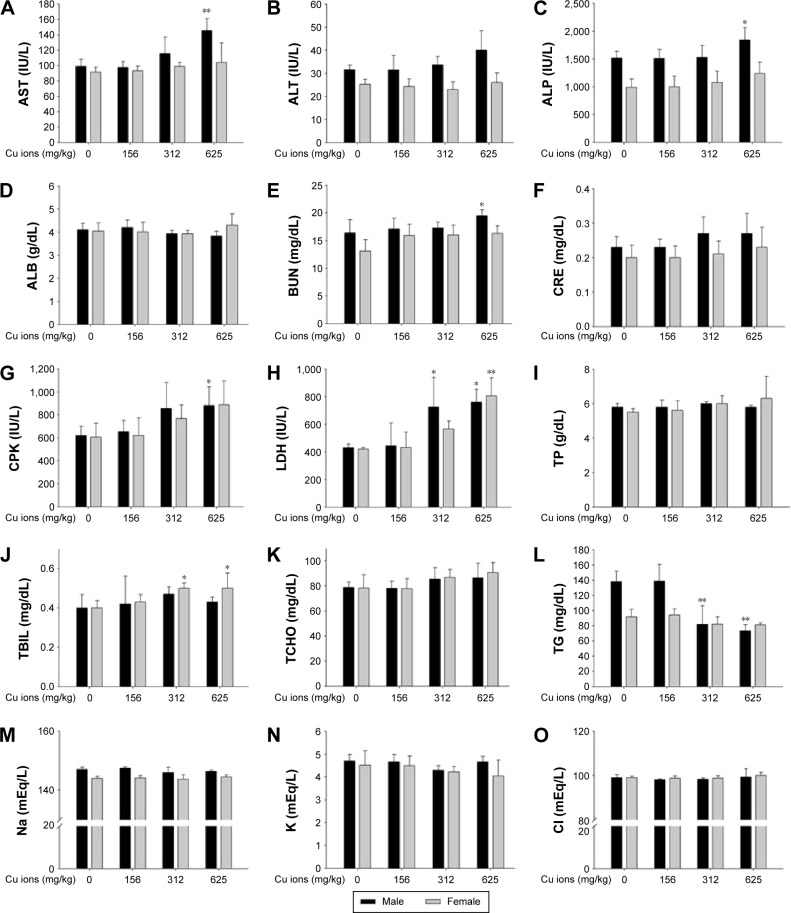
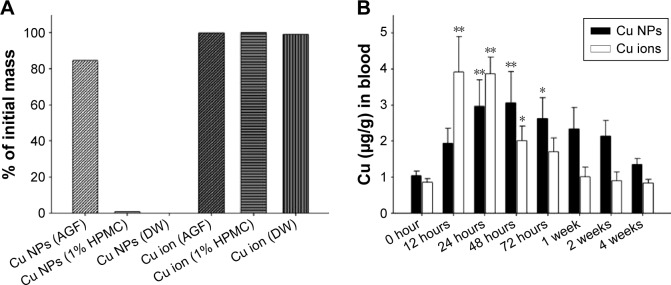
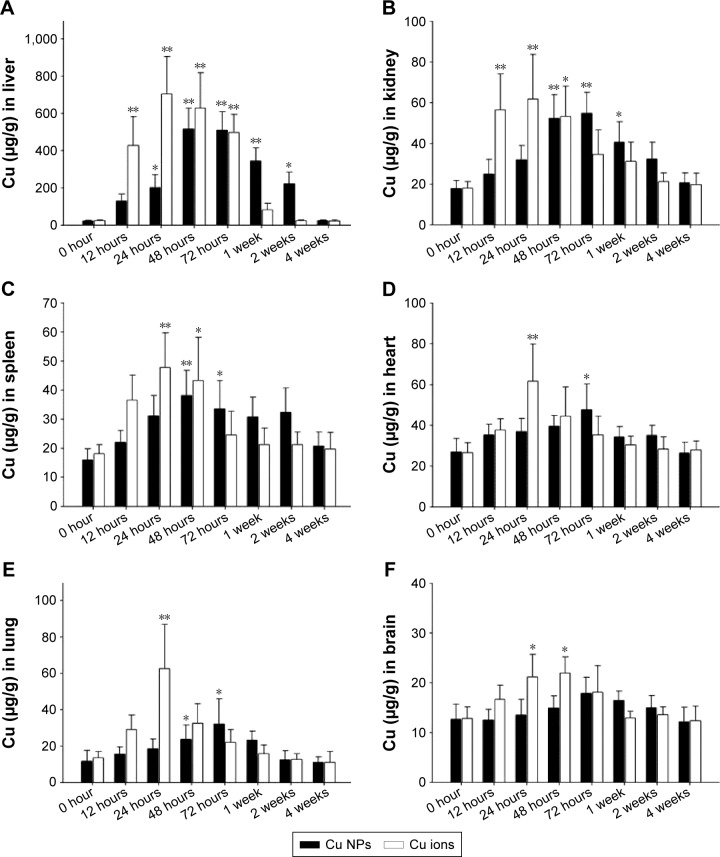
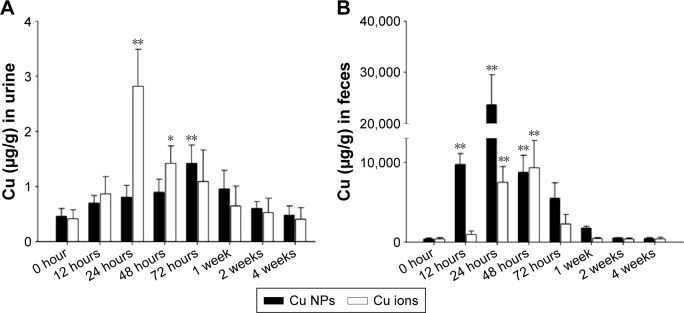
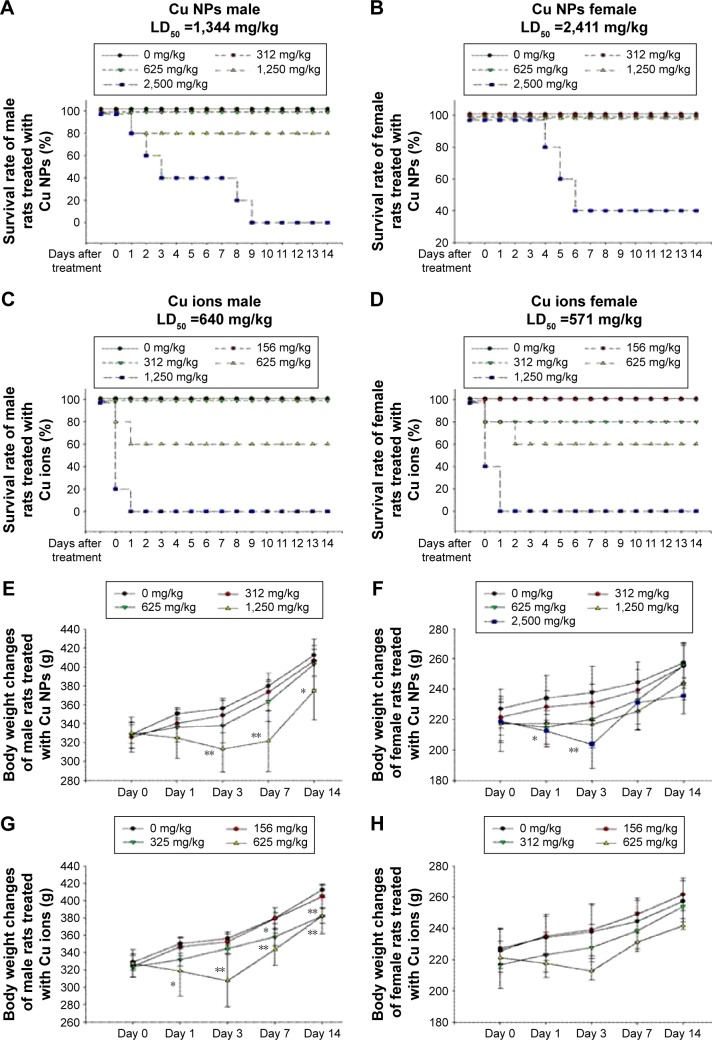
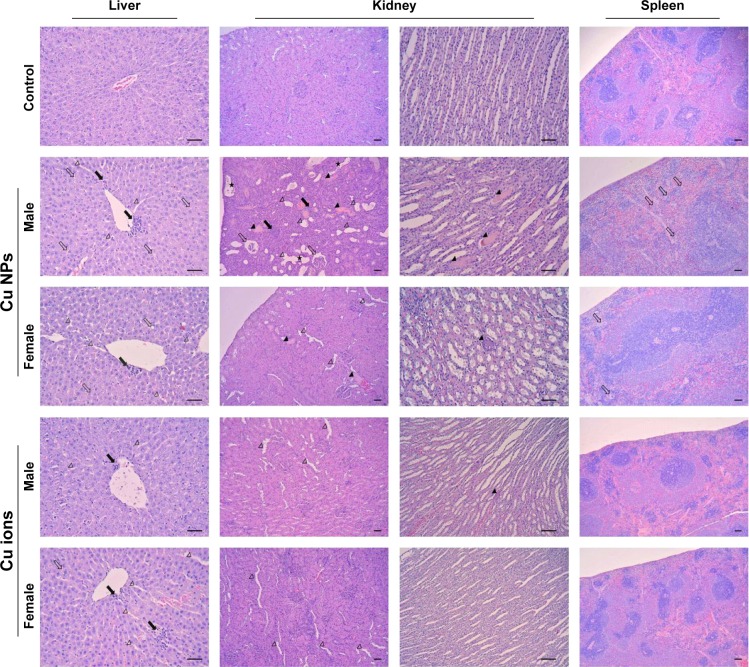
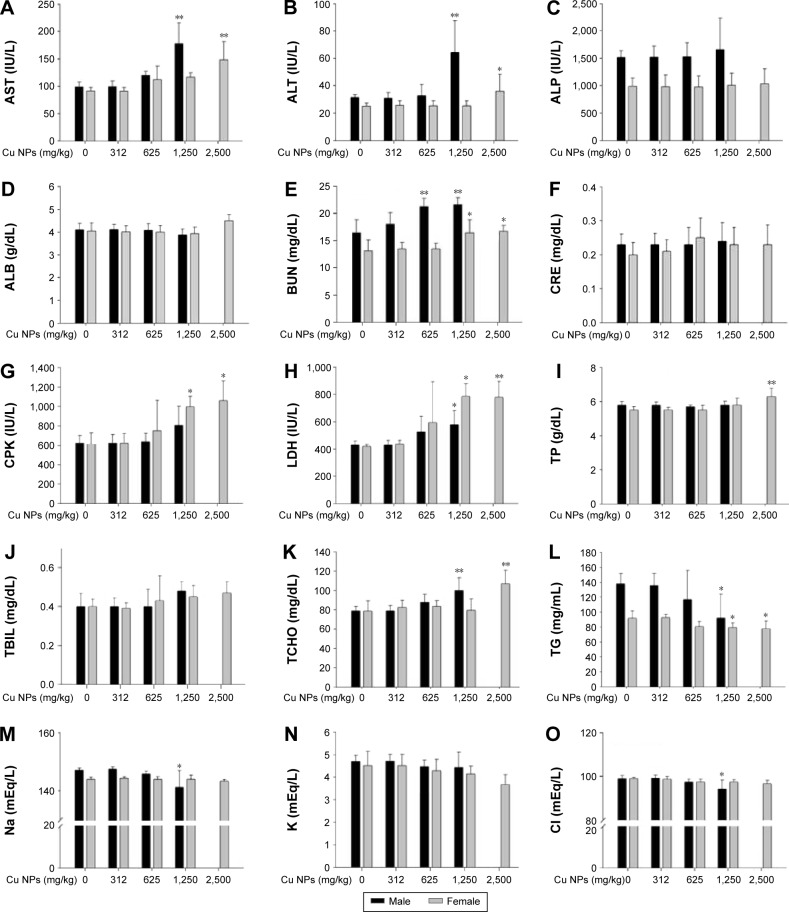
Despite widespread use and prospective biomedical applications of copper nanoparticles (Cu NPs), their biosafety issues and kinetics remain unclear. Thus, the aim of this study was to compare the detailed in vivo toxicity of Cu NPs and cupric ions (CuCl2; Cu ions) after a single oral dose. We determined the physicochemical characteristics of Cu NPs, including morphology, hydrodynamic size, zeta potential, and dissolution in gastric (pH 1.5), vehicle (pH 6.5), and intestinal (pH 7.8) conditions. We also evaluated the kinetics of Cu following a single equivalent dose (500 mg/kg) of Cu NPs and Cu ions. Cu NPs had highest dissolution (84.5%) only in gastric conditions when compared with complete dissolution of Cu ions under various physiological milieus. Kinetic analysis revealed that highest Cu levels in blood and tested organs of Cu NP-treated rats were 15%-25% lower than that of Cu ions. Similar to the case of Cu ions, Cu levels in the tested organs (especially liver, kidney, and spleen) of Cu NP-treated rats increased significantly when compared with the vehicle control. However, delay in reaching the highest level and biopersistence of Cu were observed in the blood and tested organs of Cu NP-treated rats compared with Cu ions. Extremely high levels of Cu in feces indicated that unabsorbed Cu NPs or absorbed Cu ions were predominantly eliminated through liver/feces. Cu NPs exerted apparent toxicological effects at higher dose levels compared with Cu ions and showed sex-dependent differences in mortality, biochemistry, and histopathology. Liver, kidney, and spleen were the major organs affected by Cu NPs. Collectively, the toxicity and kinetics of Cu NPs are most likely influenced by the release of Cu dissociated from Cu NPs under physiological conditions.
尽管铜纳米颗粒(Cu NPs)已被广泛应用并具有潜在的生物医学应用前景,但其生物安全性问题和动力学仍不清楚。因此,本研究的目的是比较单次口服剂量后Cu NPs和铜离子(CuCl2;Cu离子)在体内的详细毒性。我们测定了Cu NPs的物理化学特性,包括形态、流体动力学尺寸、zeta电位以及在胃(pH 1.5)、载体(pH 6.5)和肠道(pH 7.8)条件下的溶解性。我们还评估了单次等效剂量(500 mg/kg)的Cu NPs和Cu离子后铜的动力学。与在各种生理环境下完全溶解的Cu离子相比,Cu NPs仅在胃条件下具有最高的溶解性(84.5%)。动力学分析表明,Cu NP处理大鼠的血液和受试器官中的最高铜水平比Cu离子低15%-25%。与Cu离子的情况类似,与载体对照组相比,Cu NP处理大鼠的受试器官(尤其是肝脏、肾脏和脾脏)中的铜水平显著升高。然而,与Cu离子相比,在Cu NP处理大鼠的血液和受试器官中观察到铜达到最高水平的延迟和生物持久性。粪便中极高水平的铜表明未吸收的Cu NPs或吸收的Cu离子主要通过肝脏/粪便排出。与Cu离子相比,Cu NPs在较高剂量水平下表现出明显的毒理学效应,并且在死亡率、生物化学和组织病理学方面表现出性别依赖性差异。肝脏、肾脏和脾脏是受Cu NPs影响的主要器官。总体而言,Cu NPs的毒性和动力学很可能受到生理条件下从Cu NPs解离的铜释放的影响。