Kim Seul-Kee, Kim So-Yeong, Kang Hang-Bong
Department of Media Engineering, Catholic University of Korea, Bucheon-si, Gyeonggi-do 420-743, Republic of Korea.
Comput Intell Neurosci. 2016;2016:5718580. doi: 10.1155/2016/5718580. Epub 2016 Jun 5.
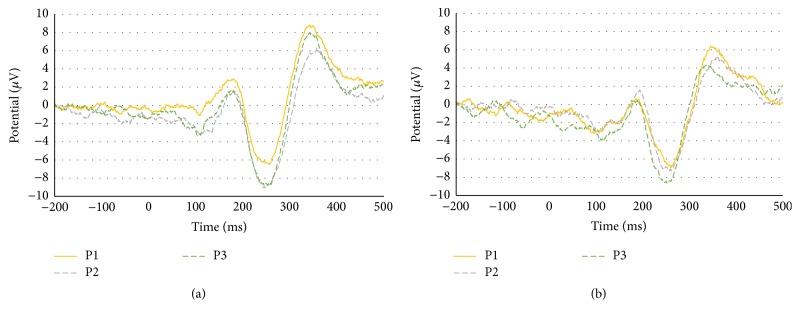
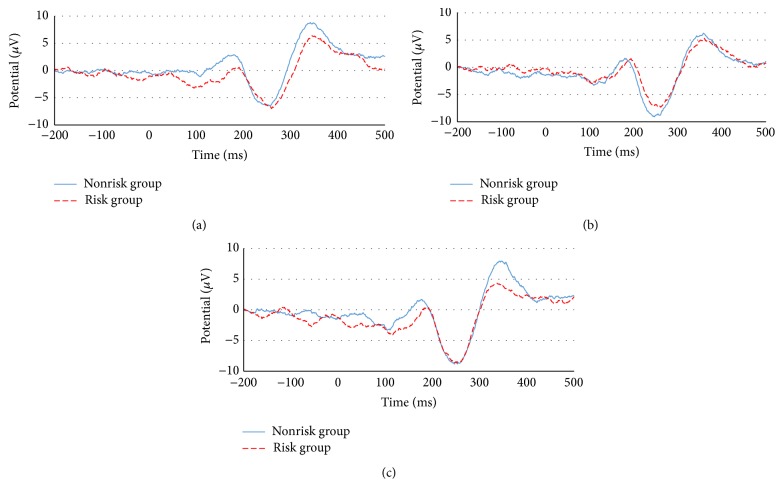
Smartphones are used ubiquitously worldwide and are essential tools in modern society. However, smartphone overuse is an emerging social issue, and limited studies have objectively assessed this matter. The majority of previous studies have included surveys or behavioral observation studies. Since a previous study demonstrated an association between increased push notifications and smartphone overuse, we investigated the effects of push notifications on task performance. We detected changes in brainwaves generated by smartphone push notifications using the N200 and P300 components of event-related potential (ERP) to investigate both concentration and cognitive ability. ERP assessment indicated that, in both risk and nonrisk groups, the lowest N200 amplitude and the longest latency during task performance were found when push notifications were delivered. Compared to the nonrisk group, the risk group demonstrated lower P300 amplitudes and longer latencies. In addition, the risk group featured a higher rate of error in the Go-Nogo task, due to the negative influence of smartphone push notifications on performance in both risk and nonrisk groups. Furthermore, push notifications affected subsequent performance in the risk group.
智能手机在全球范围内被广泛使用,是现代社会的重要工具。然而,智能手机过度使用是一个新出现的社会问题,且仅有有限的研究对这一问题进行了客观评估。之前的大多数研究包括调查或行为观察研究。由于之前的一项研究表明推送通知增加与智能手机过度使用之间存在关联,我们调查了推送通知对任务表现的影响。我们使用事件相关电位(ERP)的N200和P300成分检测智能手机推送通知产生的脑电波变化,以研究注意力和认知能力。ERP评估表明,在风险组和非风险组中,任务执行期间推送通知发出时,N200波幅最低且潜伏期最长。与非风险组相比,风险组的P300波幅更低且潜伏期更长。此外,由于智能手机推送通知对风险组和非风险组的表现均有负面影响,风险组在“停止信号”任务中的错误率更高。此外,推送通知影响了风险组的后续表现。