Chang Yu-Chi, Ho Kuo-Ning, Feng Sheng-Wei, Huang Haw-Ming, Chang Chia-Hsun, Lin Che-Tong, Teng Nai-Chia, Pan Yu Hwa, Chang Wei-Jen
School of Dentistry, College of Oral Medicine, Taipei Medical University, Taipei 110, Taiwan.
School of Dentistry, College of Oral Medicine, Taipei Medical University, Taipei 110, Taiwan; Graduate Institute of Biomedical Materials & Tissue Engineering, College of Oral Medicine, Taipei Medical University, Taipei 110, Taiwan.
Biomed Res Int. 2016;2016:2414809. doi: 10.1155/2016/2414809. Epub 2016 Jun 6.
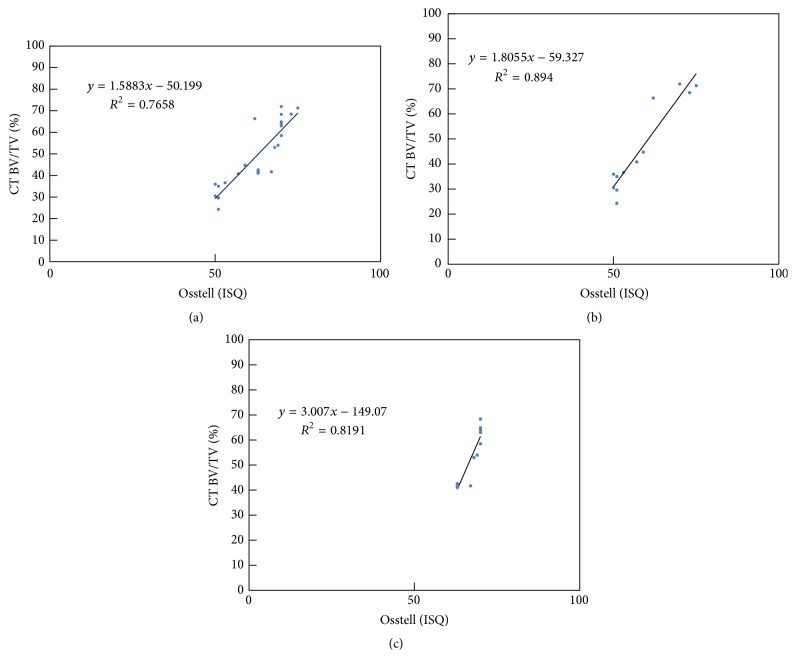
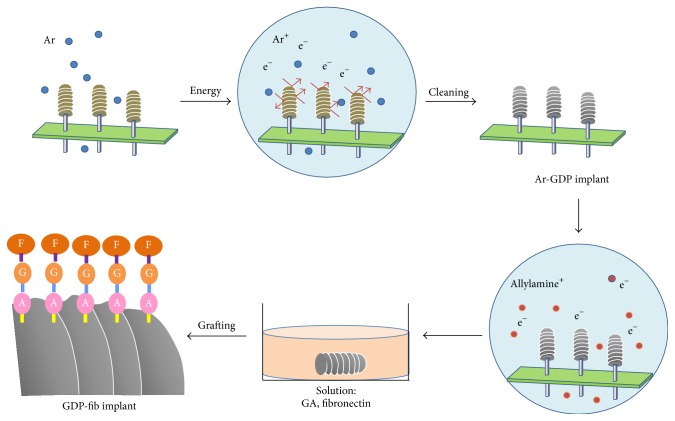
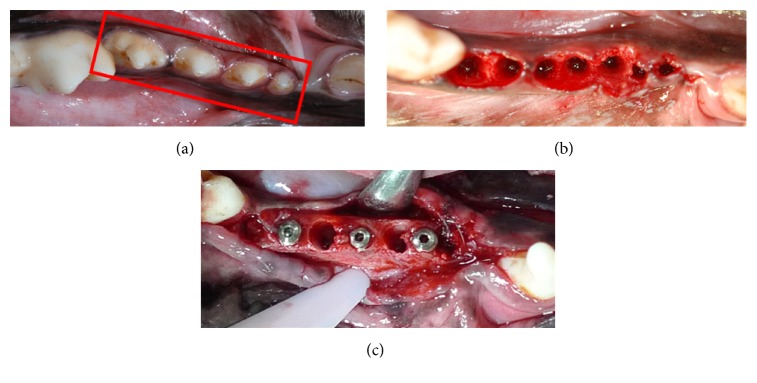
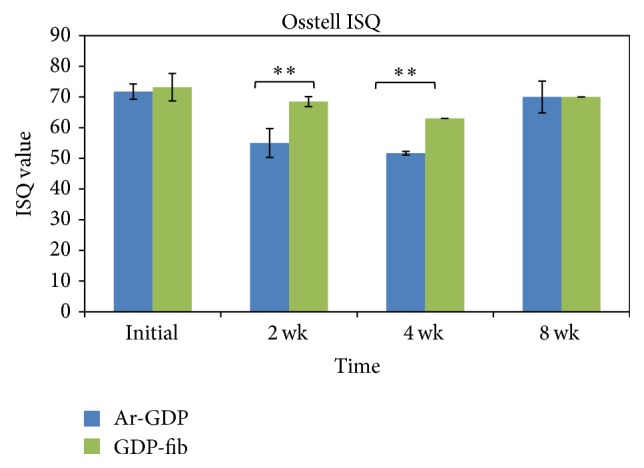
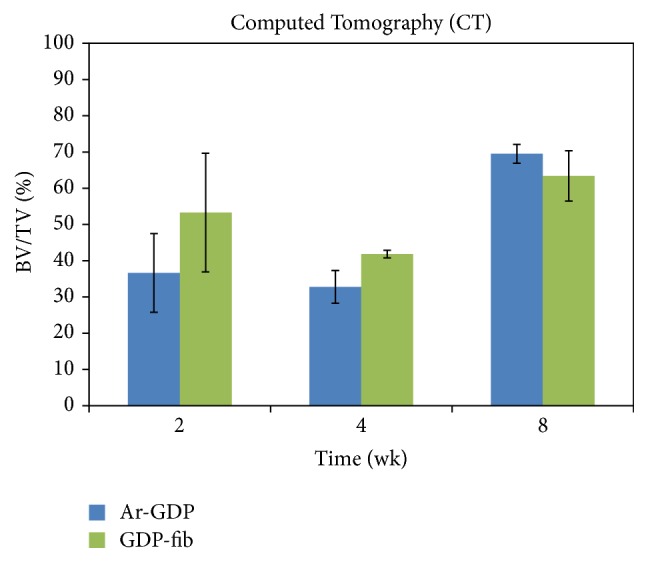
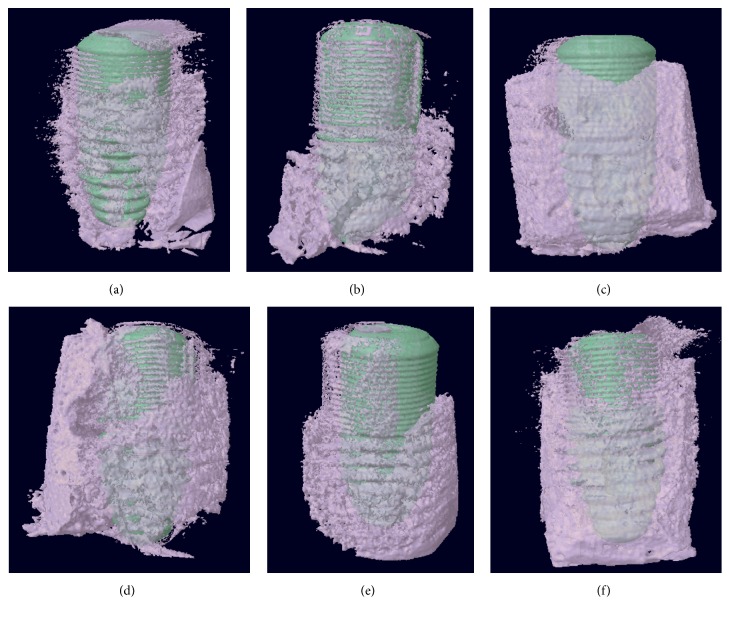
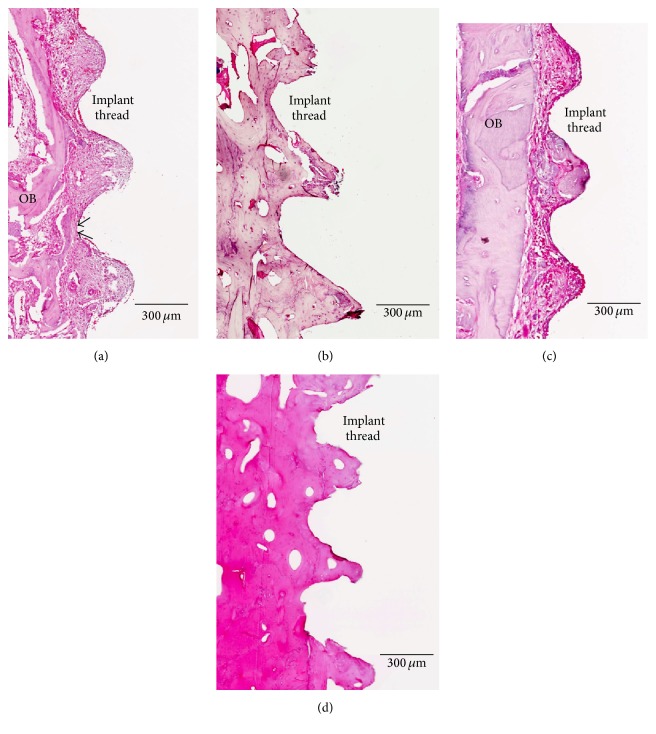
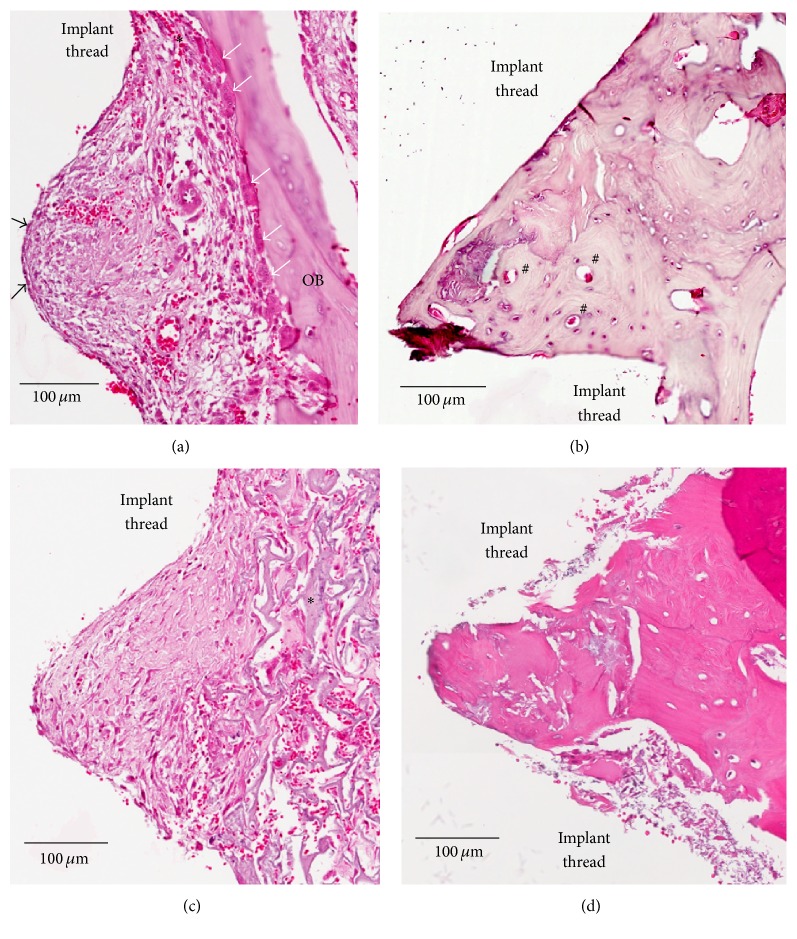
Modification of the physiochemical properties of titanium surfaces using glow discharge plasma (GDP) and fibronectin coating has been shown to enhance the surface hydrophilicity, surface roughness, cell adhesion, migration, and proliferation. This in vivo study aimed to evaluate the bone integration efficacy of a biologically modified implant surface. Two different surface-modified implants (Ar-GDP and GDP-fib) were placed in the mandibular premolar area of six beagle dogs for 2-8 weeks. Three techniques [histologic evaluation, resonance frequency analysis (RFA), and microcomputed tomography (micro-CT) evaluation] were used to detect the implant stability and bone-implant contact. The implant stability quotient values of GDP-fib implants were significantly greater than the Ar-GDP implants at 2 and 4 weeks (P < 0.01). The bone volume/total volume ratio of GDP-fib implants was greater than the Ar-GDP implants in micro-CT evaluation. A high positive correlation was observed between RFA and micro-CT measurements. At 2 weeks, osteoblasts were seen to line the implant surface, and multinuclear osteoclasts could be seen on the surface of old parent bone. After 8 weeks, a majority of the space in the wound chamber appeared to be replaced by bone. Enhancement of the stability of biologically modified implants was proved by the results of RFA, micro-CT, and histological analysis. This enhanced stability may help fasten treatment and be clinically beneficial.
使用辉光放电等离子体(GDP)和纤连蛋白涂层对钛表面的物理化学性质进行改性,已被证明可增强表面亲水性、表面粗糙度、细胞粘附、迁移和增殖。本体内研究旨在评估生物改性种植体表面的骨整合效果。将两种不同表面改性的种植体(Ar-GDP和GDP-纤连蛋白)植入6只比格犬的下颌前磨牙区2至8周。使用三种技术[组织学评估、共振频率分析(RFA)和微型计算机断层扫描(micro-CT)评估]来检测种植体稳定性和骨-种植体接触情况。在2周和4周时,GDP-纤连蛋白种植体的种植体稳定性商值显著高于Ar-GDP种植体(P < 0.01)。在微型计算机断层扫描评估中,GDP-纤连蛋白种植体的骨体积/总体积比大于Ar-GDP种植体。在RFA和微型计算机断层扫描测量之间观察到高度正相关。在2周时,可见成骨细胞排列在种植体表面,在旧母骨表面可见多核破骨细胞。8周后,伤口腔内的大部分空间似乎被骨替代。RFA、微型计算机断层扫描和组织学分析结果证明了生物改性种植体稳定性的增强。这种增强的稳定性可能有助于加快治疗并具有临床益处。