Yang Xiaolong, Sha Kaihui, Xu Guangya, Tian Hanwen, Wang Xiaoying, Chen Shanze, Wang Yi, Li Jingyu, Chen Junli, Huang Ning
Research Unit of Infection and Immunity, Department of Pathophysiology, West China School of Preclinical & Forensic Medicine, Sichuan University, Chengdu 610000, Sichuan, China.
Int J Mol Sci. 2016 Jun 29;17(7):979. doi: 10.3390/ijms17070979.
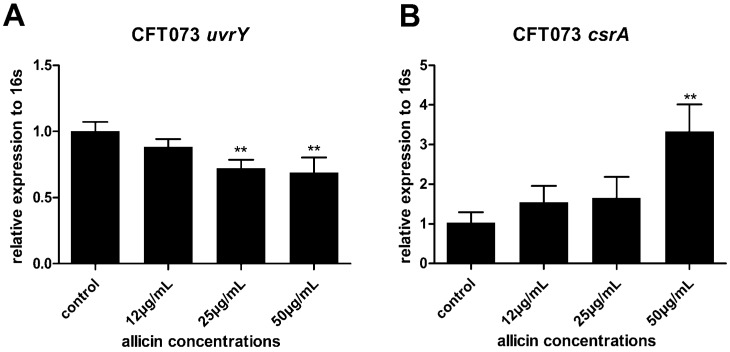
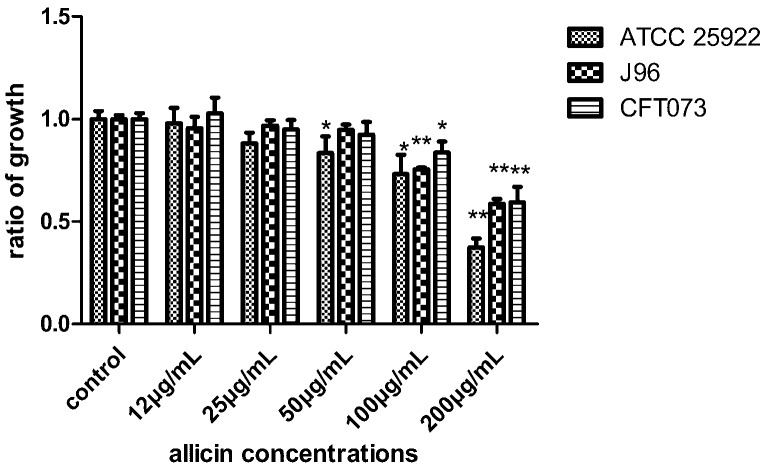
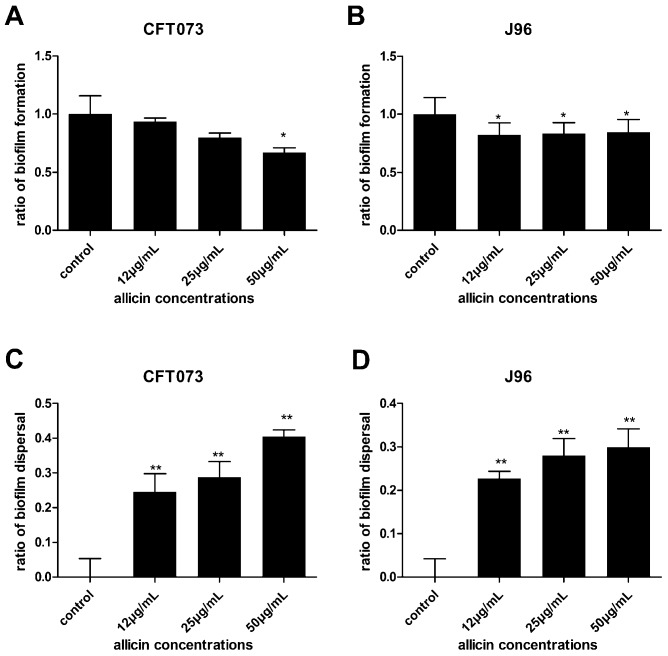
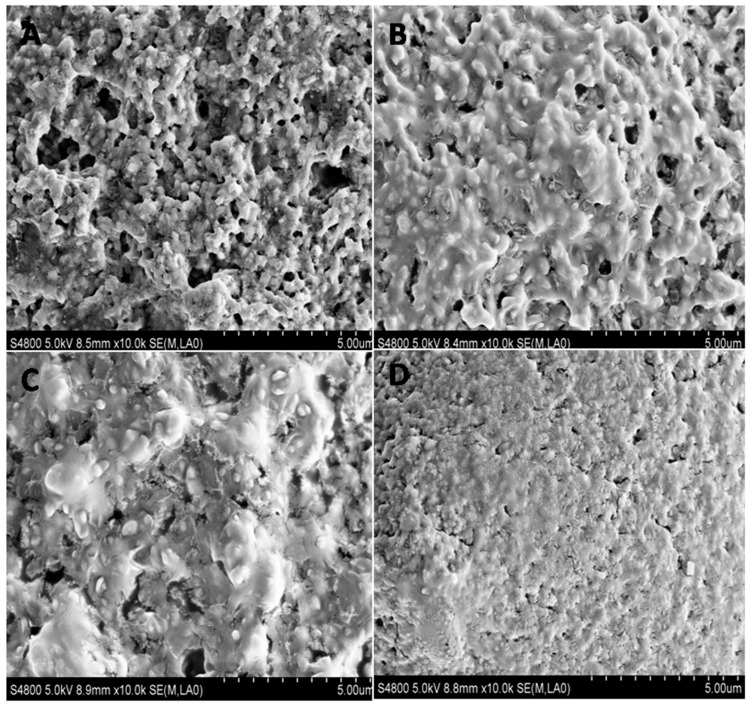
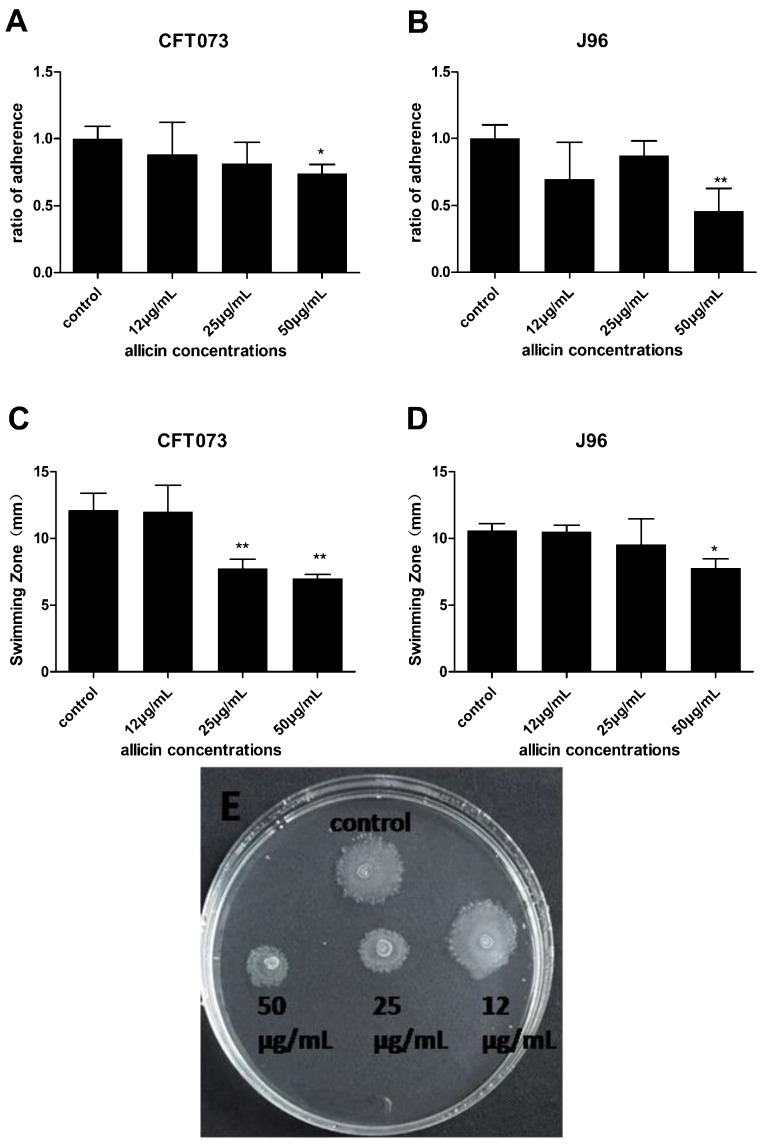
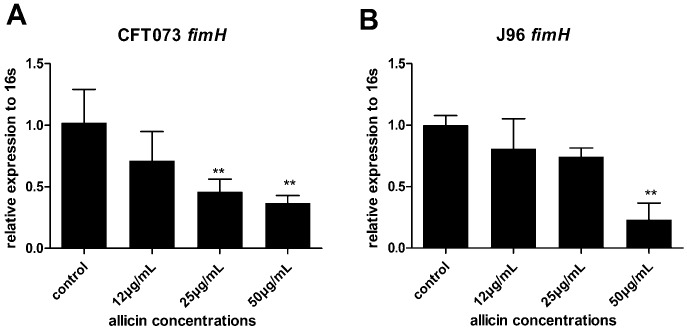
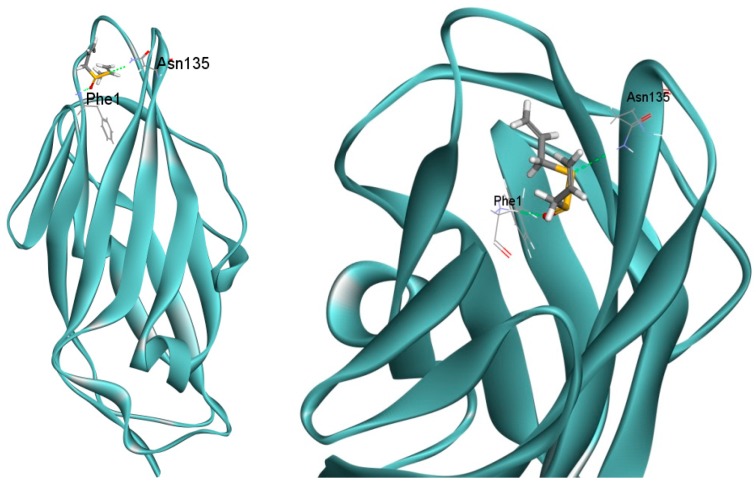
Uropathogenic Escherichia coli (UPEC) biofilm formation enables the organism to avoid the host immune system, resist antibiotics, and provide a reservoir for persistent infection. Once the biofilm is established, eradication of the infection becomes difficult. Therefore, strategies against UPEC biofilm are urgently required. In this study, we investigated the effect of allicin, isolated from garlic essential oil, on UPEC CFT073 and J96 biofilm formation and dispersal, along with its effect on UPEC adhesion ability and swimming motility. Sub-inhibitory concentrations (sub-MICs) of allicin decreased UPEC biofilm formation and affected its architecture. Allicin was also capable of dispersing biofilm. Furthermore, allicin decreased the bacterial adhesion ability and swimming motility, which are important for biofilm formation. Real-time quantitative polymerase chain reaction (RT-qPCR) revealed that allicin decreased the expression of UPEC type 1 fimbriae adhesin gene fimH. Docking studies suggested that allicin was located within the binding pocket of heptyl α-d-mannopyrannoside in FimH and formed hydrogen bonds with Phe1 and Asn135. In addition, allicin decreased the expression of the two-component regulatory systems (TCSs) cognate response regulator gene uvrY and increased the expression of the RNA binding global regulatory protein gene csrA of UPEC CFT073, which is associated with UPEC biofilm. The findings suggest that sub-MICs of allicin are capable of affecting UPEC biofilm formation and dispersal, and decreasing UPEC adhesion ability and swimming motility.
尿路致病性大肠杆菌(UPEC)生物膜的形成使该生物体能够逃避宿主免疫系统、抵抗抗生素,并为持续性感染提供一个储存库。一旦生物膜形成,感染的根除就变得困难。因此,迫切需要针对UPEC生物膜的策略。在本研究中,我们研究了从大蒜精油中分离出的大蒜素对UPEC CFT073和J96生物膜形成与分散的影响,以及其对UPEC黏附能力和游动性的影响。大蒜素的亚抑制浓度(亚MICs)降低了UPEC生物膜的形成并影响其结构。大蒜素还能够分散生物膜。此外,大蒜素降低了细菌的黏附能力和游动性,而这两者对生物膜的形成都很重要。实时定量聚合酶链反应(RT-qPCR)显示,大蒜素降低了UPEC 1型菌毛黏附素基因fimH的表达。对接研究表明,大蒜素位于FimH中庚基α-D-甘露吡喃糖苷的结合口袋内,并与Phe1和Asn135形成氢键。此外,大蒜素降低了UPEC CFT073的双组分调节系统(TCSs)同源应答调节基因uvrY的表达,并增加了与UPEC生物膜相关的RNA结合全局调节蛋白基因csrA的表达。这些发现表明,大蒜素的亚MICs能够影响UPEC生物膜的形成与分散,并降低UPEC的黏附能力和游动性。