Ng Chip-Jin, Liao Pei-Ju, Chang Yu-Che, Kuan Jen-Tze, Chen Jih-Chang, Hsu Kuang-Hung
aEmergency Department, Chang Gung Memorial Hospital and College of Medicine, Chang Gung University, Tao-Yuan bDepartment of Health Care Administration, Oriental Institute of Technology, New Taipei City cDepartment of Medical Education, Chang Gung Memorial Hospital and College of Medicine, Chang Gung University dLaboratory for Epidemiology, Department of Health Care Management, and Healthy Aging Research Center, and Department of Urology, Chang Gung Memorial Hospital, Chang Gung University, Kwei-Shan, Tao-Yuan, Taiwan.
Medicine (Baltimore). 2016 Jun;95(26):e4053. doi: 10.1097/MD.0000000000004053.
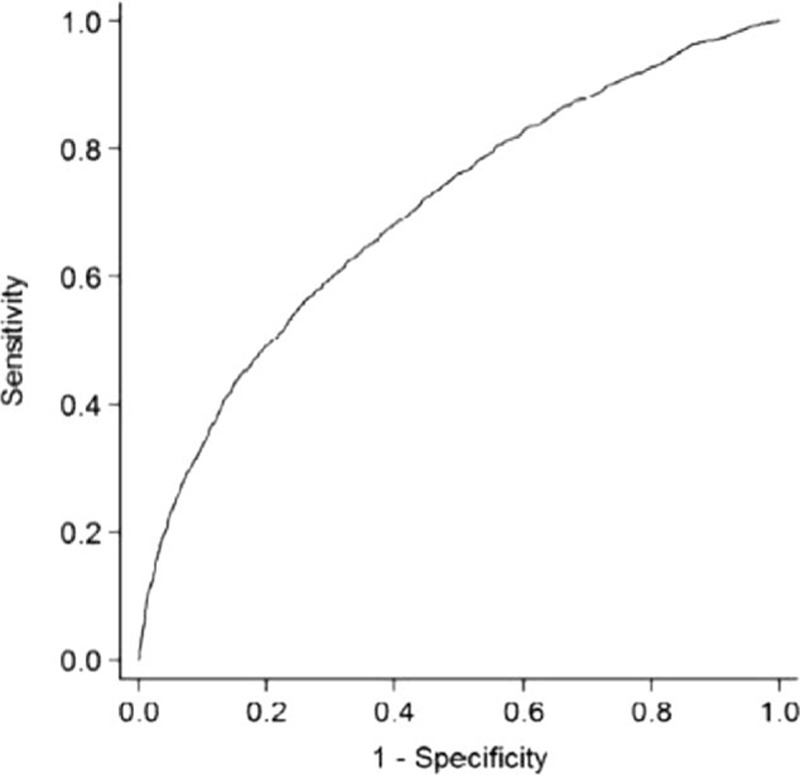
Nonurgent emergency department (ED) patients are a controversial issue in the era of ED overcrowding. However, a substantial number of post-ED hospitalizations were found, which prompted for investigation and strategy management. The objective of this study is to identify risk factors for predicting the subsequent hospitalization of nonurgent emergency patients. This was a retrospective study of a database of adult nontrauma ED visits in a medical center for a period of 12 months from January 2013 to December 2013. Patient triages as either Taiwan Triage and Acuity Scale (TTAS) level 4 or 5 were considered "nonurgent." Basic demographic data, primary and secondary diagnoses, clinical parameters including blood pressure, heart rate, body temperature, and chief complaint category in TTAS were analyzed to determine if correlation exists between potential predictors and hospitalization in nonurgent patients.A total of 16,499 nonurgent patients were included for study. The overall hospitalization rate was 12.47 % (2058/16,499). In the multiple logistic regression model, patients with characteristics of males (odds ratio, OR = 1.37), age more than 65 years old (OR = 1.56), arrival by ambulance (OR = 2.40), heart rate more than 100/min (OR = 1.47), fever (OR = 2.73), and presented with skin swelling/redness (OR = 4.64) were predictors for hospitalization. The area under receiver-operator calibration curve (AUROC) for the prediction model was 0.70. Nonurgent patients might still be admitted for further care especially in male, the elderly, with more secondary diagnoses, abnormal vital signs, and presented with dermatologic complaints. Using the TTAS acuity level to identify patients for diversion away from the ED is unsafe and will lead to inappropriate refusal of care for many patients requiring hospital treatment.
在急诊科拥挤的时代,非紧急急诊科患者是一个有争议的问题。然而,研究发现大量急诊科就诊后仍需住院治疗的情况,这促使进行调查和策略管理。本研究的目的是确定预测非紧急急诊患者随后住院的危险因素。这是一项对某医疗中心2013年1月至2013年12月期间成人非创伤性急诊科就诊数据库的回顾性研究。分诊为台湾分诊及 acuity 量表(TTAS)4级或5级的患者被视为“非紧急”。分析基本人口统计学数据、主要和次要诊断、包括血压、心率、体温在内的临床参数以及TTAS中的主要症状类别,以确定潜在预测因素与非紧急患者住院之间是否存在相关性。
共有16499名非紧急患者纳入研究。总体住院率为12.47%(2058/16499)。在多元逻辑回归模型中,具有男性特征(比值比,OR = 1.37)、年龄超过65岁(OR = 1.56)、乘救护车到达(OR = 2.40)、心率超过100次/分钟(OR = 1.47)、发热(OR = 2.73)以及出现皮肤肿胀/发红(OR = 4.64)的患者是住院的预测因素。预测模型的受试者工作特征校准曲线下面积(AUROC)为0.70。非紧急患者可能仍需住院接受进一步治疗,尤其是男性、老年人、有更多次要诊断、生命体征异常以及有皮肤相关症状的患者。使用TTAS acuity级别来识别应从急诊科分流的患者是不安全的,会导致许多需要住院治疗的患者被不恰当地拒绝治疗。