Institut für Zellbiologie und Neurowissenschaft, Goethe Universität Frankfurt am Main, Germany.
Sci Rep. 2016 Jul 4;6:29129. doi: 10.1038/srep29129.
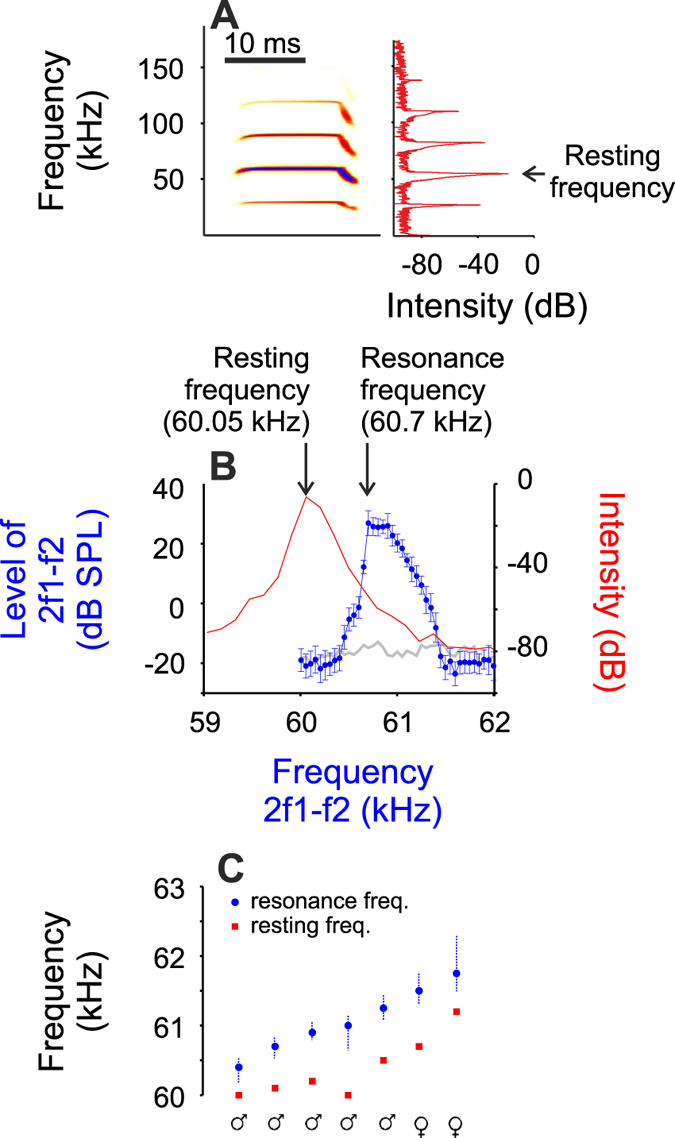
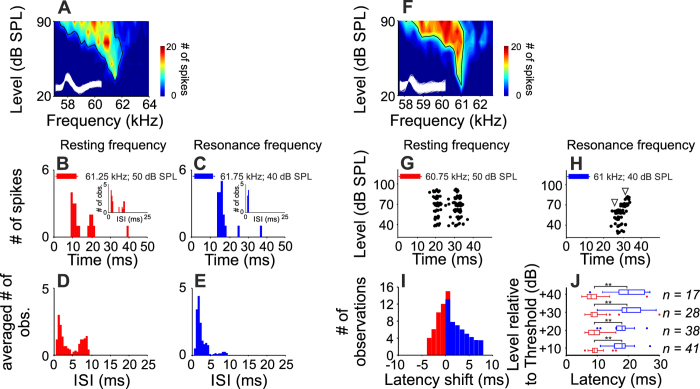
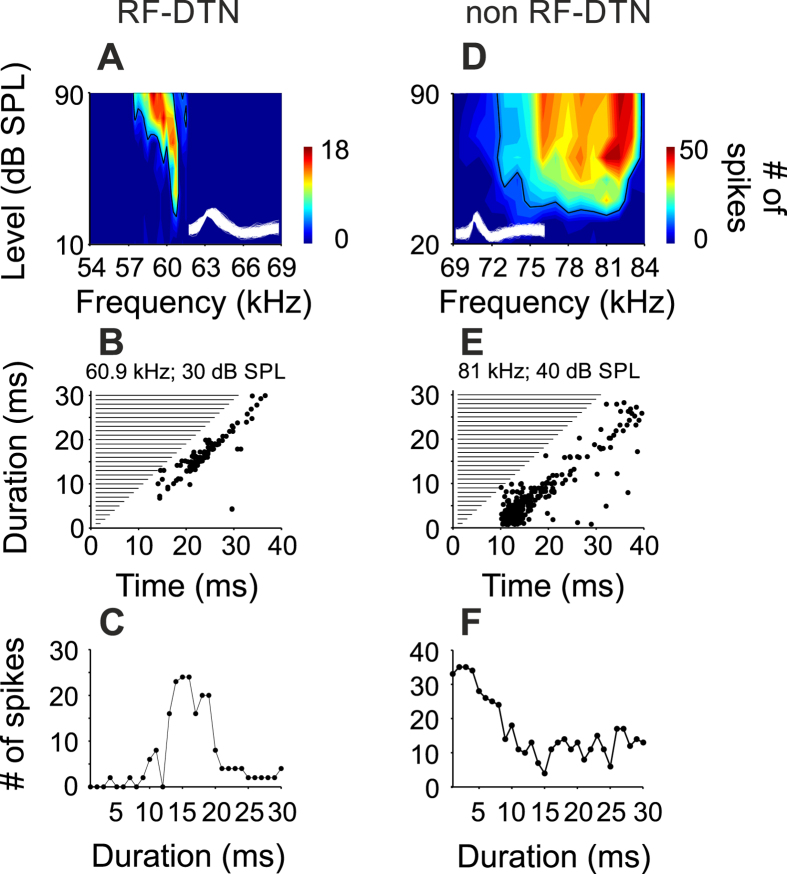
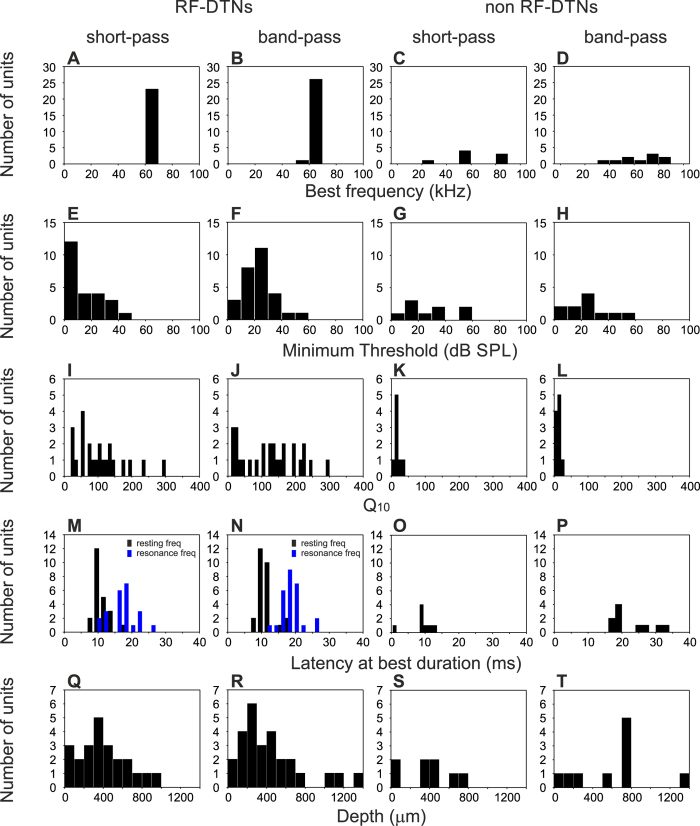
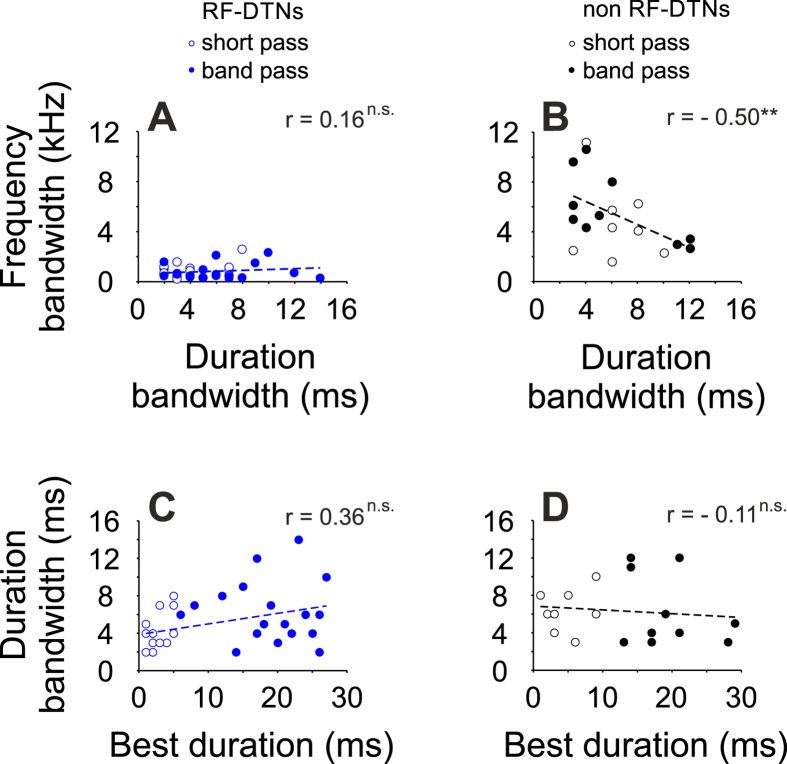
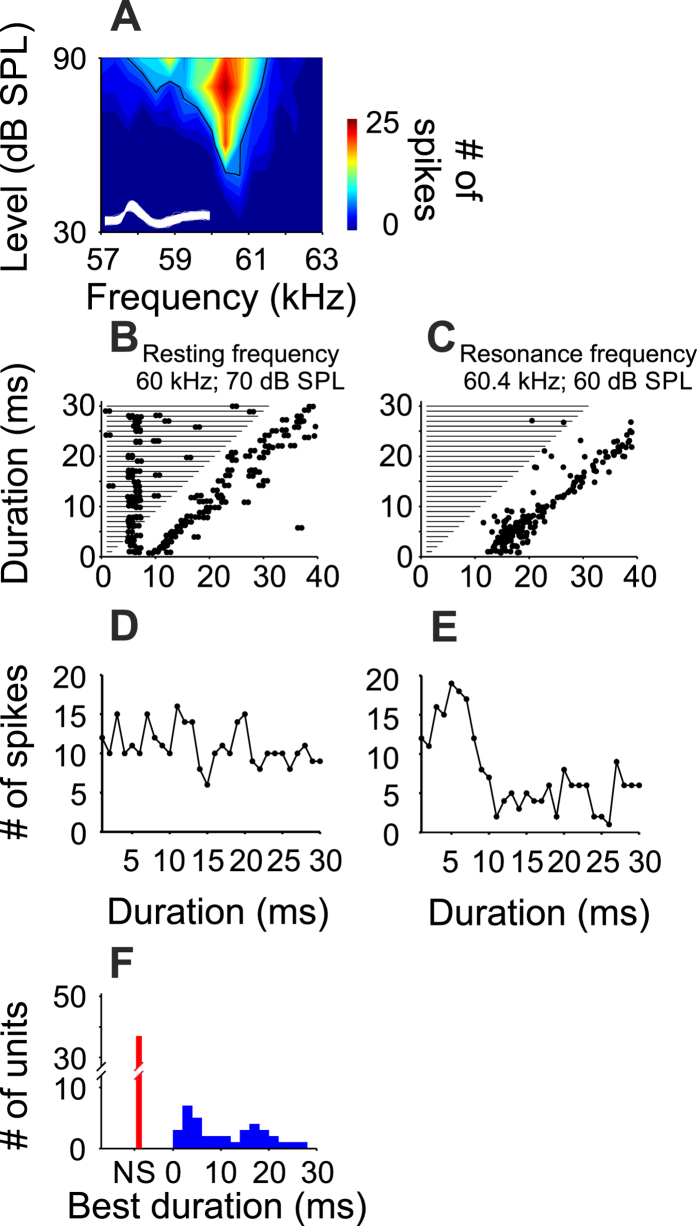
In the cochlea of the mustached bat, cochlear resonance produces extremely sharp frequency tuning to the dominant frequency of the echolocation calls, around 61 kHz. Such high frequency resolution in the cochlea is accomplished at the expense of losing temporal resolution because of cochlear ringing, an effect that is observable not only in the cochlea but also in the cochlear nucleus. In the midbrain, the duration of sounds is thought to be analyzed by duration-tuned neurons, which are selective to both stimulus duration and frequency. We recorded from 57 DTNs in the auditory midbrain of the mustached bat to assess if a spectral-temporal trade-off is present. Such spectral-temporal trade-off is known to occur as sharp tuning in the frequency domain which results in poorer resolution in the time domain, and vice versa. We found that a specialized sub-population of midbrain DTNs tuned to the bat's mechanical cochlear resonance frequency escape the cochlear spectral-temporal trade-off. We also show evidence that points towards an underlying neuronal inhibition that appears to be specific only at the resonance frequency.
在须蝠的耳蜗中,耳蜗共振使回声定位信号的主频产生极其尖锐的频率调谐,主频约为 61 kHz。这种在耳蜗中实现的高频分辨率是以牺牲时间分辨率为代价的,这是由于耳蜗 ringing 引起的,这种效应不仅在耳蜗中可见,在耳蜗核中也可见。在中脑,声音的持续时间被认为是由持续时间调谐神经元分析的,这些神经元对刺激持续时间和频率都有选择性。我们记录了须蝠听觉中脑的 57 个 DTN,以评估是否存在频谱-时间权衡。众所周知,这种频谱-时间权衡会导致频率域中的尖锐调谐,从而导致时间域中的分辨率下降,反之亦然。我们发现,对蝙蝠机械耳蜗共振频率调谐的专门的中脑 DTN 亚群逃脱了耳蜗的频谱-时间权衡。我们还提供了证据,表明存在一种潜在的神经元抑制,这种抑制似乎只在共振频率下出现。