Skorski Matthew, Esenther Jake, Ahmed Zeeshan, Miller Abigail E, Hartings Matthew R
Department of Chemistry, American University, 4400 Massachusetts Ave., NW, Washington, DC 20016, USA.
Thermodynamic Metrology Group, Sensor Science Division, Physical Measurement Laboratory, National Institute of Standards and Technology, Gaithersburg, MD 20899, USA.
Sci Technol Adv Mater. 2016;17(1):89-97. doi: 10.1080/14686996.2016.1152879. Epub 2016 Apr 1.
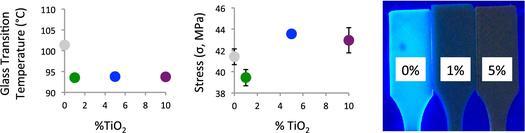
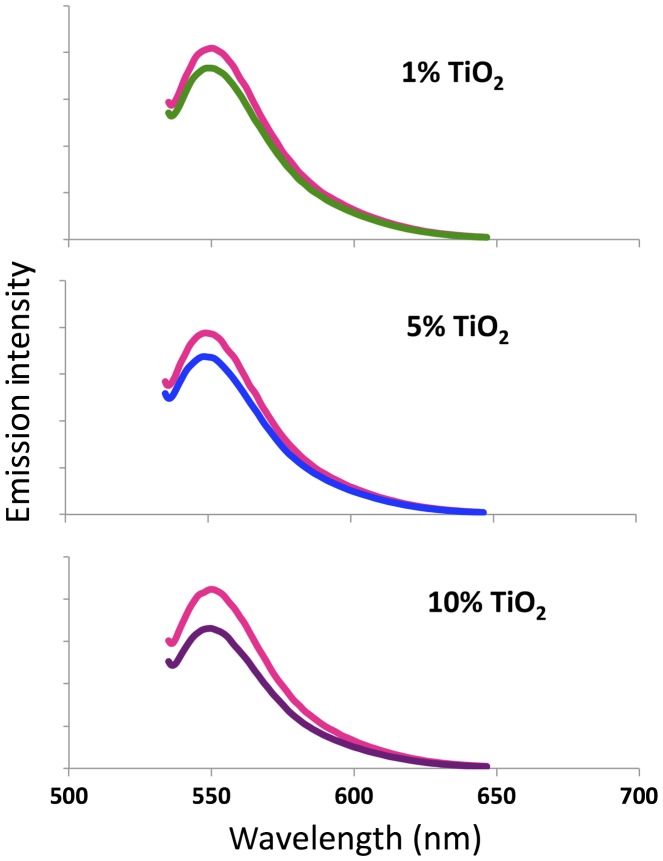
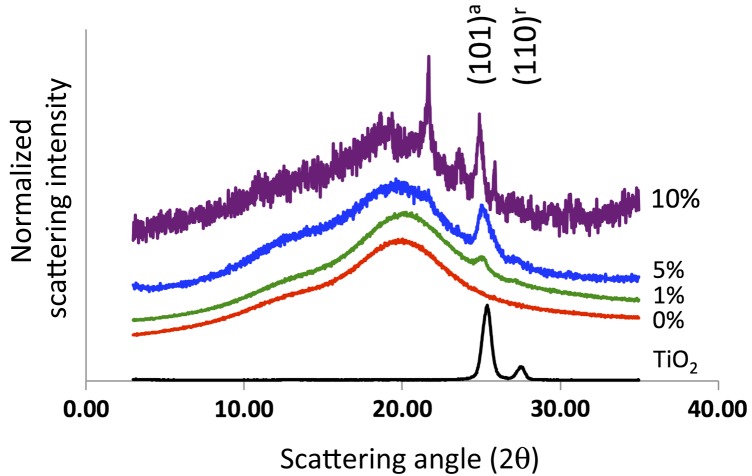
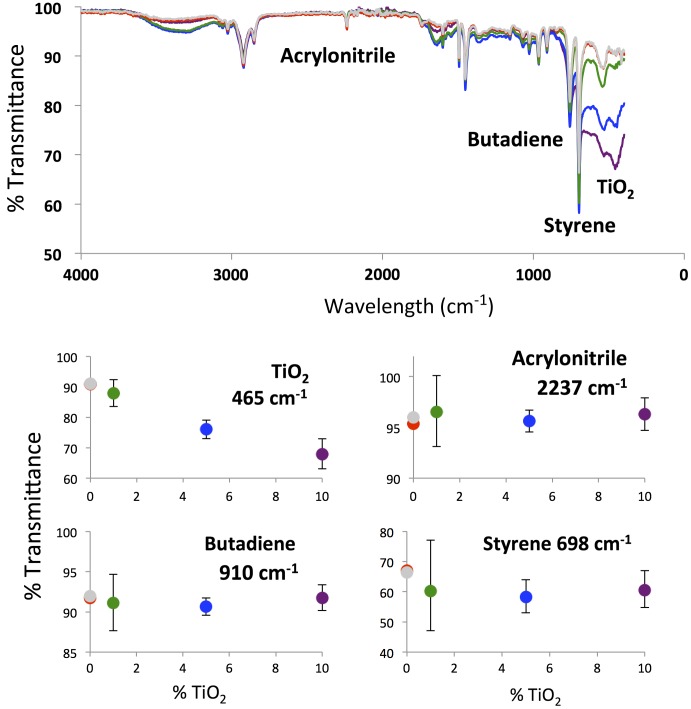
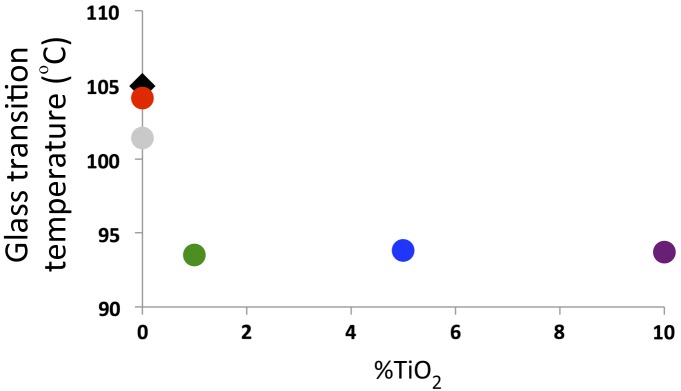
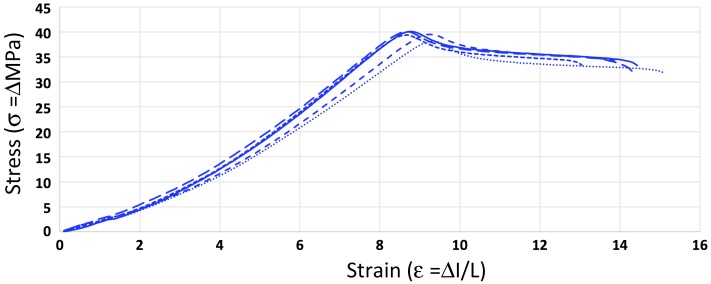
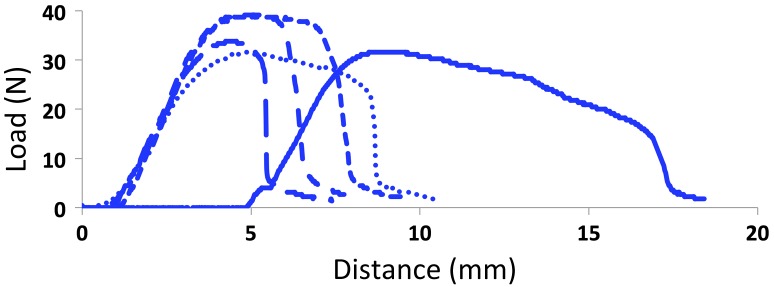
To expand the chemical capabilities of 3D printed structures generated from commercial thermoplastic printers, we have produced and printed polymer filaments that contain inorganic nanoparticles. TiO was dispersed into acrylonitrile butadiene styrene (ABS) and extruded into filaments with 1.75 mm diameters. We produced filaments with TiO compositions of 1%, 5%, and 10% (kg/kg) and printed structures using a commercial 3D printer. Our experiments suggest that ABS undergoes minor degradation in the presence of TiO during the different processing steps. The measured mechanical properties (strain and Young's modulus) for all of the composites are similar to those of structures printed from the pure polymer. TiO incorporation at 1% negatively affects the stress at breaking point and the flexural stress. Structures produced from the 5 and 10% nanocomposites display a higher breaking point stress than those printed from the pure polymer. TiO within the printed matrix was able to quench the intrinsic fluorescence of the polymer. TiO was also able to photocatalyze the degradation of a rhodamine 6G in solution. These experiments display chemical reactivity in nanocomposites that are printed using commercial 3D printers, and we expect that our methodology will help to inform others who seek to incorporate catalytic nanoparticles in 3D printed structures.
为了拓展商用热塑性打印机生成的3D打印结构的化学功能,我们制备并打印了含有无机纳米颗粒的聚合物长丝。将TiO分散到丙烯腈-丁二烯-苯乙烯共聚物(ABS)中,并挤出成直径为1.75毫米的长丝。我们制备了TiO含量分别为1%、5%和10%(千克/千克)的长丝,并使用商用3D打印机打印结构。我们的实验表明,在不同加工步骤中,ABS在TiO存在下会发生轻微降解。所有复合材料的测量力学性能(应变和杨氏模量)与纯聚合物打印的结构相似。1%的TiO掺入对断裂点应力和弯曲应力有负面影响。由5%和10%纳米复合材料制成的结构比纯聚合物打印的结构显示出更高的断裂点应力。打印基质中的TiO能够淬灭聚合物的固有荧光。TiO还能够光催化溶液中罗丹明6G的降解。这些实验展示了使用商用3D打印机打印的纳米复合材料中的化学反应性,我们预计我们的方法将有助于为其他寻求在3D打印结构中掺入催化纳米颗粒的人提供信息。