Hadj-Hamou Mehdi, Lorenzi Marco, Ayache Nicholas, Pennec Xavier
Asclepios Research Project, INRIA Sophia Antipolis Sophia Antipolis, France.
Front Neurosci. 2016 Jun 3;10:236. doi: 10.3389/fnins.2016.00236. eCollection 2016.
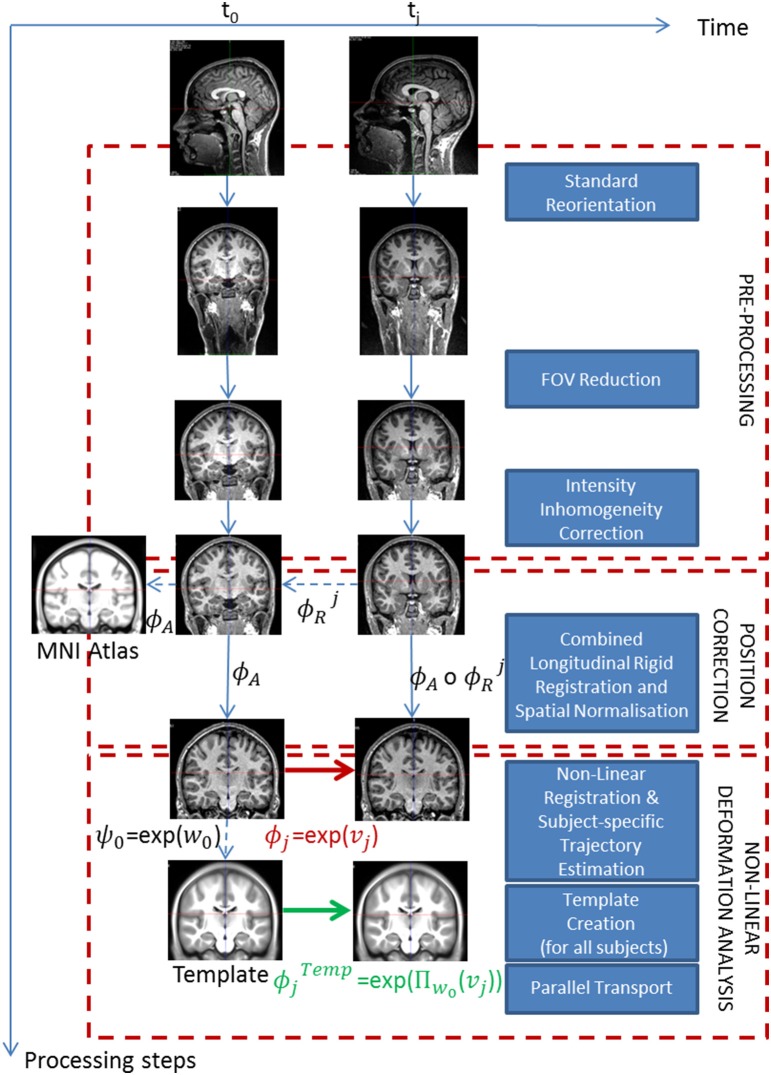
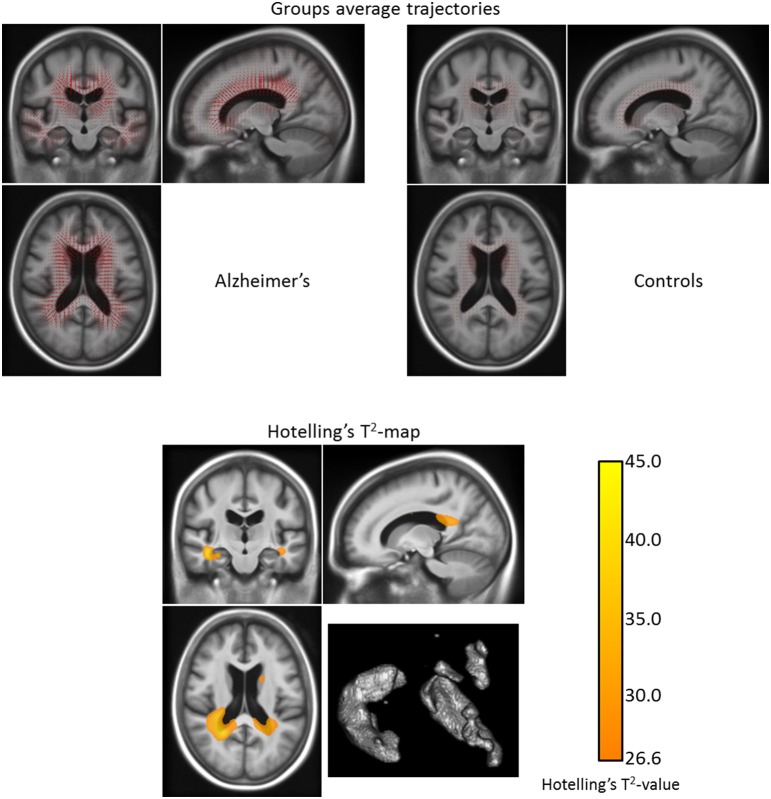
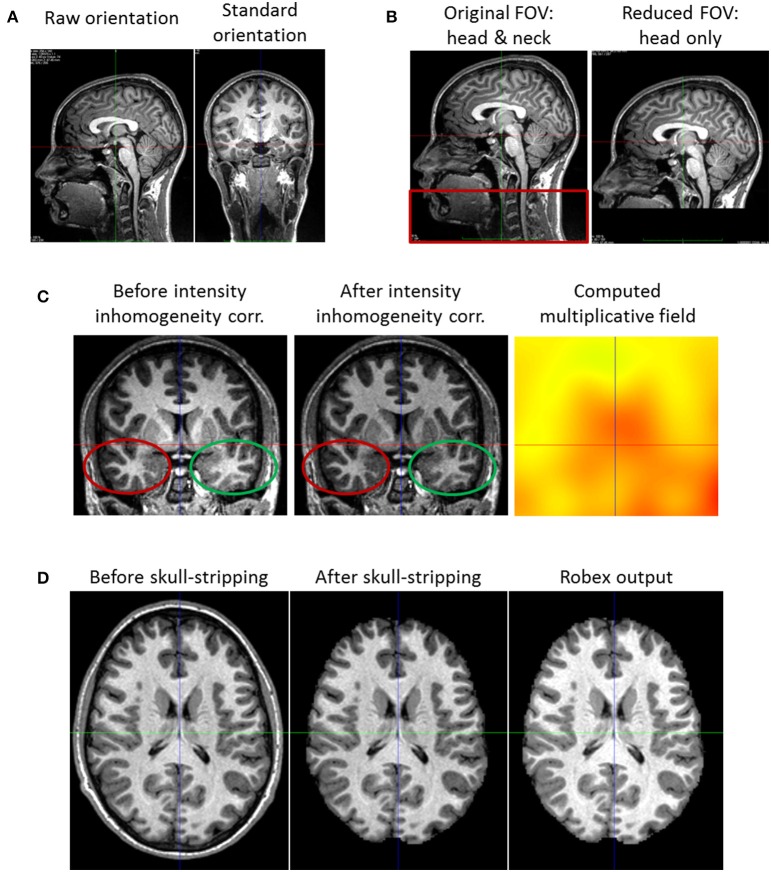
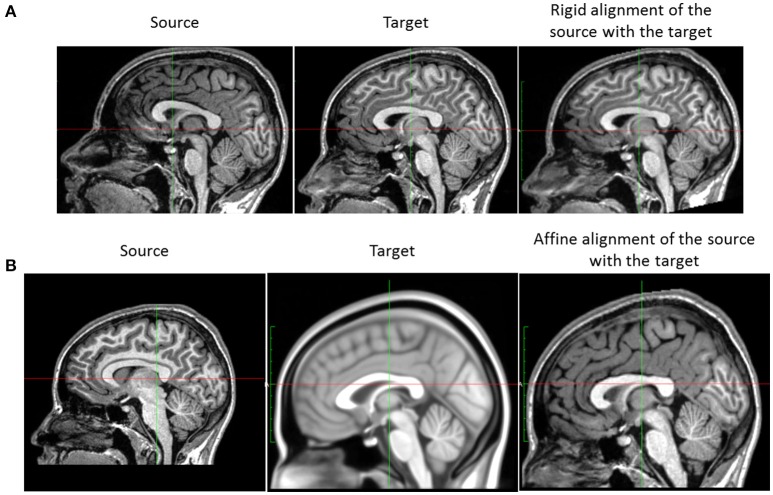
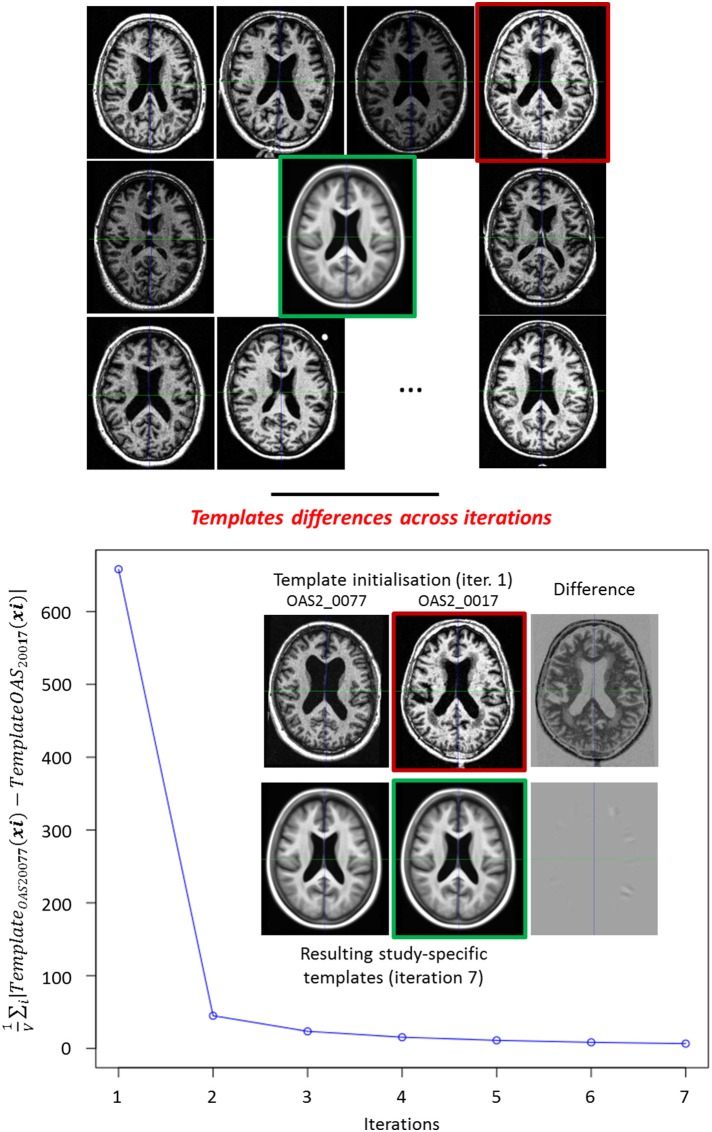
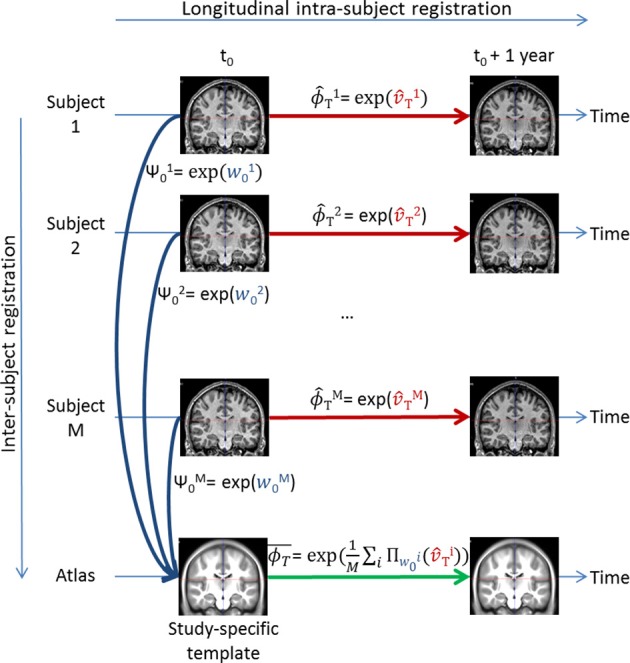
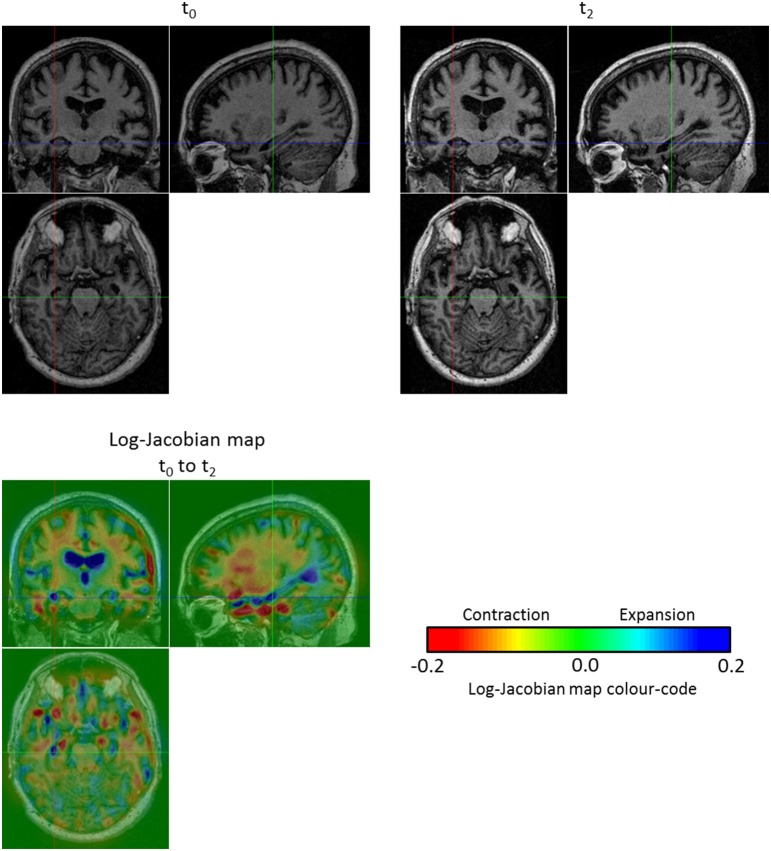
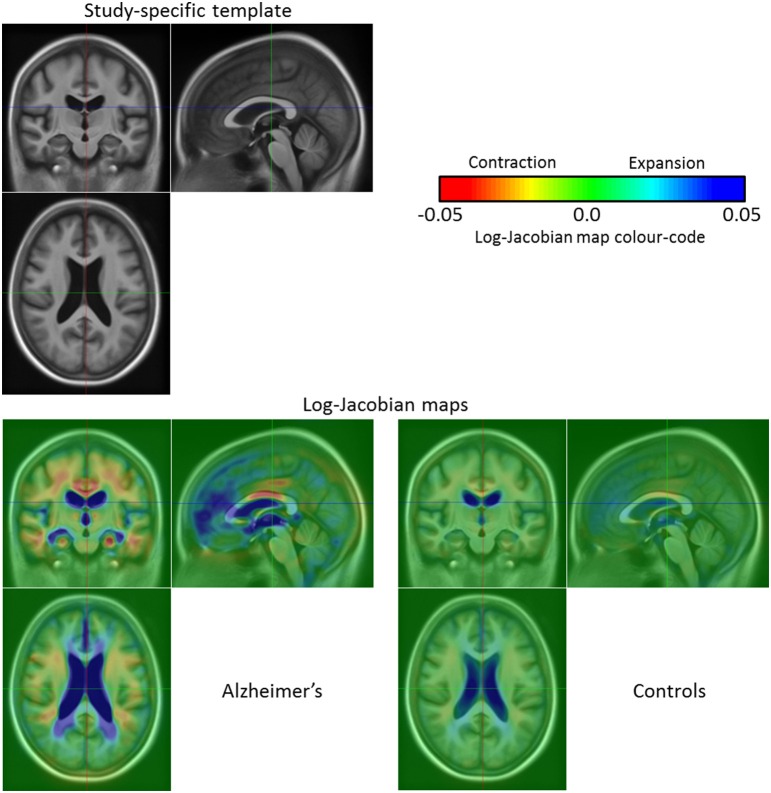
We propose and detail a deformation-based morphometry computational framework, called Longitudinal Log-Demons Framework (LLDF), to estimate the longitudinal brain deformations from image data series, transport them in a common space and perform statistical group-wise analyses. It is based on freely available software and tools, and consists of three main steps: (i) Pre-processing, (ii) Position correction, and (iii) Non-linear deformation analysis. It is based on the LCC log-Demons non-linear symmetric diffeomorphic registration algorithm with an additional modulation of the similarity term using a confidence mask to increase the robustness with respect to brain boundary intensity artifacts. The pipeline is exemplified on the longitudinal Open Access Series of Imaging Studies (OASIS) database and all the parameters values are given so that the study can be reproduced. We investigate the group-wise differences between the patients with Alzheimer's disease and the healthy control group, and show that the proposed pipeline increases the sensitivity with no decrease in the specificity of the statistical study done on the longitudinal deformations.
我们提出并详细介绍了一种基于变形的形态计量学计算框架,称为纵向对数恶魔框架(LLDF),用于从图像数据序列估计纵向脑变形,将其传输到公共空间并进行统计组分析。它基于免费可用的软件和工具,包括三个主要步骤:(i)预处理,(ii)位置校正,以及(iii)非线性变形分析。它基于LCC对数恶魔非线性对称微分同胚配准算法,并使用置信掩码对相似性项进行额外调制,以提高对脑边界强度伪影的鲁棒性。该流程在纵向开放获取成像研究系列(OASIS)数据库上进行了示例,并给出了所有参数值,以便能够重现该研究。我们研究了阿尔茨海默病患者与健康对照组之间的组间差异,并表明所提出的流程提高了敏感性,同时在对纵向变形进行的统计研究中特异性没有降低。