Kirk Joseph A, Fagan Robert P
Krebs Institute, Department of Molecular Biology and Biotechnology, University of Sheffield, Sheffield, S10 2TN, UK.
Anaerobe. 2016 Dec;42:1-5. doi: 10.1016/j.anaerobe.2016.06.009. Epub 2016 Jul 1.
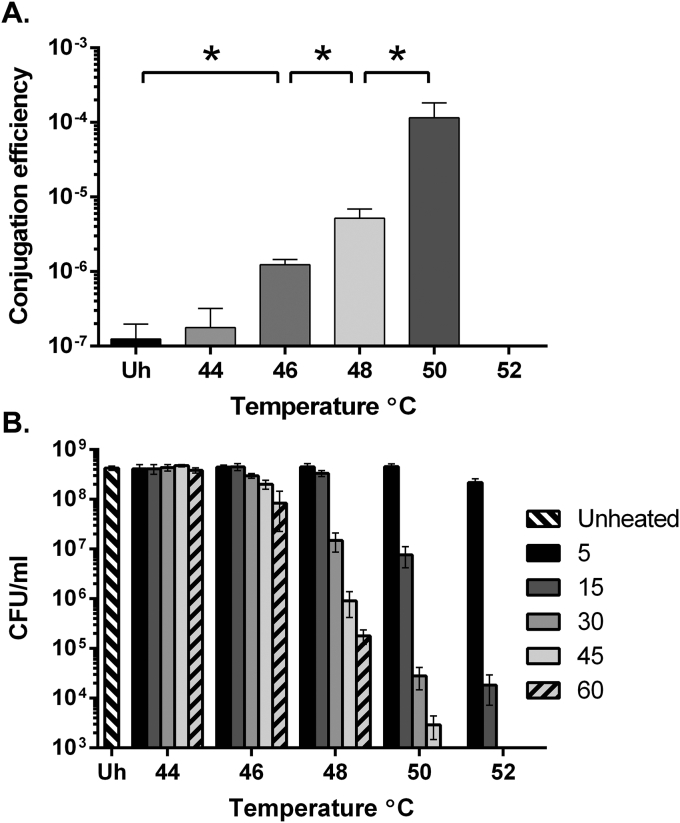
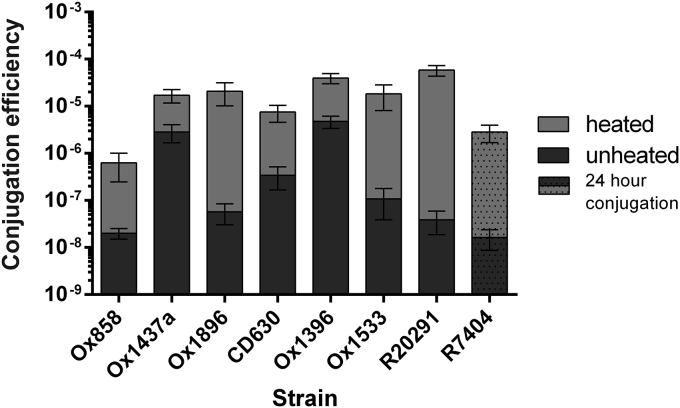
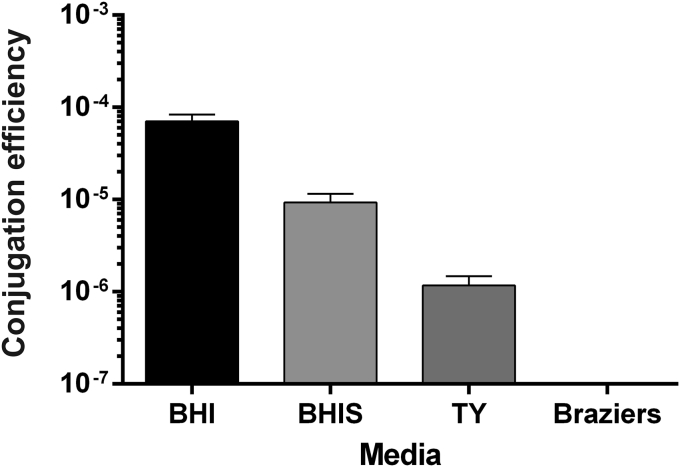
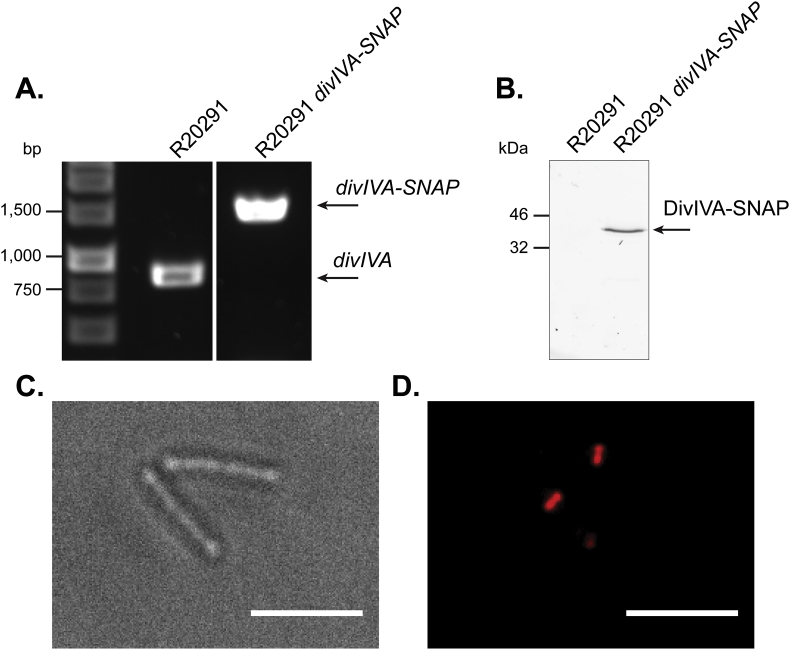
Clostridium difficile infection has increased in incidence and severity over the past decade, and poses a unique threat to human health. However, genetic manipulation of C. difficile remains in its infancy and the bacterium remains relatively poorly characterised. Low-efficiency conjugation is currently the only available method for transfer of plasmid DNA into C. difficile. This is practically limiting and has slowed progress in understanding this important pathogen. Conjugation efficiency varies widely between strains, with important clinically relevant strains such as R20291 being particularly refractory to plasmid transfer. Here we present an optimised conjugation method in which the recipient C. difficile is heat treated prior to conjugation. This significantly improves conjugation efficiency in all C. difficile strains tested including R20291. Conjugation efficiency was also affected by the choice of media on which conjugations were performed, with standard BHI media giving most transconjugant recovery. Using our optimised method greatly increased the ease with which the chromosome of R20291 could be precisely manipulated by homologous recombination. Our method improves on current conjugation protocols and will help speed genetic manipulation of strains otherwise difficult to work with.
在过去十年中,艰难梭菌感染的发病率和严重程度都有所上升,对人类健康构成了独特威胁。然而,对艰难梭菌的基因操作仍处于起步阶段,而且该细菌的特征仍相对了解不足。低效率的接合作用是目前将质粒DNA导入艰难梭菌的唯一可用方法。这在实际操作中存在限制,减缓了对这种重要病原体的了解进程。接合效率在不同菌株之间差异很大,像R20291这样重要的临床相关菌株对质粒转移尤其具有抗性。在此,我们提出一种优化的接合方法,即在接合之前对受体艰难梭菌进行热处理。这显著提高了在所有测试的艰难梭菌菌株(包括R20291)中的接合效率。接合效率还受到进行接合所用培养基选择的影响,标准BHI培养基能使大多数转接合子回收。使用我们的优化方法极大地提高了通过同源重组精确操作R20291染色体的便利性。我们的方法改进了当前的接合方案,并将有助于加快对原本难以操作的菌株进行基因操作的速度。