Clausen M J A M, Melchers L J, Mastik M F, Slagter-Menkema L, Groen H J M, Laan B F A M van der, van Criekinge W, de Meyer T, Denil S, van der Vegt B, Wisman G B A, Roodenburg J L N, Schuuring E
a Departments of Pathology , University of Groningen, University Medical Center Groningen , Groningen , the Netherlands.
b Oral and Maxillofacial Surgery, University of Groningen, University Medical Center Groningen , Groningen , the Netherlands.
Epigenetics. 2016 Sep;11(9):653-663. doi: 10.1080/15592294.2016.1205176. Epub 2016 Jul 5.
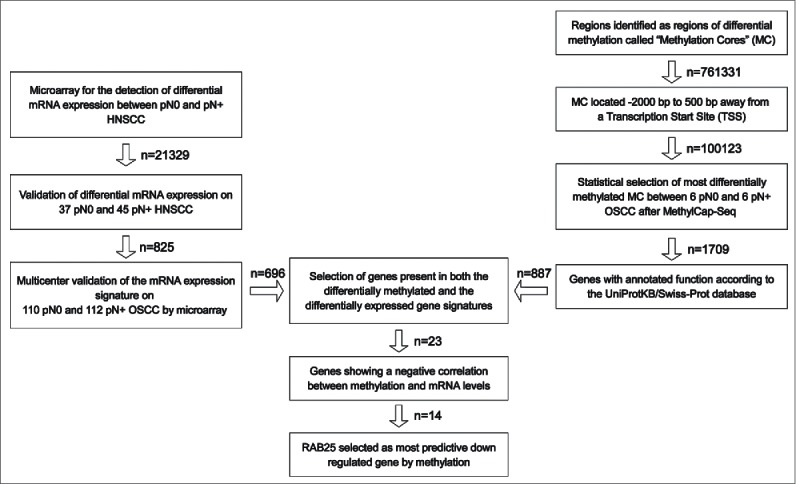
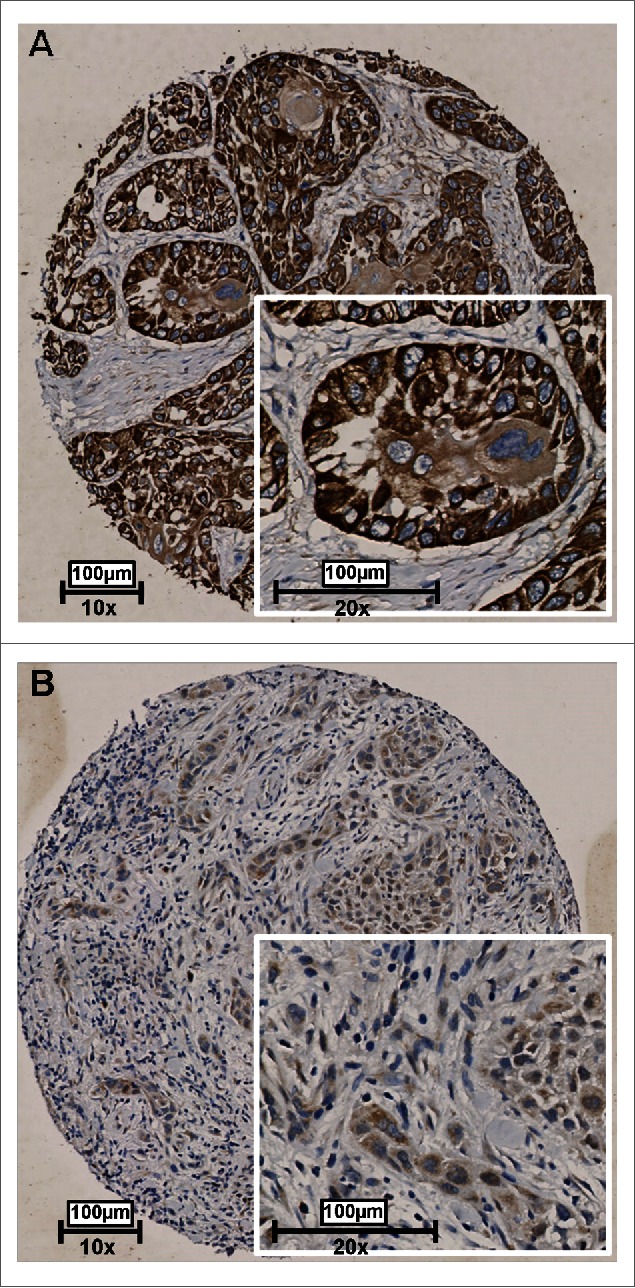
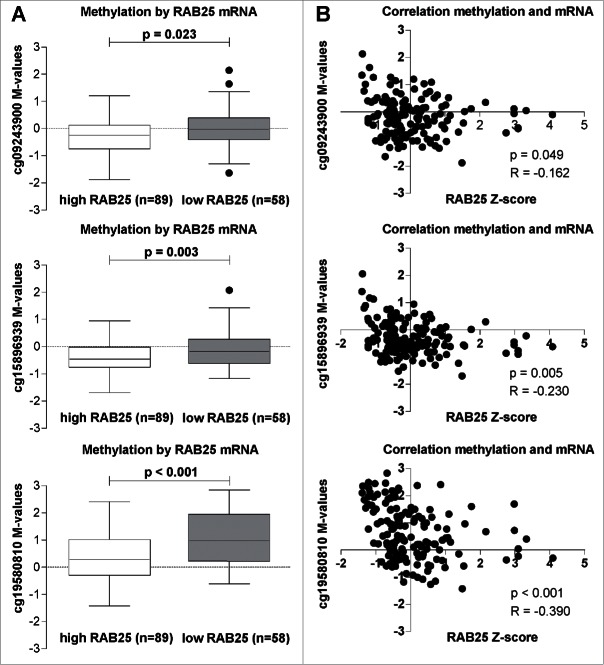
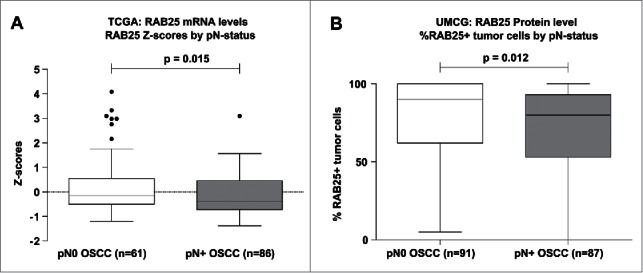
Oral and oropharyngeal squamous cell carcinoma (OOSCC) have a low survival rate, mainly due to metastasis to the regional lymph nodes. For optimal treatment of these metastases, a neck dissection is required; however, inaccurate detection methods results in under- and over-treatment. New DNA prognostic methylation biomarkers might improve lymph node metastases detection. To identify epigenetically regulated genes associated with lymph node metastases, genome-wide methylation analysis was performed on 6 OOSCC with (pN+) and 6 OOSCC without (pN0) lymph node metastases and combined with a gene expression signature predictive for pN+ status in OOSCC. Selected genes were validated using an independent OOSCC cohort by immunohistochemistry and pyrosequencing, and on data retrieved from The Cancer Genome Atlas. A two-step statistical selection of differentially methylated sequences revealed 14 genes with increased methylation status and mRNA downregulation in pN+ OOSCC. RAB25, a known tumor suppressor gene, was the highest-ranking gene in the discovery set. In the validation sets, both RAB25 mRNA (P = 0.015) and protein levels (P = 0.012) were lower in pN+ OOSCC. RAB25 mRNA levels were negatively correlated with RAB25 methylation levels (P < 0.001) but RAB25 protein expression was not. Our data revealed that promoter methylation is a mechanism resulting in downregulation of RAB25 expression in pN+ OOSCC and decreased expression is associated with lymph node metastasis. Detection of RAB25 methylation might contribute to lymph node metastasis diagnosis and serve as a potential new therapeutic target in OOSCC.
口腔和口咽鳞状细胞癌(OOSCC)的生存率较低,主要原因是区域淋巴结转移。为了对这些转移灶进行最佳治疗,需要进行颈部清扫术;然而,检测方法不准确会导致治疗不足和过度治疗。新的DNA预后甲基化生物标志物可能会改善淋巴结转移的检测。为了鉴定与淋巴结转移相关的表观遗传调控基因,对6例伴有(pN+)淋巴结转移的OOSCC和6例无(pN0)淋巴结转移的OOSCC进行了全基因组甲基化分析,并结合了预测OOSCC中pN+状态的基因表达特征。通过免疫组织化学和焦磷酸测序,以及从癌症基因组图谱中检索到的数据,使用独立的OOSCC队列对所选基因进行了验证。对差异甲基化序列进行的两步统计筛选揭示了14个基因,其在pN+ OOSCC中的甲基化状态增加且mRNA下调。RAB25是一种已知的肿瘤抑制基因,在发现集中是排名最高的基因。在验证集中,pN+ OOSCC中的RAB25 mRNA(P = 0.015)和蛋白水平(P = 0.012)均较低。RAB25 mRNA水平与RAB25甲基化水平呈负相关(P < 0.001),但RAB25蛋白表达并非如此。我们的数据表明,启动子甲基化是导致pN+ OOSCC中RAB25表达下调的一种机制,表达降低与淋巴结转移相关。检测RAB25甲基化可能有助于淋巴结转移的诊断,并作为OOSCC潜在的新治疗靶点。