Zhang Yi, Yang Tuo, Zeng Chao, Wei Jie, Li Hui, Xiong Yi-Lin, Yang Ye, Ding Xiang, Lei Guanghua
Department of Orthopaedics, Xiangya Hospital, Central South University, Changsha, Hunan Province, China.
Department of Epidemiology and Health Statistics, School of Public Health, Central South University, Changsha, Hunan Province, China.
BMJ Open. 2016 Jul 8;6(7):e009809. doi: 10.1136/bmjopen-2015-009809.
To examine the associations of coffee consumption with the serum uric acid (SUA) level, hyperuricaemia (HU) and gout.
Systematic review and meta-analysis.
A comprehensive literature search up to April 2015, using PubMed and EMBASE databases, was conducted to identify the observational researches that examined the associations of coffee consumption with the SUA level, HU and gout. The standard mean difference (SMD), OR, relative risk (RR) and their corresponding 95% CIs for the highest and the lowest categories of coffee intake were determined.
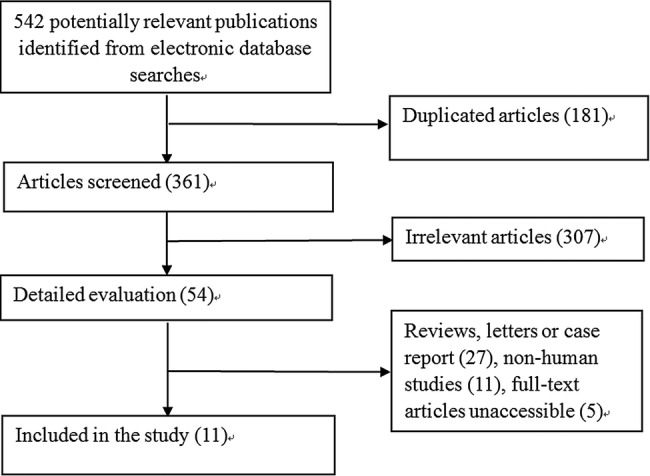
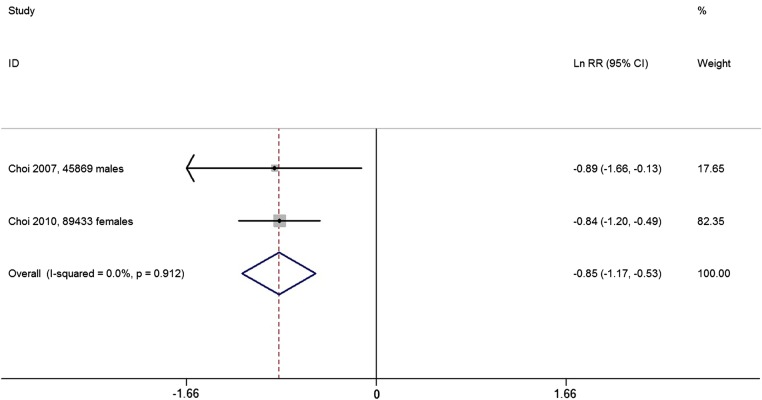
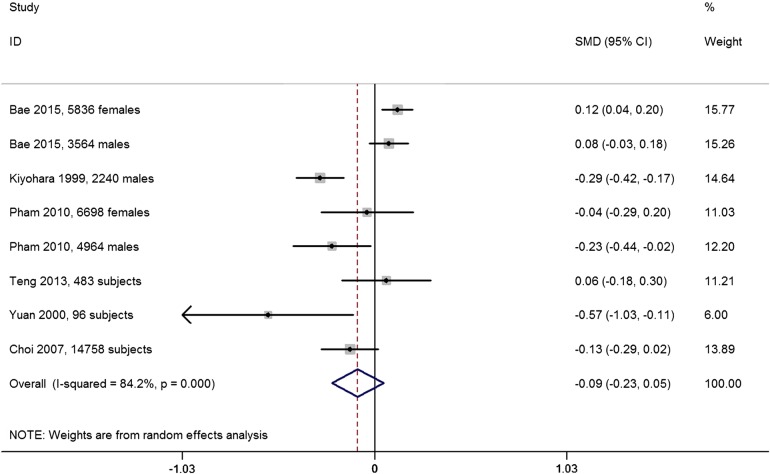
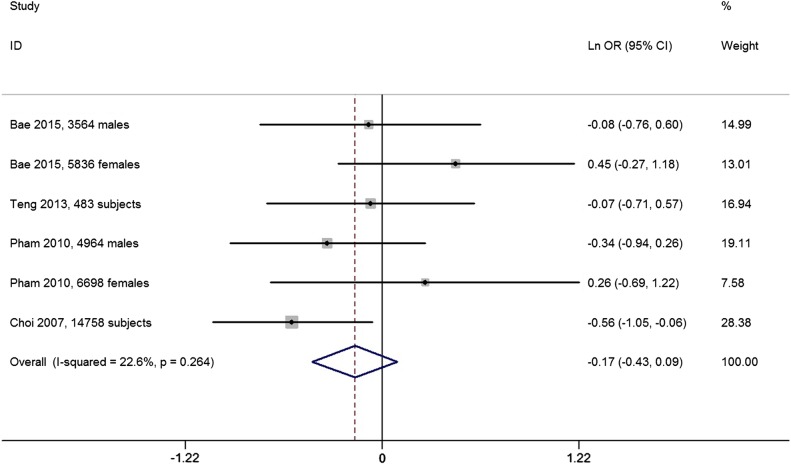
A total of 11 observational studies (6 cross-sectional, 3 cohort and 2 case-control studies) were included in this systematic review and meta-analysis. The combined SMD suggested that there was no significant difference between the highest and the lowest coffee intake categories in terms of the SUA level (SMD=-0.09, 95% CI -0.23 to 0.05; p=0.21). Meanwhile, the overall multivariable adjusted OR for HU showed no significant difference between the highest and the lowest coffee intake categories (OR=0.84, 95% CI 0.65 to 1.09; p=0.20). However, the overall multivariable adjusted RR for gout showed a significant inverse association between coffee consumption and the incidence of gout (RR=0.43, 95% CI 0.31 to 0.59, p<0.001).
Current evidences are insufficient to validate the association between coffee consumption and a lower risk of HU. Owing to the limited number of studies, the available data show that coffee consumption may be associated with a lower risk of incident gout. Further well-designed prospective researches and randomised controlled trials are therefore needed to elaborate on these issues.
研究咖啡摄入量与血清尿酸(SUA)水平、高尿酸血症(HU)及痛风之间的关联。
系统评价与荟萃分析。
通过检索PubMed和EMBASE数据库,全面检索截至2015年4月的文献,以确定研究咖啡摄入量与SUA水平、HU及痛风之间关联的观察性研究。计算咖啡摄入量最高组与最低组的标准均数差(SMD)、比值比(OR)、相对危险度(RR)及其相应的95%可信区间(CI)。
本系统评价与荟萃分析共纳入11项观察性研究(6项横断面研究、3项队列研究和2项病例对照研究)。合并的SMD表明,在SUA水平方面,咖啡摄入量最高组与最低组之间无显著差异(SMD=-0.09,95%CI -0.23至0.05;p=0.21)。同时,多变量校正后的HU总体OR在咖啡摄入量最高组与最低组之间无显著差异(OR=0.84,95%CI 0.65至1.09;p=0.20)。然而,多变量校正后的痛风总体RR显示咖啡摄入量与痛风发病率之间存在显著的负相关(RR=0.43,95%CI 0.31至0.59,p<0.001)。
目前的证据不足以证实咖啡摄入量与较低的HU风险之间的关联。由于研究数量有限,现有数据表明咖啡摄入量可能与较低的痛风发病风险相关。因此,需要进一步设计良好的前瞻性研究和随机对照试验来阐明这些问题。