Xu Guangzhong, Li Kai, Zhang Nengwei, Zhu Bin, Feng Guosheng
Department of General Surgery, Beijing Shijitan Hospital, Capital Medical University, Beijing 100038, China.
Department of General Surgery, Beijing Chao-Yang Hospital, Capital Medical University, Beijing 100020, China.
Gastroenterol Res Pract. 2016;2016:8431480. doi: 10.1155/2016/8431480. Epub 2016 Jun 15.
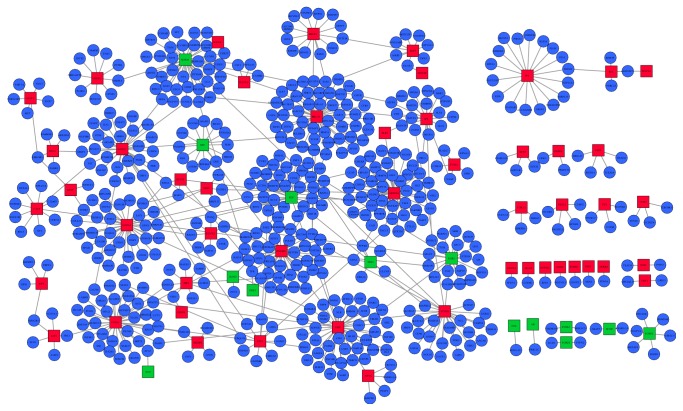
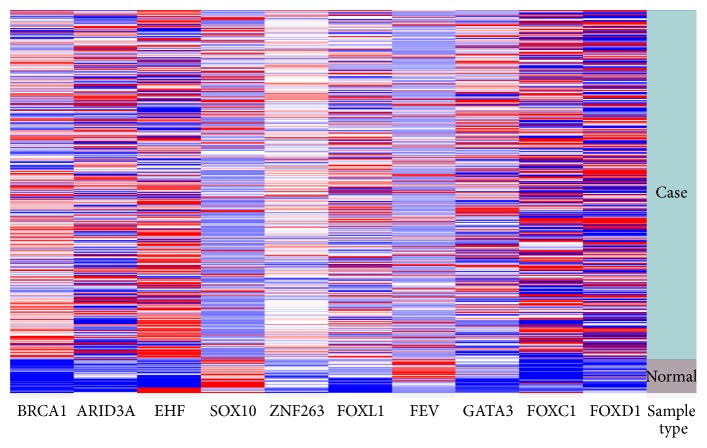
Background. Construction of the transcriptional regulatory network can provide additional clues on the regulatory mechanisms and therapeutic applications in gastric cancer. Methods. Gene expression profiles of gastric cancer were downloaded from GEO database for integrated analysis. All of DEGs were analyzed by GO enrichment and KEGG pathway enrichment. Transcription factors were further identified and then a global transcriptional regulatory network was constructed. Results. By integrated analysis of the six eligible datasets (340 cases and 43 controls), a bunch of 2327 DEGs were identified, including 2100 upregulated and 227 downregulated DEGs. Functional enrichment analysis of DEGs showed that digestion was a significantly enriched GO term for biological process. Moreover, there were two important enriched KEGG pathways: cell cycle and homologous recombination. Furthermore, a total of 70 differentially expressed TFs were identified and the transcriptional regulatory network was constructed, which consisted of 566 TF-target interactions. The top ten TFs regulating most downstream target genes were BRCA1, ARID3A, EHF, SOX10, ZNF263, FOXL1, FEV, GATA3, FOXC1, and FOXD1. Most of them were involved in the carcinogenesis of gastric cancer. Conclusion. The transcriptional regulatory network can help researchers to further clarify the underlying regulatory mechanisms of gastric cancer tumorigenesis.
背景。构建转录调控网络可为胃癌的调控机制和治疗应用提供更多线索。方法。从GEO数据库下载胃癌的基因表达谱进行综合分析。对所有差异表达基因(DEGs)进行基因本体(GO)富集分析和京都基因与基因组百科全书(KEGG)通路富集分析。进一步鉴定转录因子,然后构建全局转录调控网络。结果。通过对六个合格数据集(340例病例和43例对照)的综合分析,共鉴定出2327个差异表达基因,其中包括2100个上调基因和227个下调基因。差异表达基因的功能富集分析表明,消化是生物学过程中显著富集的GO术语。此外,有两个重要的KEGG富集通路:细胞周期和同源重组。此外,共鉴定出70个差异表达的转录因子,并构建了转录调控网络,该网络由566个转录因子-靶标相互作用组成。调控最下游靶基因最多的前十个转录因子是BRCA1、ARID3A、EHF、SOX10、ZNF263、FOXL1、FEV、GATA3、FOXC1和FOXD1。它们中的大多数参与了胃癌的致癌过程。结论。转录调控网络可帮助研究人员进一步阐明胃癌发生的潜在调控机制。