Montag Christian, Duke Éilish, Markowetz Alexander
Institute of Psychology and Education, Ulm University, Ulm, Germany; Key Laboratory for Neuroinformation/Center for Information in Medicine, School of Life Science and Technology, University of Electronic Science and Technology of China, Chengdu, China.
Department of Psychology, Goldsmiths, University of London, London, UK.
Comput Math Methods Med. 2016;2016:2983685. doi: 10.1155/2016/2983685. Epub 2016 Jun 14.
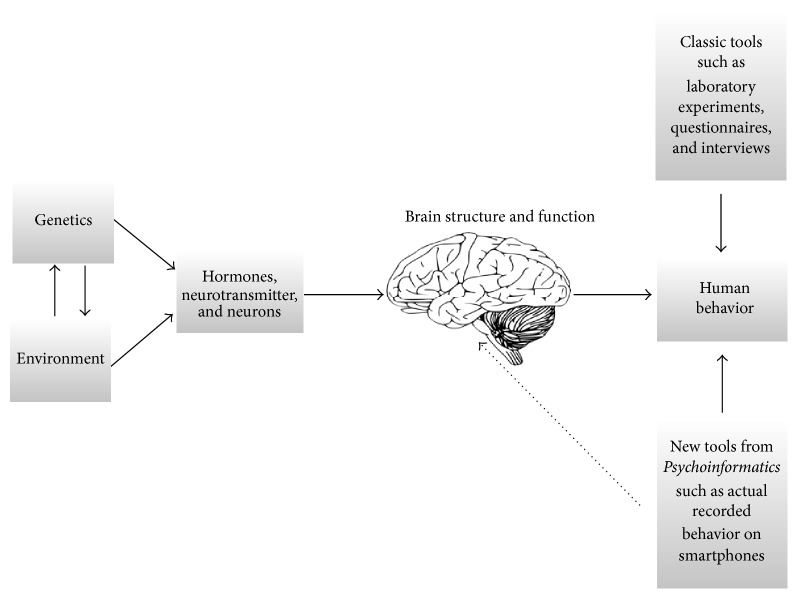
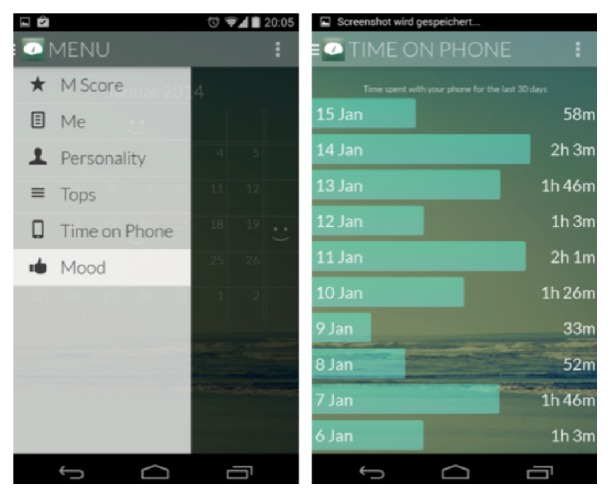
The present paper provides insight into an emerging research discipline called Psychoinformatics. In the context of Psychoinformatics, we emphasize the cooperation between the disciplines of psychology and computer science in handling large data sets derived from heavily used devices, such as smartphones or online social network sites, in order to shed light on a large number of psychological traits, including personality and mood. New challenges await psychologists in light of the resulting "Big Data" sets, because classic psychological methods will only in part be able to analyze this data derived from ubiquitous mobile devices, as well as other everyday technologies. As a consequence, psychologists must enrich their scientific methods through the inclusion of methods from informatics. The paper provides a brief review of one area of this research field, dealing mainly with social networks and smartphones. Moreover, we highlight how data derived from Psychoinformatics can be combined in a meaningful way with data from human neuroscience. We close the paper with some observations of areas for future research and problems that require consideration within this new discipline.
本文深入探讨了一门新兴的研究学科——心理信息学。在心理信息学的背景下,我们强调心理学和计算机科学学科之间的合作,以处理从频繁使用的设备(如智能手机或在线社交网站)中获取的大量数据,从而揭示包括个性和情绪在内的大量心理特征。鉴于由此产生的“大数据”集,心理学家面临着新的挑战,因为经典的心理学方法只能部分地分析从无处不在的移动设备以及其他日常技术中获取的数据。因此,心理学家必须通过纳入信息学方法来丰富他们的科学方法。本文简要回顾了这一研究领域的一个方面,主要涉及社交网络和智能手机。此外,我们强调了如何将心理信息学得出的数据与人类神经科学的数据以有意义的方式结合起来。我们以对未来研究领域的一些观察以及这一新学科中需要考虑的问题结束本文。