Wesolowski Carl A, Wesolowski Michal J, Babyn Paul S, Wanasundara Surajith N
Department of Medical Imaging, College of Medicine, University of Saskatchewan, Saskatoon, Saskatchewan, Canada.
Department of Radiology, Memorial University of Newfoundland, St. John's, Newfoundland, Canada.
PLoS One. 2016 Jul 12;11(7):e0158798. doi: 10.1371/journal.pone.0158798. eCollection 2016.
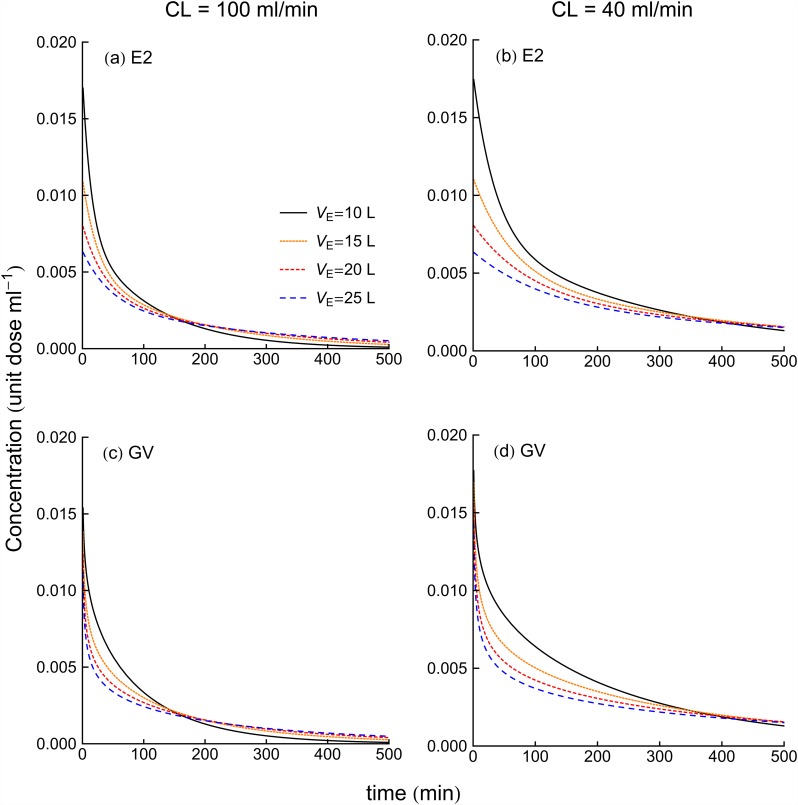
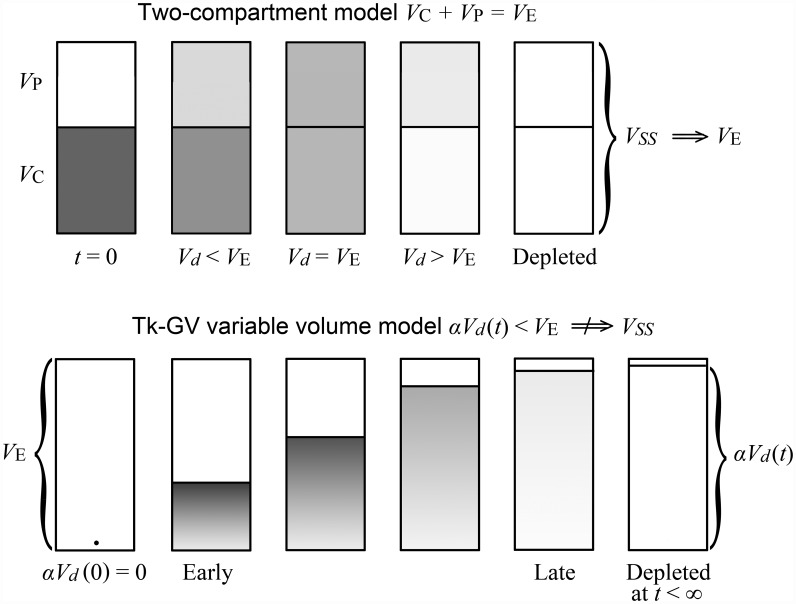
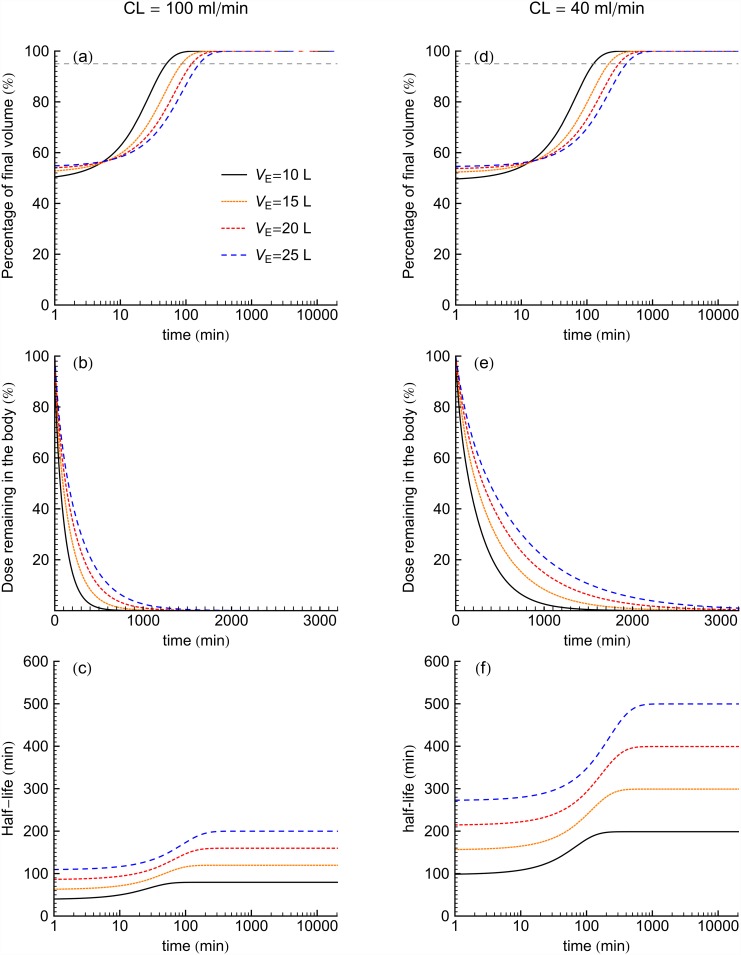
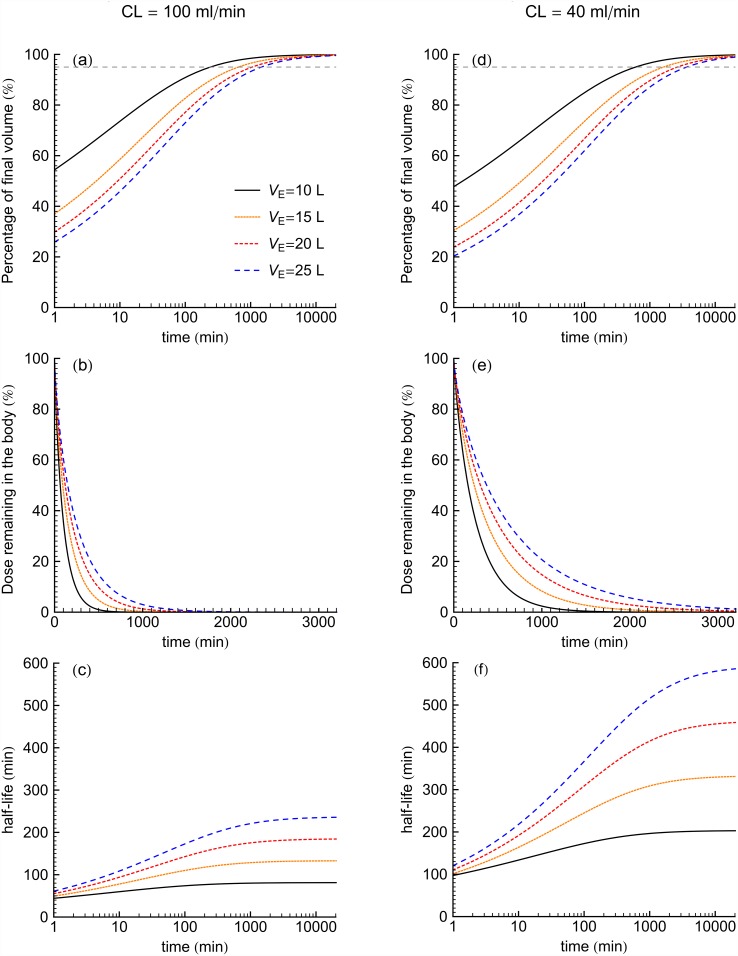
We present a model that generalizes the apparent volume of distribution and half-life as functions of time following intravenous bolus injection. This generalized model defines a time varying apparent volume of drug distribution. The half-lives of drug remaining in the body vary in time and become longer as time elapses, eventually converging to the terminal half-life. Two example fit models were substituted into the general model: biexponential models from the least relative concentration error, and gamma variate models using adaptive regularization for least relative error of clearance. Using adult population parameters from 41 studies of the renal glomerular filtration marker 169Yb-DTPA, simulations of extracellular fluid volumes of 5, 10, 15 and 20 litres and plasma clearances of 40 and 100 ml/min were obtained. Of these models, the adaptively obtained gamma variate models had longer times to 95% of terminal volume and longer half-lives.
我们提出了一个模型,该模型将静脉推注后作为时间函数的表观分布容积和半衰期进行了推广。这个广义模型定义了一个随时间变化的药物分布表观容积。体内剩余药物的半衰期随时间变化,并且随着时间的推移会变长,最终收敛到终末半衰期。将两个示例拟合模型代入到通用模型中:来自最小相对浓度误差的双指数模型,以及使用自适应正则化以实现清除率最小相对误差的伽马变量模型。利用来自41项关于肾小球滤过标志物169Yb - DTPA研究的成年人群参数,获得了细胞外液体积分别为5、10、15和20升以及血浆清除率分别为40和100 ml/min的模拟结果。在这些模型中,通过自适应获得的伽马变量模型达到终末容积95%的时间更长,半衰期也更长。