Thompson Lara A, Haburcakova Csilla, Lewis Richard F
Jenks Vestibular Physiology Laboratory, Massachusetts Eye and Ear Infirmary, Boston, MA, USA.
Division of Health Sciences and Technology, Harvard University-Massachusetts Institute of Technology (MIT), Cambridge, MA, USA.
Exp Brain Res. 2016 Nov;234(11):3245-3257. doi: 10.1007/s00221-016-4722-5. Epub 2016 Jul 12.
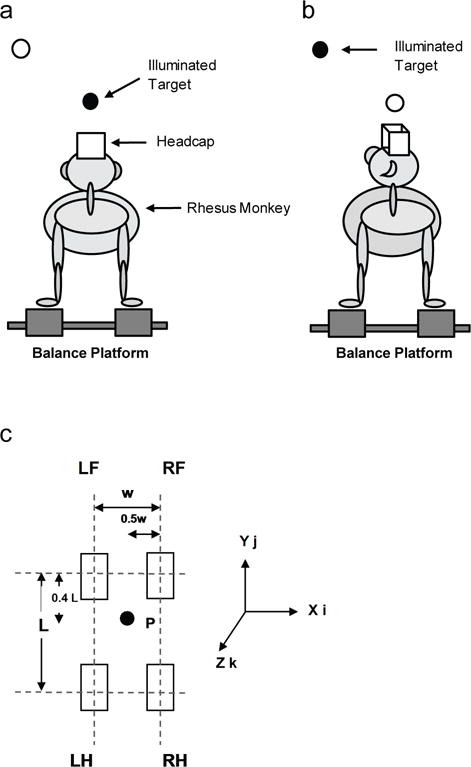
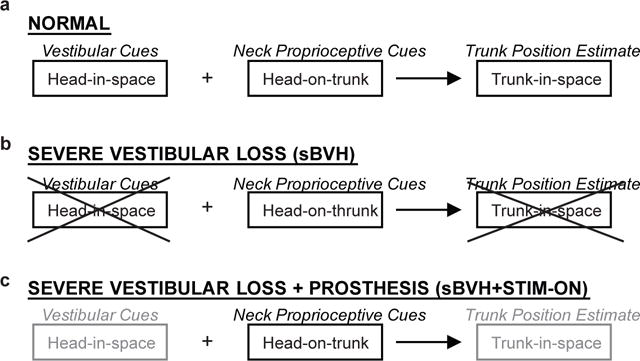
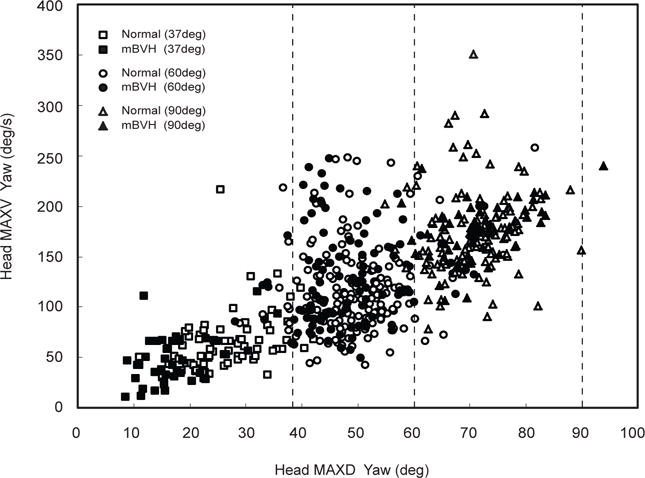
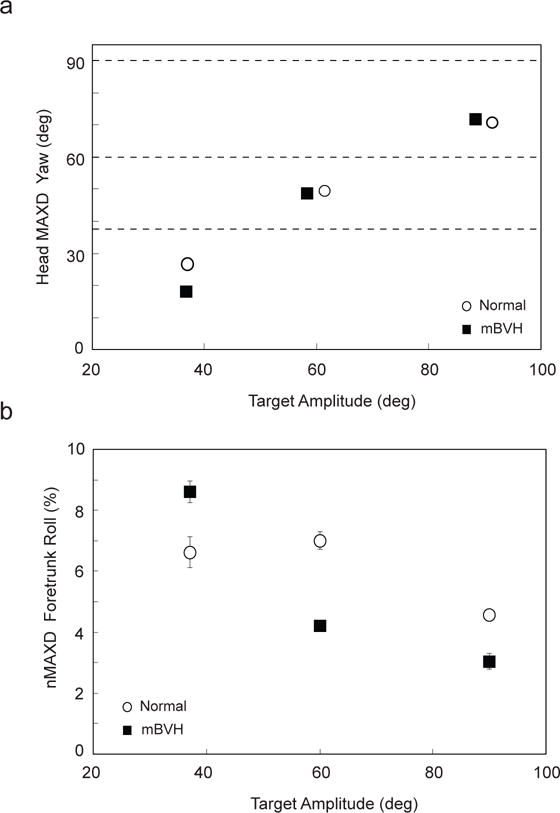
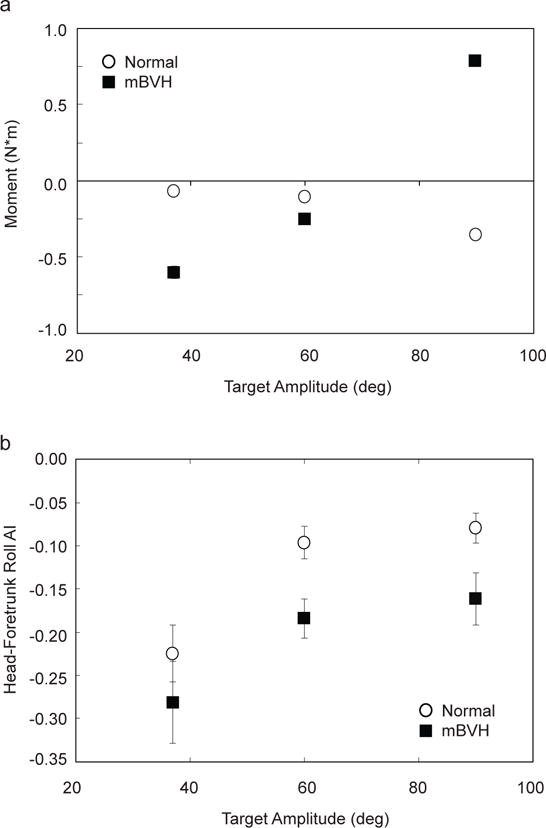
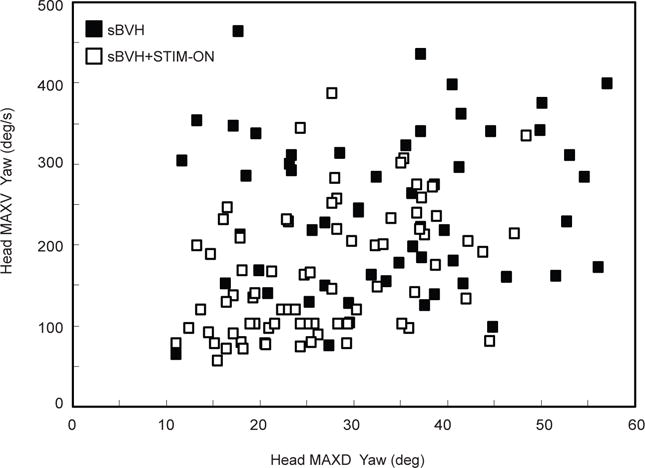
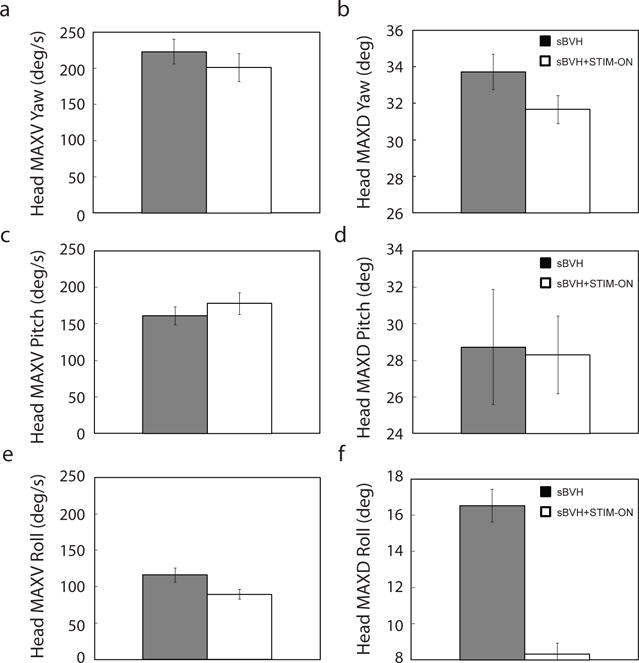
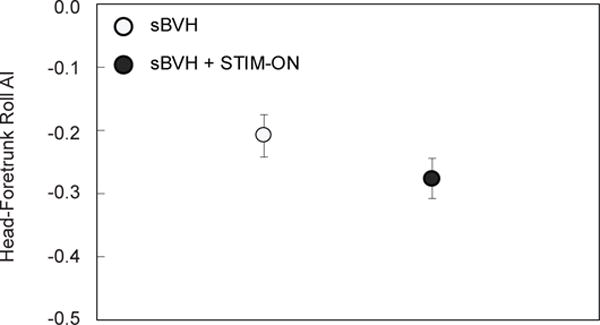
In our study, we examined postural stability during head turns for two rhesus monkeys: one animal study contrasted normal and mild bilateral vestibular ablation and a second animal study contrasted severe bilateral vestibular ablation with and without prosthetic stimulation. The monkeys freely stood, unrestrained on a balance platform and made voluntary head turns between visual targets. To quantify each animals' posture, motions of the head and trunk, as well as torque about the body's center of mass, were measured. In the mildly ablated animal, we observed less foretrunk sway in comparison with the normal state. When the canal prosthesis provided electric stimulation to the severely ablated animal, it showed a decrease in trunk sway during head turns. Because the rhesus monkey with severe bilateral vestibular loss exhibited a decrease in trunk sway when receiving vestibular prosthetic stimulation, we propose that the prosthetic electrical stimulation partially restored head velocity information. Our results provide an indication that a semicircular canal prosthesis may be an effective way to improve postural stability in patients with severe peripheral vestibular dysfunction.
在我们的研究中,我们检查了两只恒河猴转头时的姿势稳定性:一项动物研究对比了正常和轻度双侧前庭切除术,另一项动物研究对比了重度双侧前庭切除术在有和没有假体刺激情况下的差异。猴子自由站立,不受约束地站在平衡平台上,并在视觉目标之间进行自主转头。为了量化每只动物的姿势,测量了头部和躯干的运动以及围绕身体重心的扭矩。在轻度切除的动物中,与正常状态相比,我们观察到前躯干摆动较少。当半规管假体对重度切除的动物进行电刺激时,它在转头时的躯干摆动减少。由于重度双侧前庭丧失的恒河猴在接受前庭假体刺激时躯干摆动减少,我们提出假体电刺激部分恢复了头部速度信息。我们的结果表明,半规管假体可能是改善重度外周前庭功能障碍患者姿势稳定性的有效方法。