Sande Shadreck, Zimba Moses, Chinwada Peter, Masendu Hieronymo Takundwa, Mberikunshe Joseph, Makuwaza Aramu
Department of Biological Science, University of Zimbabwe, Harare, Zimbabwe.
ABT Associates Inc., 1 Erskine Road, Mt Pleasant, Harare, Zimbabwe.
Malar J. 2016 Jul 13;15(1):360. doi: 10.1186/s12936-016-1415-2.
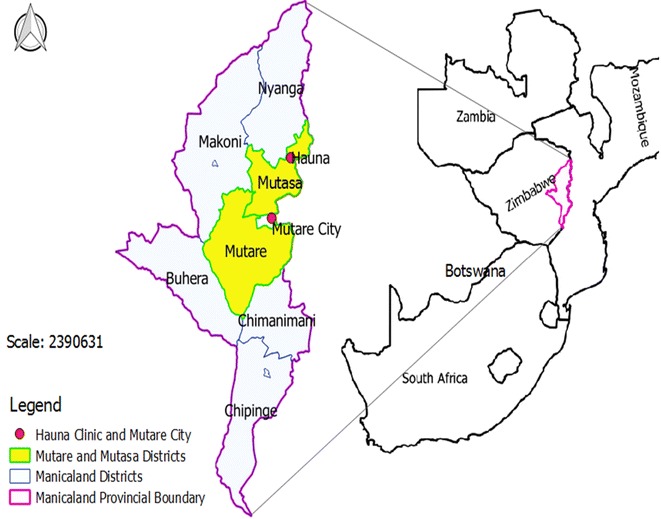
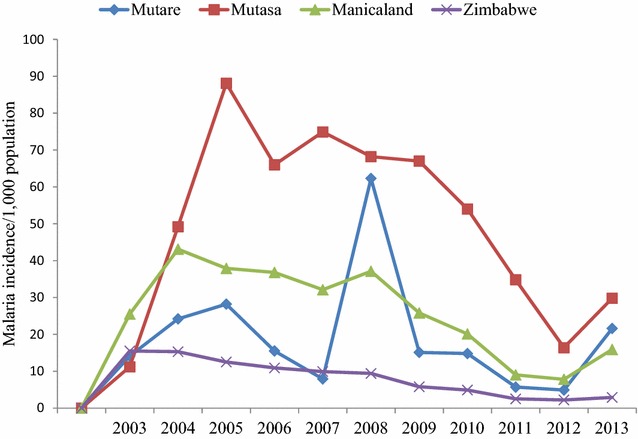
This review outlines and discusses the new challenges in malaria control and prospects for its elimination in Mutare and Mutasa Districts, Zimbabwe. The burden of malaria has declined significantly over the past 5 years in most regions in Zimbabwe, including Mutare and Mutasa Districts. The nationwide malaria reduction has been primarily linked to scaled-up vector control interventions and early diagnosis and treatment with effective anti-malarial medicines. The successes recorded have prompted Zimbabwe's National Malaria Control Programme to commit to a global health agenda of eliminating malaria in all districts in the country. However, despite the decline in malaria burden in Mutare and Mutasa Districts, there is clear evidence of new challenges, including changes in vector behaviour, resistance to insecticides and anti-malarial medicines, invasion of new areas by vectors, vectors in various combination of sympatry, changes in vector proportions, outdoor malaria transmission, climate change and lack of meticulousness of spray operators. These new challenges are likely to retard the shift from malaria control to elimination in Mutare and Mutasa Districts.
本综述概述并讨论了津巴布韦穆塔雷和穆塔萨区疟疾控制面临的新挑战及其消除前景。在过去5年里,包括穆塔雷和穆塔萨区在内的津巴布韦大部分地区,疟疾负担已显著下降。全国范围内疟疾发病率的降低主要与扩大病媒控制干预措施以及使用有效的抗疟药物进行早期诊断和治疗有关。所取得的成功促使津巴布韦国家疟疾控制规划致力于实现该国所有地区消除疟疾的全球卫生议程。然而,尽管穆塔雷和穆塔萨区的疟疾负担有所下降,但有明确证据表明存在新的挑战,包括病媒行为的变化、对杀虫剂和抗疟药物的耐药性、病媒侵入新地区、不同共生组合的病媒、病媒比例的变化、室外疟疾传播、气候变化以及喷洒操作人员不够细心等。这些新挑战可能会阻碍穆塔雷和穆塔萨区从疟疾控制向消除疟疾的转变。