Ivanov Alexandr, Mikhailova Tatyana, Eliseev Boris, Yeramala Lahari, Sokolova Elizaveta, Susorov Denis, Shuvalov Alexey, Schaffitzel Christiane, Alkalaeva Elena
Engelhardt Institute of Molecular Biology, the Russian Academy of Sciences, 119991 Moscow, Russia Faculty of Bioengineering and Bioinformatics, M.V. Lomonosov Moscow State University, 119992 Moscow, Russia.
Engelhardt Institute of Molecular Biology, the Russian Academy of Sciences, 119991 Moscow, Russia.
Nucleic Acids Res. 2016 Sep 19;44(16):7766-76. doi: 10.1093/nar/gkw635. Epub 2016 Jul 14.
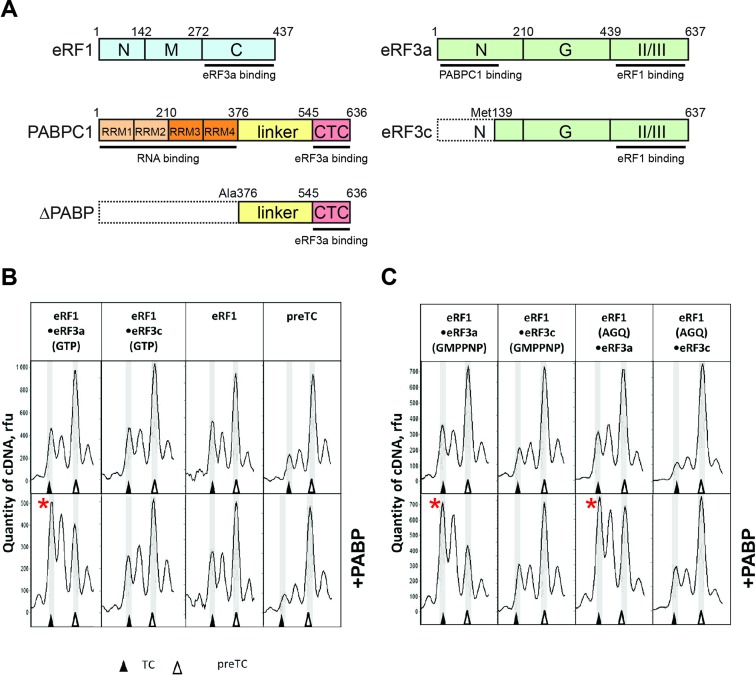
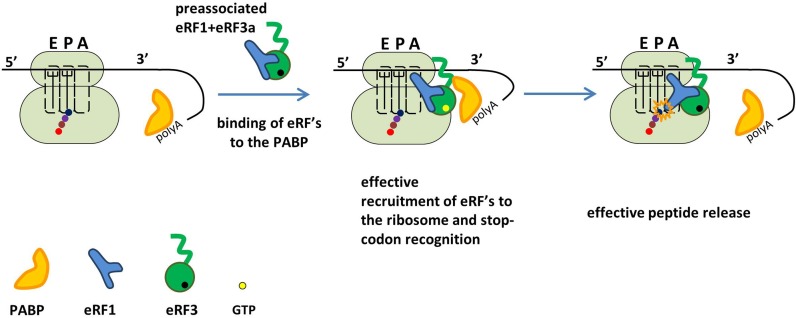
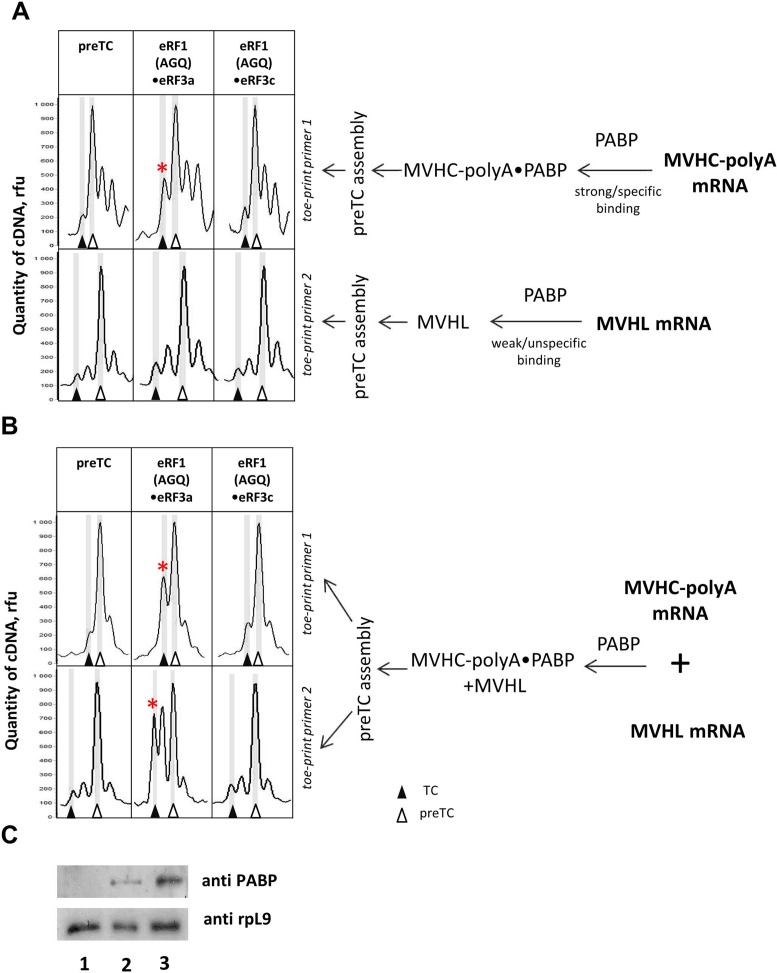
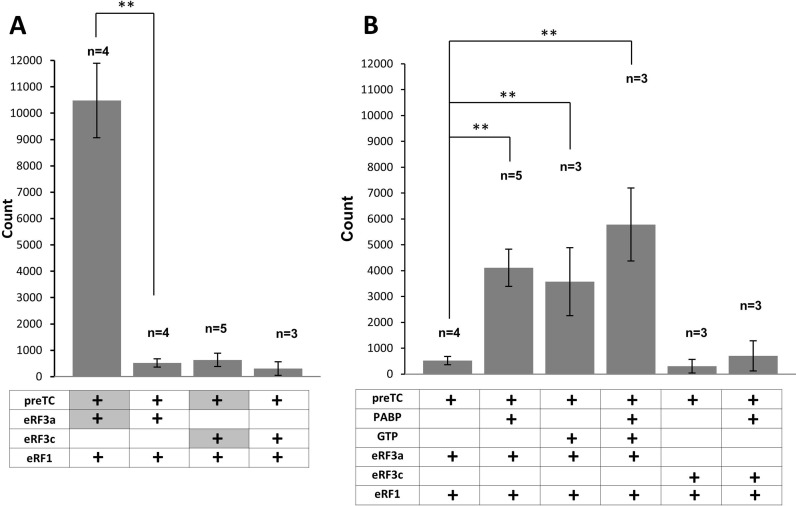
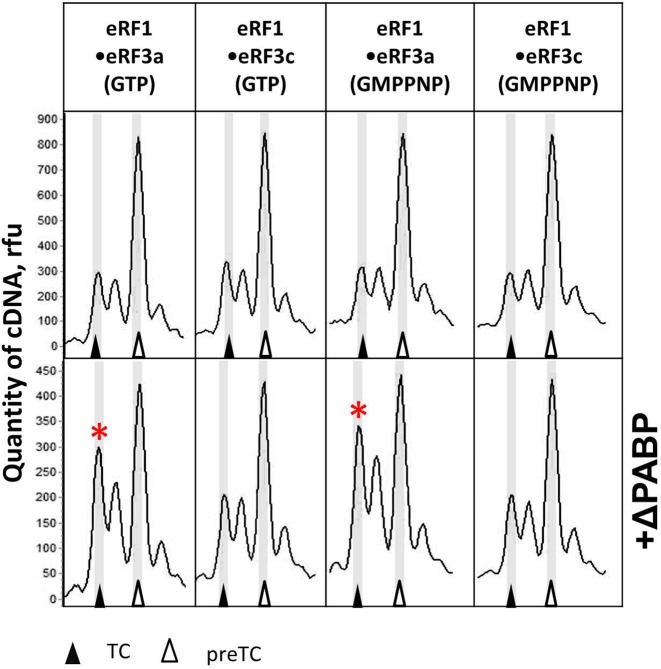
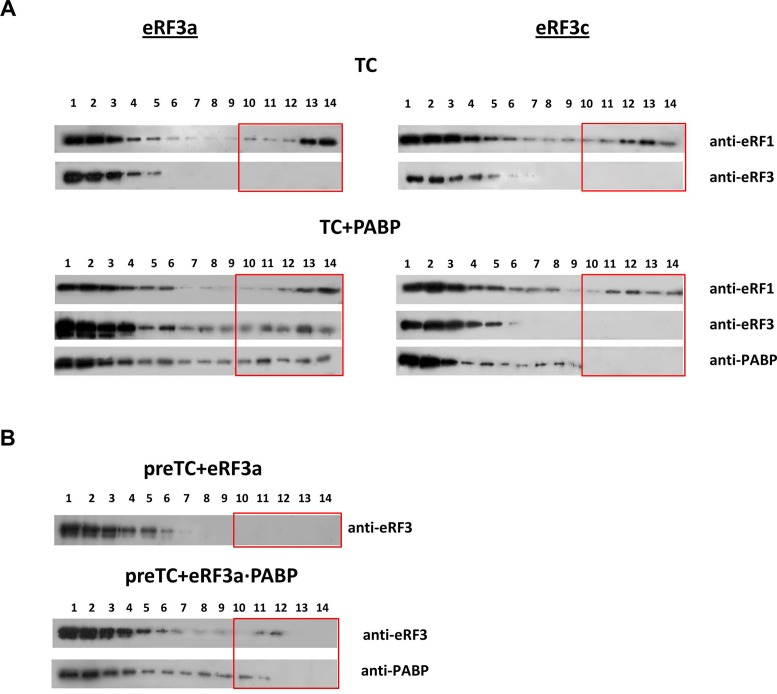
Poly(A)-binding protein (PABP) is a major component of the messenger RNA-protein complex. PABP is able to bind the poly(A) tail of mRNA, as well as translation initiation factor 4G and eukaryotic release factor 3a (eRF3a). PABP has been found to stimulate translation initiation and to inhibit nonsense-mediated mRNA decay. Using a reconstituted mammalian in vitro translation system, we show that PABP directly stimulates translation termination. PABP increases the efficiency of translation termination by recruitment of eRF3a and eRF1 to the ribosome. PABP's function in translation termination depends on its C-terminal domain and its interaction with the N-terminus of eRF3a. Interestingly, we discover that full-length eRF3a exerts a different mode of function compared to its truncated form eRF3c, which lacks the N-terminal domain. Pre-association of eRF3a, but not of eRF3c, with pre-termination complexes (preTCs) significantly increases the efficiency of peptidyl-tRNA hydrolysis by eRF1. This implicates new, additional interactions of full-length eRF3a with the ribosomal preTC. Based on our findings, we suggest that PABP enhances the productive binding of the eRF1-eRF3 complex to the ribosome, via interactions with the N-terminal domain of eRF3a which itself has an active role in translation termination.
聚腺苷酸结合蛋白(PABP)是信使核糖核酸-蛋白质复合物的主要成分。PABP能够结合mRNA的聚腺苷酸尾,以及翻译起始因子4G和真核释放因子3a(eRF3a)。已发现PABP可刺激翻译起始并抑制无义介导的mRNA降解。利用重组的哺乳动物体外翻译系统,我们发现PABP直接刺激翻译终止。PABP通过将eRF3a和eRF1募集到核糖体来提高翻译终止效率。PABP在翻译终止中的功能取决于其C末端结构域及其与eRF3a N末端的相互作用。有趣的是,我们发现全长eRF3a与其截短形式eRF3c(缺少N末端结构域)发挥不同的功能模式。eRF3a而非eRF3c与终止前复合物(preTCs)的预结合显著提高了eRF1进行肽基-tRNA水解的效率。这意味着全长eRF3a与核糖体preTC之间存在新的额外相互作用。基于我们的发现,我们认为PABP通过与eRF3a的N末端结构域相互作用,增强了eRF1-eRF3复合物与核糖体的有效结合,而eRF3a本身在翻译终止中发挥着积极作用。