Naghiloo Somayeh, Movafeghi Ali, Delazar Abbas, Nazemiyeh Hosein, Asnaashari Solmaz, Dadpour Mohammad Reza
Department of Plant Biology, Faculty of Natural Sciences, University of Tabriz, Tabriz, Iran.
School of Pharmacy and Drug Applied Research Center, Tabriz University of Medical Sciences, Tabriz, Iran.
EXCLI J. 2012 Jul 25;11:436-43. eCollection 2012.
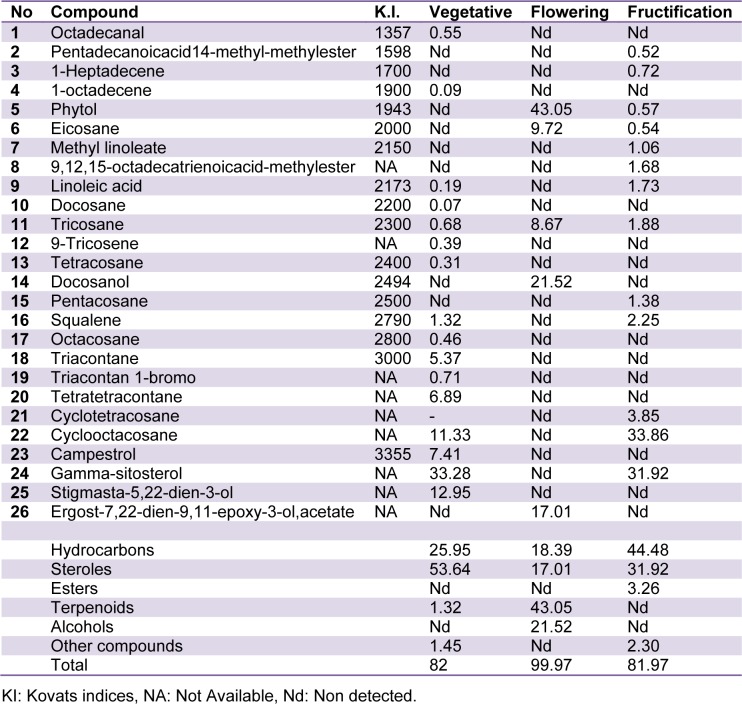
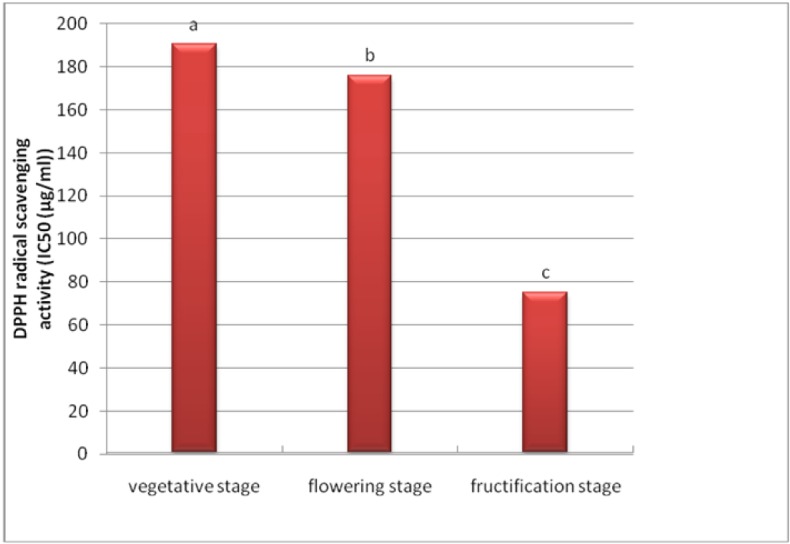
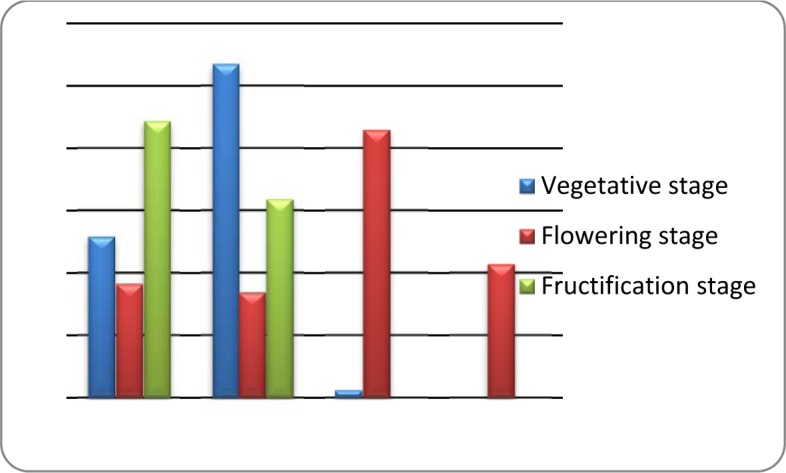
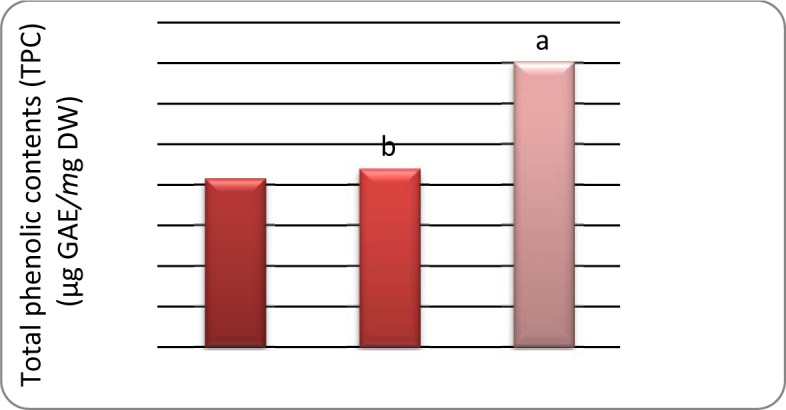
The genus Astragalus is a rich source of a variety of biologically active compounds including phenols, saponins, polysaccharides and essential oils. The present study was conducted to determine ontogenetic variation of the volatile organic compounds as well as total phenolic contents and antioxidant activity in leaves of A. compactus. The leaves of plant were harvested at vegetative, flowering and fructification stages and were analyzed by gas chromatography coupled with mass spectrometry (GC-MS). Total phenolic content (TPC) was determined using the Folin-Ciocalteau reagent and the antioxidant capacity was evaluated with the 1,1-diphenyl-2-picrylhydrazyl (DPPH) test. Different classes of volatile compounds were identified including alcohols, esters, hydrocarbons, sterols and terpenoides. Significant variation of these compounds was found during phenological stages of development. Sterols and hydrocarbons were the main components of essential oils at the vegetative stage. The presence of terpenoides (phytol) and alcohols (docosanol) was significant at the flowering stage. Fructification phase was characterized by the high content of sterols and hydrocarbons and absence of phytol. The antioxidant activity and phenolic content were related to the physiological stage and the highest amount detected at fructification phase. The ontogenetic variations of phenolic contents and antioxidant properties are largely contributed by climatic factors such as temperature and solar radiation.
黄芪属植物富含多种生物活性化合物,包括酚类、皂苷、多糖和精油。本研究旨在确定紧密黄芪叶片中挥发性有机化合物的个体发育变化以及总酚含量和抗氧化活性。在营养期、花期和结果期采集植物叶片,并采用气相色谱-质谱联用(GC-MS)进行分析。使用福林-西奥尔特试剂测定总酚含量(TPC),并用1,1-二苯基-2-苦基肼(DPPH)试验评估抗氧化能力。鉴定出了不同类别的挥发性化合物,包括醇类、酯类、烃类、甾醇类和萜类化合物。在发育的物候阶段发现这些化合物有显著变化。甾醇类和烃类是营养期精油的主要成分。萜类化合物(叶绿醇)和醇类(二十二醇)在花期含量显著。结果期的特点是甾醇类和烃类含量高且不含叶绿醇。抗氧化活性和酚类含量与生理阶段有关,在结果期检测到的含量最高。酚类含量和抗氧化特性的个体发育变化在很大程度上受温度和太阳辐射等气候因素的影响。