Michelle Xu M, Pu Y, Weichselbaum R R, Fu Y-X
Department of Pathology and Radiation Oncology, University of Chicago, Chicago, IL, USA.
Ludwig Center for Metastasis Research, University of Chicago, Chicago, IL, USA.
Oncogene. 2017 Feb 2;36(5):585-592. doi: 10.1038/onc.2016.231. Epub 2016 Jul 18.
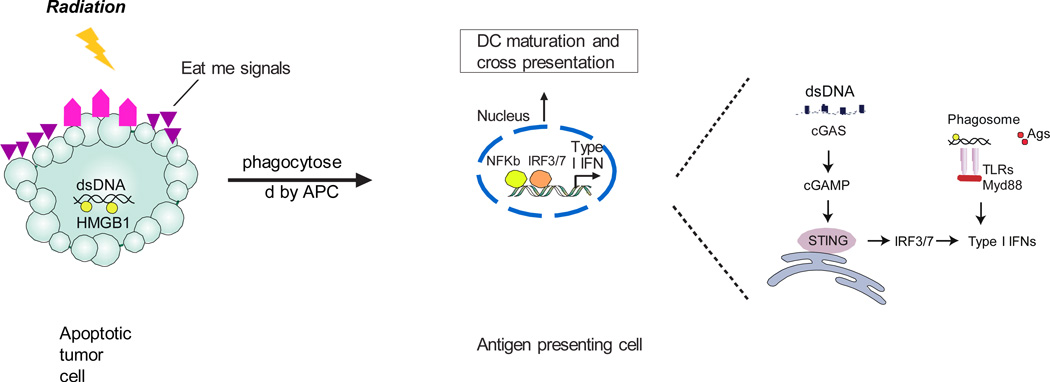
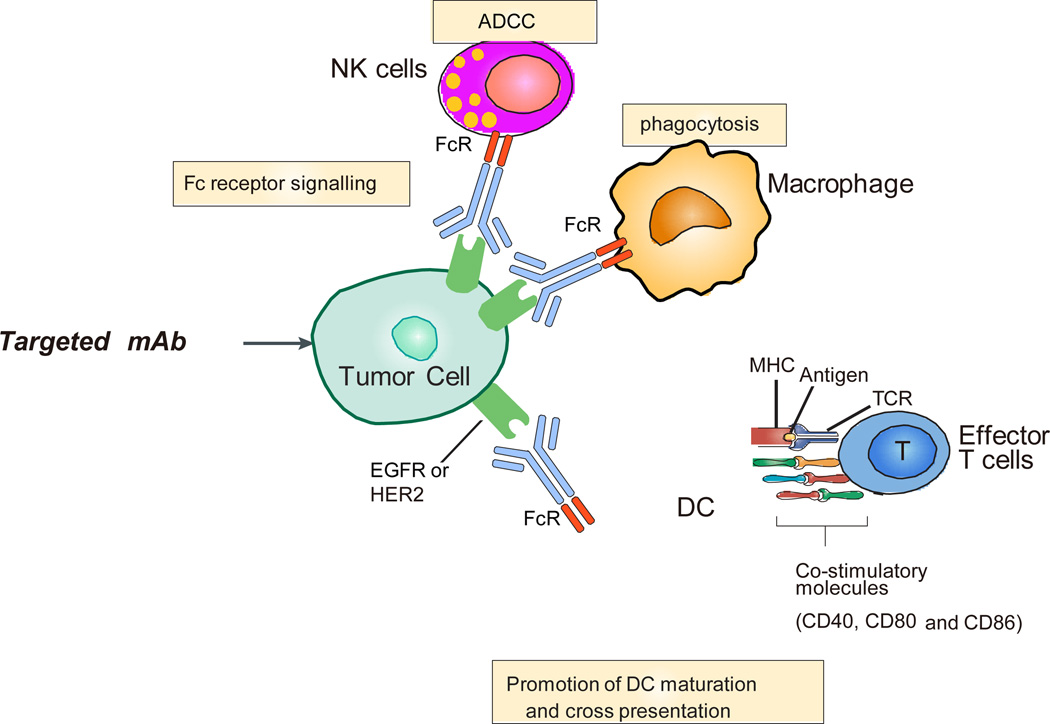
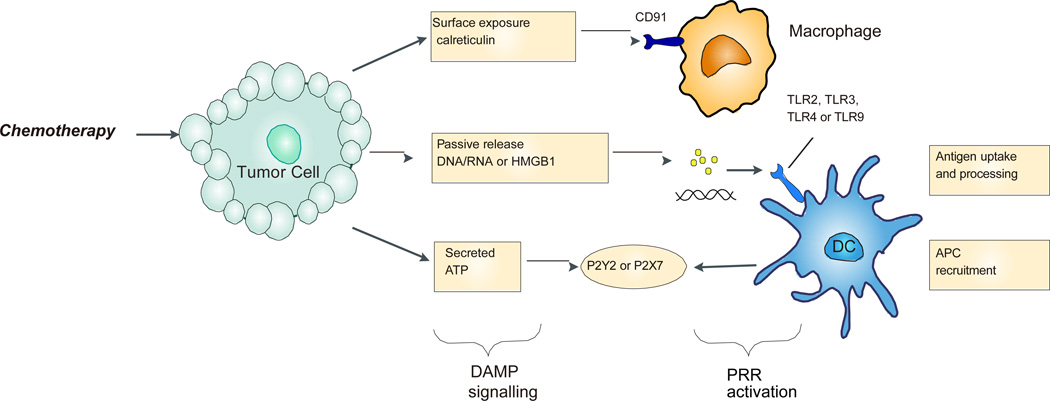
In advanced cancer, current conventional therapies or immunotherapies cannot eradicate all tumor cells for most patients. Integration of these two treatments for synergistic effects could eradicate more tumor cells and increase the overall survival rates. However, since how conventional treatments impact on immune system remains unclear, proper integration is still a challenge. Intensive chemo/radiotherapy may impair ongoing immune responses, while lower intensity of therapy might not kill enough tumor cells, both leading to tumor relapse. Current understanding of mechanisms of resistance to conventional and targeted cancer therapies has focused on cell intrinsic pathways that trigger DNA damage/repair or signaling pathways related to cell growth. Recent reports show that host T cells properly primed against tumor-specific antigens after conventional treatment, which can integrate with direct cytotoxic effects induced by radiation or chemotherapy to profoundly control tumors. Following cytotoxic anticancer treatment, tumor-derived DAMPs (damage-associated molecular patterns) can be sensed by innate cells, which drives type I interferon production for cross-priming of CD8 T cells. Some types and protocols of chemotherapy or radiation can increase tumor-infiltrating lymphocytes that overcome resistance to immunotherapy. As such, a deeper understanding of the immune mechanisms of conventional and targeted cancer therapies will lead toward novel combinatorial anticancer strategies with improved clinical benefit.
在晚期癌症中,对于大多数患者而言,当前的传统疗法或免疫疗法无法根除所有肿瘤细胞。将这两种治疗方法结合以产生协同效应,可能会根除更多肿瘤细胞并提高总体生存率。然而,由于传统治疗对免疫系统的影响尚不清楚,因此合理的结合仍然是一项挑战。强化化疗/放疗可能会损害正在进行的免疫反应,而较低强度的治疗可能无法杀死足够多的肿瘤细胞,两者都可能导致肿瘤复发。目前对传统和靶向癌症治疗耐药机制的理解主要集中在触发DNA损伤/修复的细胞内在途径或与细胞生长相关的信号通路。最近的报告表明,传统治疗后针对肿瘤特异性抗原适当激活的宿主T细胞,可以与放疗或化疗诱导的直接细胞毒性作用相结合,从而深度控制肿瘤。在进行细胞毒性抗癌治疗后,肿瘤来源的损伤相关分子模式(DAMPs)可被固有细胞感知,从而驱动I型干扰素产生,用于CD8 T细胞的交叉激活。某些类型的化疗或放疗方案可以增加肿瘤浸润淋巴细胞,从而克服对免疫疗法的耐药性。因此,更深入地了解传统和靶向癌症治疗的免疫机制将有助于开发具有更好临床疗效的新型联合抗癌策略。