Du Wen-Li, Dubarry Nelly, Passot Fanny M, Kamgoué Alain, Murray Heath, Lane David, Pasta Franck
Laboratoire de Microbiologie et Génétique Moléculaires, Centre National de Recherche Scientifique / Université Paul Sabatier, Toulouse, France.
Laboratoire de Biologie Moléculaire Eucaryote, Centre National de Recherche Scientifique / Université Paul Sabatier, Toulouse, France.
PLoS Genet. 2016 Jul 18;12(7):e1006172. doi: 10.1371/journal.pgen.1006172. eCollection 2016 Jul.
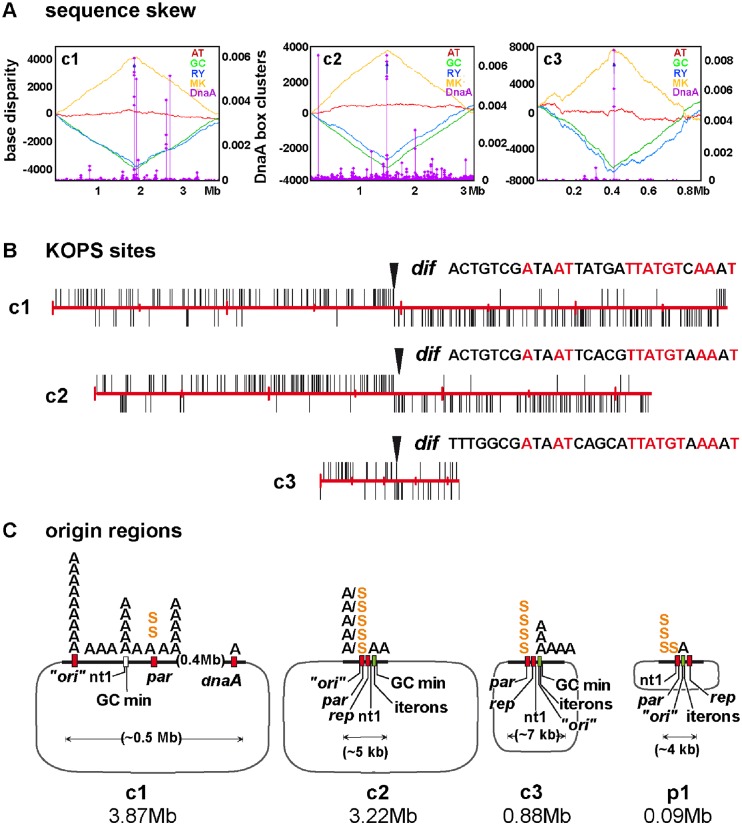
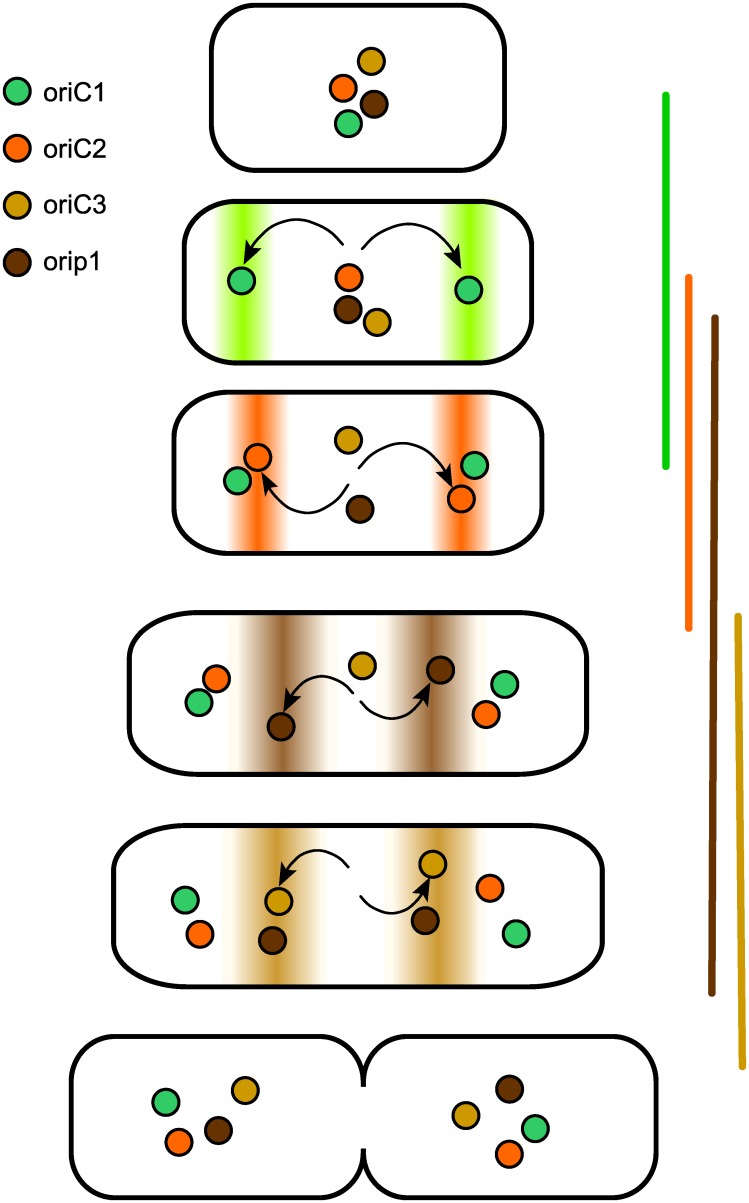
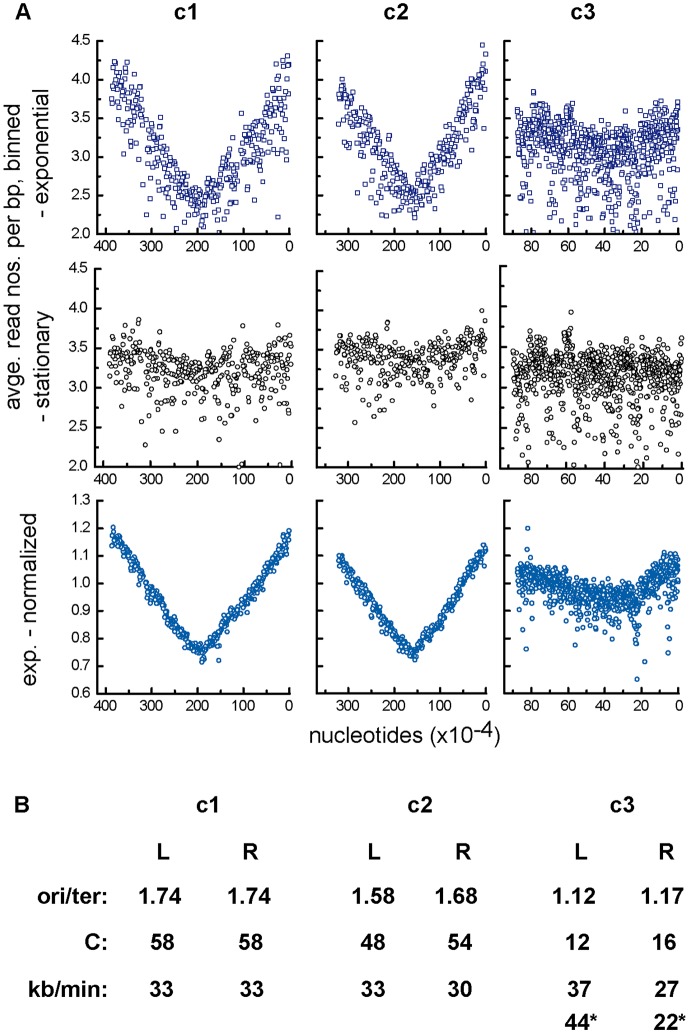
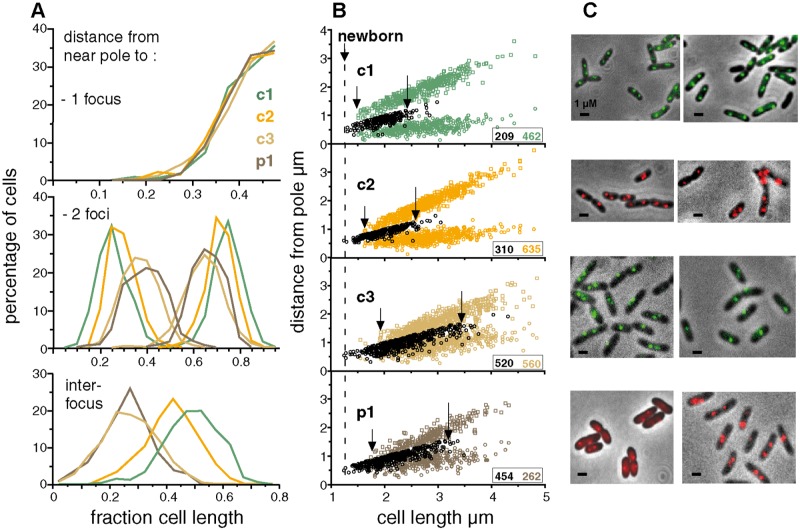
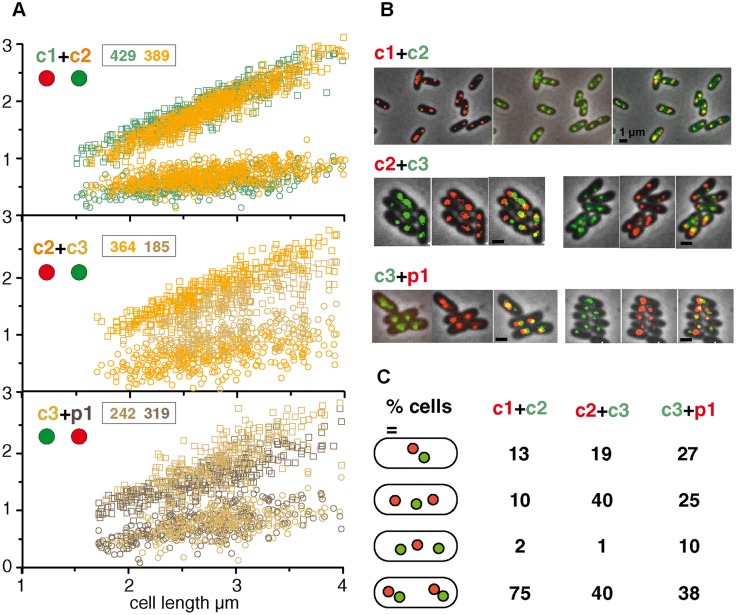
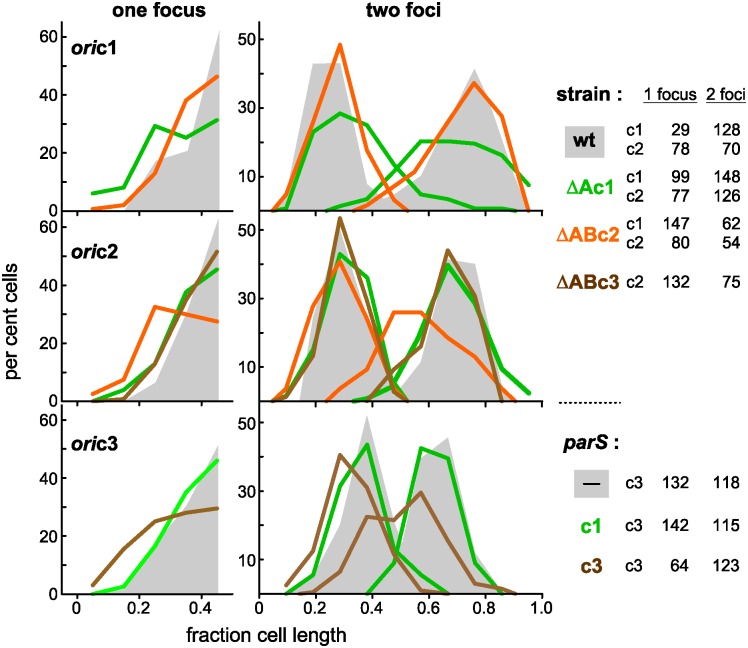
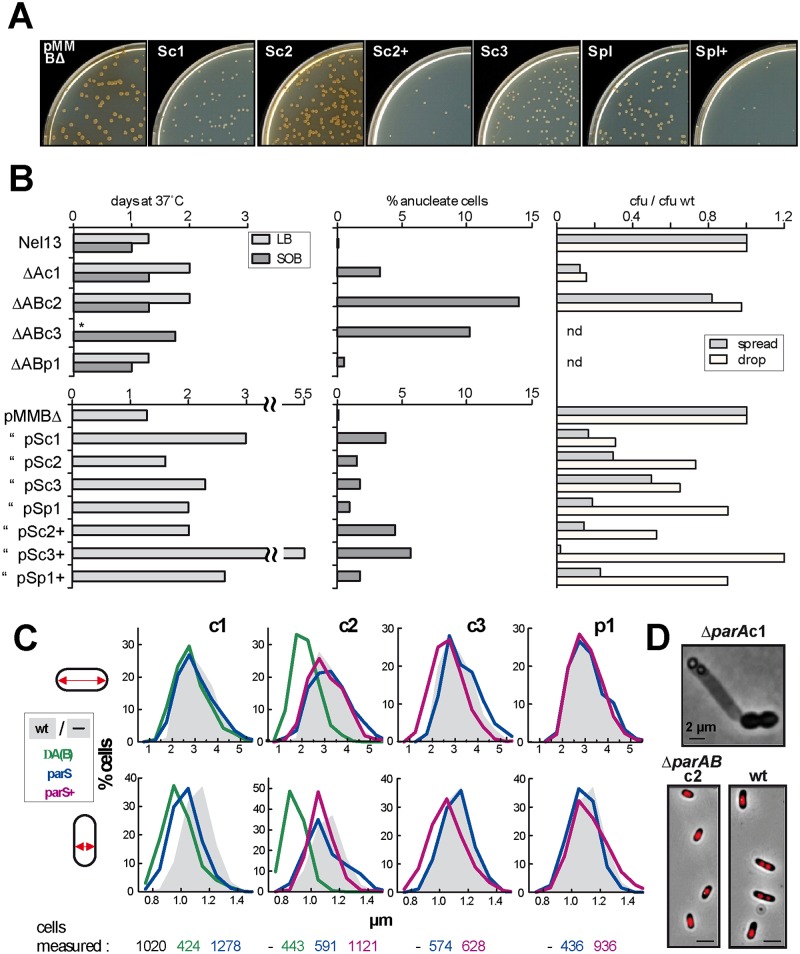
Bacterial genomes typically consist of a single chromosome and, optionally, one or more plasmids. But whole-genome sequencing reveals about ten per-cent of them to be multipartite, with additional replicons which by size and indispensability are considered secondary chromosomes. This raises the questions of how their replication and partition is managed without compromising genome stability and of how such genomes arose. Vibrio cholerae, with a 1 Mb replicon in addition to its 3 Mb chromosome, is the only species for which maintenance of a multipartite genome has been investigated. In this study we have explored the more complex genome of Burkholderia cenocepacia (strain J2315). It comprises an extra replicon (c2) of 3.21 Mb, comparable in size to the3.87Mb main chromosome (c1), another extra replicon(c3) of 0.87 Mb and a plasmid of 0.09 Mb. The replication origin of c1 is typically chromosomal and those of c2 and c3 are plasmid-like; all are replicated bidirectionally. Fluorescence microscopy of tagged origins indicates that all initiate replication at mid-cell and segregate towards the cell quarter positions sequentially, c1-c2-p1/c3. c2 segregation is as well-phased with the cell cycle as c1, implying that this plasmid-like origin has become subject to regulation not typical of plasmids; in contrast, c3 segregates more randomly through the cycle. Disruption of individual Par systems by deletion of parAB or by addition of parS sites showed each Par system to govern the positioning of its own replicon only. Inactivation of c1, c2 and c3 Par systems not only reduced growth rate, generated anucleate cells and compromised viability but influenced processes beyond replicon partition, notably regulation of replication, chromosome condensation and cell size determination. In particular, the absence of the c1 ParA protein altered replication of all three chromosomes, suggesting that the partition system of the main chromosome is a major participant in the choreography of the cell cycle.
细菌基因组通常由一条染色体构成,也可能含有一个或多个质粒。但全基因组测序显示,约10%的细菌基因组是多部分的,带有额外的复制子,根据大小和不可或缺性,这些复制子被视为次生染色体。这就引出了这样的问题:在不损害基因组稳定性的情况下,它们的复制和分配是如何进行管理的,以及这样的基因组是如何产生的。霍乱弧菌除了其3 Mb的染色体外,还有一个1 Mb的复制子,是唯一对多部分基因组的维持进行过研究的物种。在本研究中,我们探索了洋葱伯克霍尔德菌(菌株J2315)更为复杂的基因组。它包含一个3.21 Mb的额外复制子(c2),大小与3.87 Mb的主染色体(c1)相当,另一个0.87 Mb的额外复制子(c3)和一个0.09 Mb的质粒。c1的复制起点通常是染色体型的,c2和c3的复制起点则类似质粒;所有复制起点都是双向复制的。对标记起点的荧光显微镜观察表明,所有起点都在细胞中部起始复制,并依次向细胞四分体位置分离,顺序为c1 - c2 - p1/c3。c2的分离与细胞周期的同步性与c1一样好,这意味着这个类似质粒的起点已受到不同于质粒的调控;相比之下,c3在整个细胞周期中的分离更为随机。通过缺失parAB或添加parS位点破坏单个Par系统,结果表明每个Par系统仅控制其自身复制子的定位。c1、c2和c3的Par系统失活不仅降低了生长速率,产生了无核细胞并损害了活力,还影响了复制子分配之外的过程,特别是复制调控、染色体凝聚和细胞大小的确定。特别是,c1的ParA蛋白缺失改变了所有三条染色体的复制,这表明主染色体的分配系统是细胞周期编排中的主要参与者。