Li Rongtao, Morris-Natschke Susan L, Lee Kuo-Hsiung
Faculty of Life Science and Technology, Kunming University of Science and Technology, Kunming 650500, Yunnan, People's Republic of China.
Nat Prod Rep. 2016 Oct 28;33(10):1166-226. doi: 10.1039/c5np00137d. Epub 2016 Jul 18.
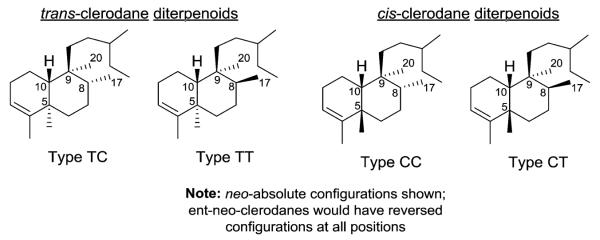
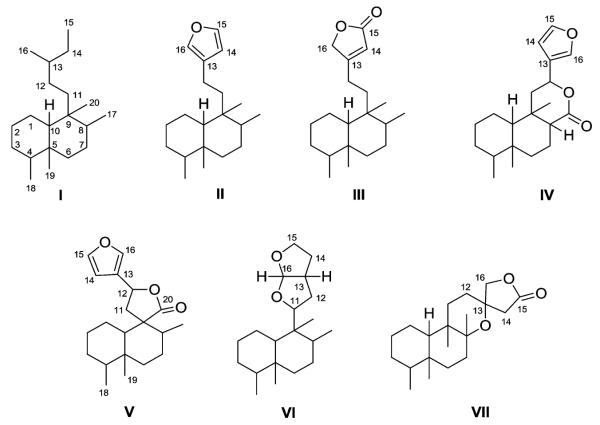
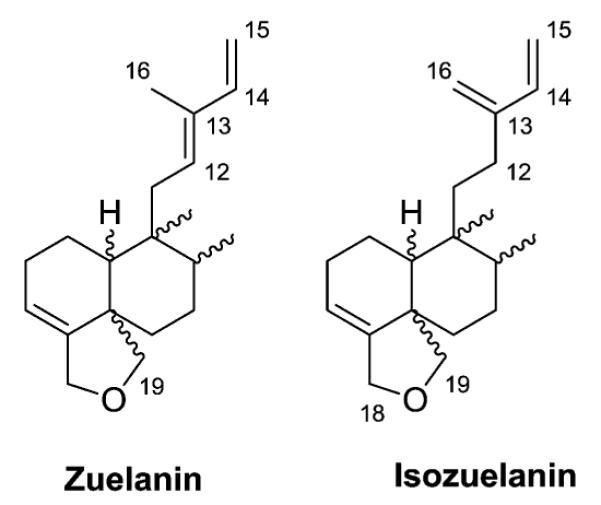
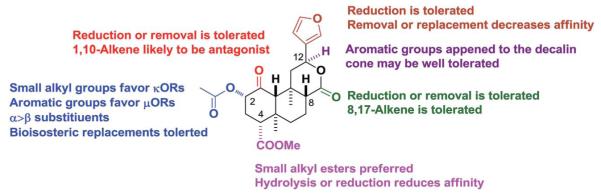
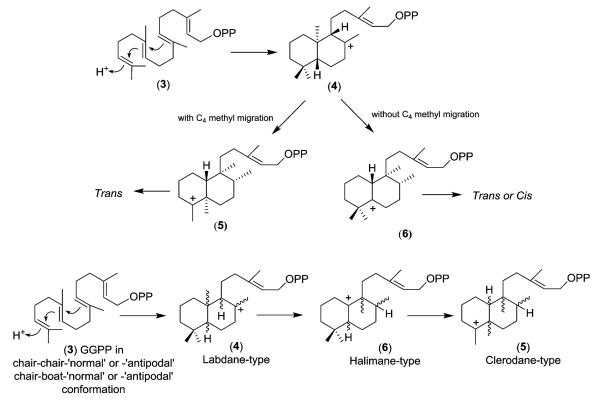
Covering: 1990 to 2015The clerodane diterpenoids are a widespread class of secondary metabolites and have been found in several hundreds of plant species from various families and in organisms from other taxonomic groups. These substances have attracted interest in recent years due to their notable biological activities, particularly insect antifeedant properties. In addition, the major active clerodanes of Salvia divinorum can be used as novel opioid receptor probes, allowing greater insight into opioid receptor-mediated phenomena, as well as opening additional areas for chemical investigation. This article provides extensive coverage of naturally occurring clerodane diterpenes discovered from 1990 until 2015, and follows up on the 1992 review by Merritt and Ley in this same journal. The distribution, chemotaxonomic significance, chemical structures, and biological activities of clerodane diterpenes are summarized. In the cases where sufficient information is available, structure activity relationship (SAR) correlations and mode of action of active clerodanes have been presented.
1990年至2015年
克罗烷二萜类化合物是一类广泛存在的次生代谢产物,已在来自不同科的数百种植物物种以及其他分类群的生物中被发现。近年来,由于这些物质具有显著的生物活性,特别是昆虫拒食特性,它们引起了人们的关注。此外,鼠尾草属植物中的主要活性克罗烷类化合物可用作新型阿片受体探针,有助于更深入地了解阿片受体介导的现象,并为化学研究开辟新的领域。本文广泛涵盖了1990年至2015年间发现的天然存在的克罗烷二萜类化合物,并对梅里特和利伊于1992年在同一期刊上发表的综述进行了跟进。总结了克罗烷二萜类化合物的分布、化学分类学意义、化学结构和生物活性。在有足够信息的情况下,还介绍了活性克罗烷类化合物的构效关系(SAR)相关性和作用模式。