Stoyanova Radka, Pollack Alan, Takhar Mandeep, Lynne Charles, Parra Nestor, Lam Lucia L C, Alshalalfa Mohammed, Buerki Christine, Castillo Rosa, Jorda Merce, Ashab Hussam Al-Deen, Kryvenko Oleksandr N, Punnen Sanoj, Parekh Dipen J, Abramowitz Matthew C, Gillies Robert J, Davicioni Elai, Erho Nicholas, Ishkanian Adrian
Department of Radiation Oncology, University of Miami Miller School of Medicine, Miami, FL, USA.
Reserach and Development, GenomeDx Biosciences, Vancouver, BC, Canada.
Oncotarget. 2016 Aug 16;7(33):53362-53376. doi: 10.18632/oncotarget.10523.
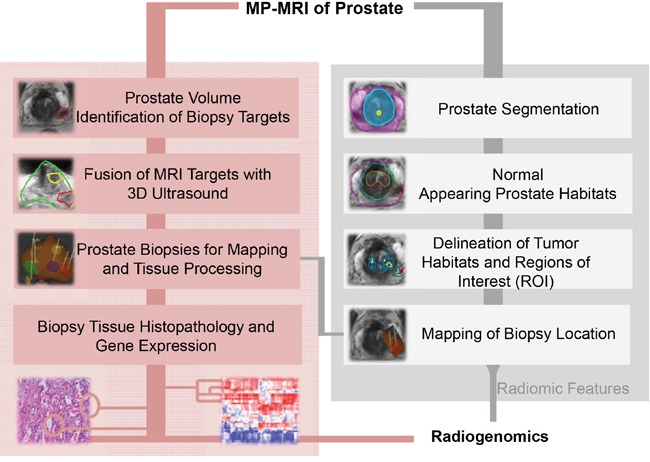
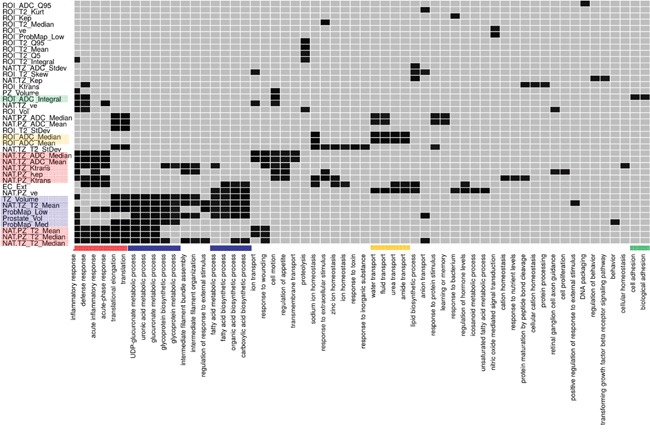
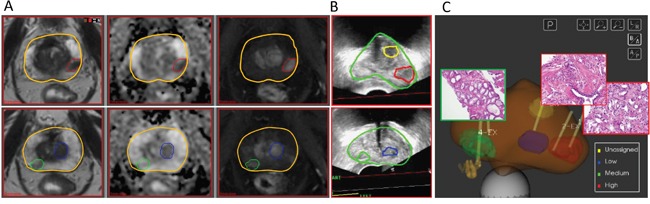
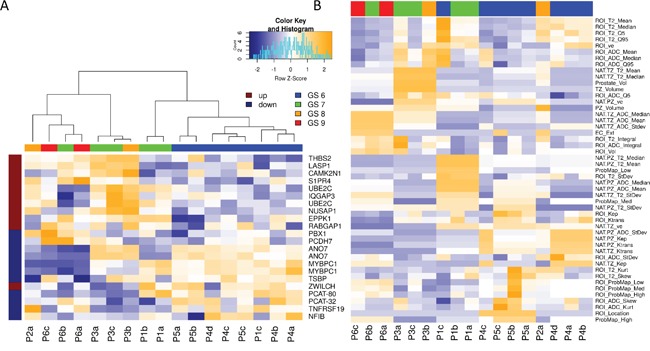
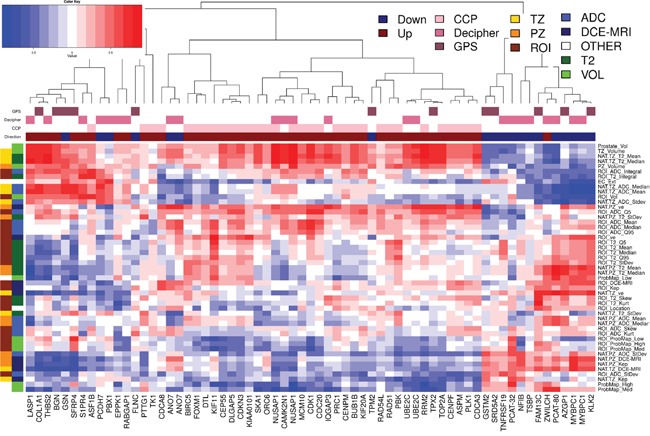
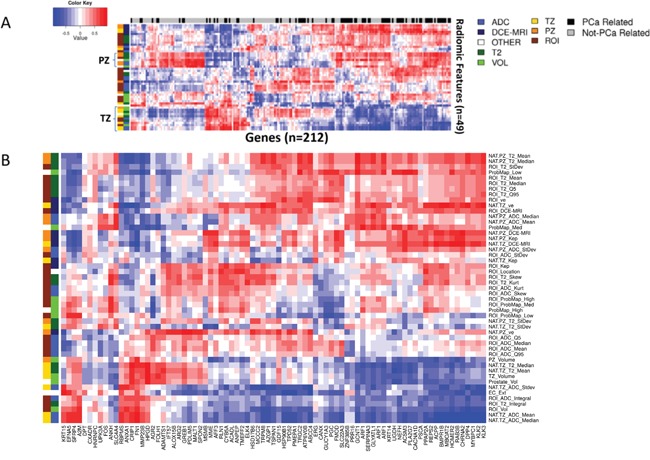
Standard clinicopathological variables are inadequate for optimal management of prostate cancer patients. While genomic classifiers have improved patient risk classification, the multifocality and heterogeneity of prostate cancer can confound pre-treatment assessment. The objective was to investigate the association of multiparametric (mp)MRI quantitative features with prostate cancer risk gene expression profiles in mpMRI-guided biopsies tissues.Global gene expression profiles were generated from 17 mpMRI-directed diagnostic prostate biopsies using an Affimetrix platform. Spatially distinct imaging areas ('habitats') were identified on MRI/3D-Ultrasound fusion. Radiomic features were extracted from biopsy regions and normal appearing tissues. We correlated 49 radiomic features with three clinically available gene signatures associated with adverse outcome. The signatures contain genes that are over-expressed in aggressive prostate cancers and genes that are under-expressed in aggressive prostate cancers. There were significant correlations between these genes and quantitative imaging features, indicating the presence of prostate cancer prognostic signal in the radiomic features. Strong associations were also found between the radiomic features and significantly expressed genes. Gene ontology analysis identified specific radiomic features associated with immune/inflammatory response, metabolism, cell and biological adhesion. To our knowledge, this is the first study to correlate radiogenomic parameters with prostate cancer in men with MRI-guided biopsy.
标准的临床病理变量不足以对前列腺癌患者进行最佳管理。虽然基因组分类器改善了患者风险分类,但前列腺癌的多灶性和异质性会混淆治疗前评估。目的是研究多参数(mp)MRI定量特征与mpMRI引导活检组织中前列腺癌风险基因表达谱之间的关联。使用Affimetrix平台从17次mpMRI引导的诊断性前列腺活检中生成全局基因表达谱。在MRI/3D超声融合上识别出空间上不同的成像区域(“栖息地”)。从活检区域和外观正常的组织中提取放射组学特征。我们将49个放射组学特征与三种与不良结局相关的临床可用基因特征进行了关联。这些特征包含在侵袭性前列腺癌中过度表达的基因和在侵袭性前列腺癌中表达不足的基因。这些基因与定量成像特征之间存在显著相关性,表明放射组学特征中存在前列腺癌预后信号。在放射组学特征与显著表达的基因之间也发现了强关联。基因本体分析确定了与免疫/炎症反应、代谢、细胞和生物粘附相关的特定放射组学特征。据我们所知,这是第一项将放射基因组参数与接受MRI引导活检的男性前列腺癌相关联的研究。