Vatsiou Alexandra I, Bazin Eric, Gaggiotti Oscar E
Laboratoire d'Écologie Alpine (LECA), Univesrity Joseph Fourier, 2233 Rue de la Piscine, 38041, Grenoble, Cedex 9, France.
Scottish Oceans Institute, East Sands, University of St Andrews, St Andrews, KY16 8LB, Scotland, UK.
BMC Genomics. 2016 Jul 21;17:504. doi: 10.1186/s12864-016-2783-2.
The study of local adaptation processes is a very important research topic in the field of population genomics. There is a particular interest in the study of human populations because they underwent a process of rapid spatial expansion and faced important environmental changes that translated into changes in selective pressures. New mutations may have been selected for in the new environment and previously existing genetic variants may have become detrimental. Immune related genes may have been released from the selective pressure exerted by pathogens in the ancestral environment and new variants may have been positively selected due to pathogens present in the newly colonized habitat. Also, variants that had a selective advantage in past environments may have become deleterious in the modern world due to external stimuli including climatic, dietary and behavioral changes, which could explain the high prevalence of some polygenic diseases such as diabetes and obesity.
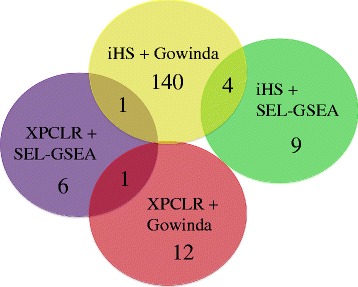
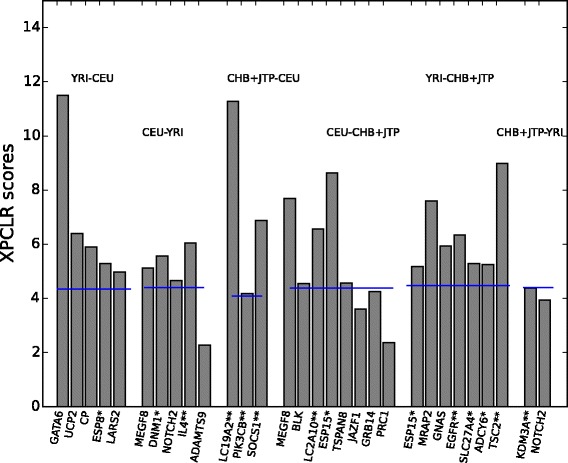
We performed an enrichment analysis to identify gene sets enriched for signals of positive selection in humans. We used two genome scan methods, XPCLR and iHS to detect selection using a dense coverage of SNP markers combined with two gene set enrichment approaches. We identified immune related gene sets that could be involved in the protection against pathogens especially in the African population. We also identified the glycolysis & gluconeogenesis gene set, related to metabolism, which supports the thrifty genotype hypothesis invoked to explain the current high prevalence of diseases such as diabetes and obesity. Extending our analysis to the gene level, we found signals for 23 candidate genes linked to metabolic syndrome, 13 of which are new candidates for positive selection.
Our study provides a list of genes and gene sets associated with immunity and metabolic syndrome that are enriched for signals of positive selection in three human populations (Europeans, Africans and Asians). Our results highlight differences in the relative importance of pathogens as drivers of local adaptation in different continents and provide new insights into the evolution and high incidence of metabolic syndrome in modern human populations.
局部适应过程的研究是群体基因组学领域一个非常重要的研究课题。对人类群体的研究尤其受到关注,因为人类经历了快速的空间扩张过程,并面临着重要的环境变化,这些变化转化为选择压力的改变。新的突变可能在新环境中被选择,而先前存在的基因变异可能变得有害。免疫相关基因可能已从祖先环境中病原体施加的选择压力中释放出来,而新的变异可能由于新殖民栖息地中存在的病原体而被正向选择。此外,在过去环境中具有选择优势的变异,在现代世界中可能由于包括气候、饮食和行为变化在内的外部刺激而变得有害,这可以解释一些多基因疾病如糖尿病和肥胖症的高患病率。
我们进行了富集分析,以识别在人类中富集正选择信号的基因集。我们使用了两种基因组扫描方法,即XPCLR和iHS,通过密集覆盖的单核苷酸多态性(SNP)标记结合两种基因集富集方法来检测选择。我们确定了可能参与抵御病原体的免疫相关基因集,特别是在非洲人群中。我们还确定了与代谢相关的糖酵解和糖异生基因集,这支持了为解释当前糖尿病和肥胖症等疾病的高患病率而提出的节俭基因型假说。将我们的分析扩展到基因水平,我们发现了与代谢综合征相关的23个候选基因的信号,其中13个是正选择的新候选基因。
我们的研究提供了一份与免疫和代谢综合征相关的基因和基因集清单,这些基因和基因集在三个人类群体(欧洲人、非洲人和亚洲人)中富集了正选择信号。我们的结果突出了病原体作为不同大陆局部适应驱动因素的相对重要性的差异,并为现代人类群体中代谢综合征的进化和高发病率提供了新的见解。