Herrera-Martínez Mayra, Hernández-Ramírez Verónica I, Hernández-Carlos Beatriz, Chávez-Munguía Bibiana, Calderón-Oropeza Mónica A, Talamás-Rohana Patricia
Departamento de Infectómica y Patogénesis Molecular, Centro de Investigación y de Estudios Avanzados del Instituto Politécnico Nacional Ciudad de México, Mexico.
Instituto de Agroindustrias, Universidad Tecnológica de la Mixteca Huajuapan de León, Mexico.
Front Pharmacol. 2016 Jun 27;7:169. doi: 10.3389/fphar.2016.00169. eCollection 2016.
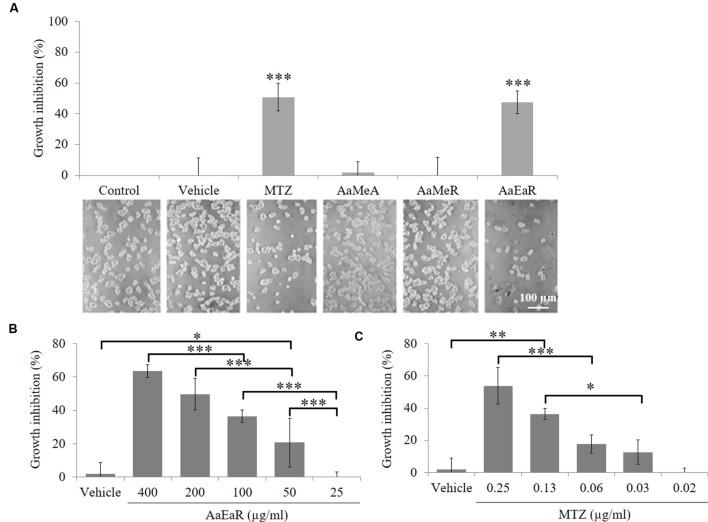
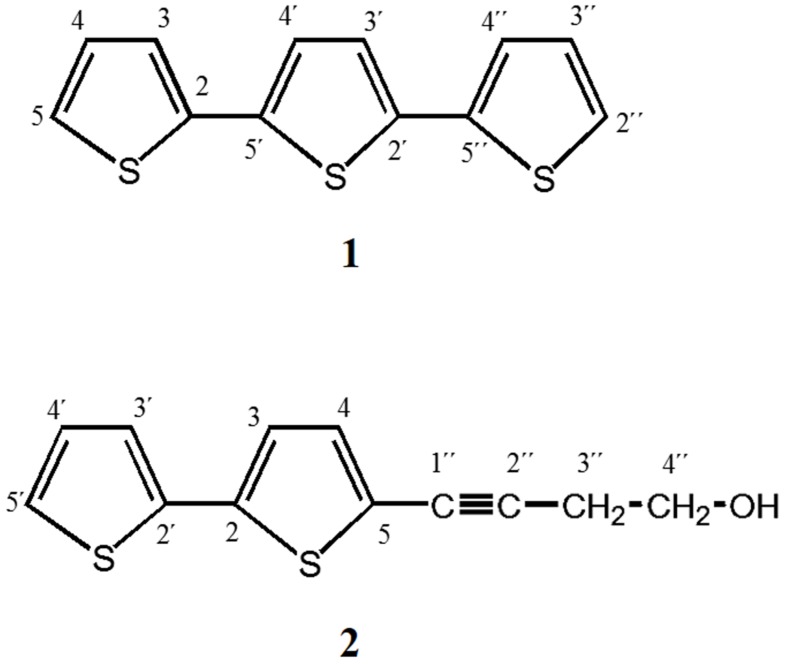
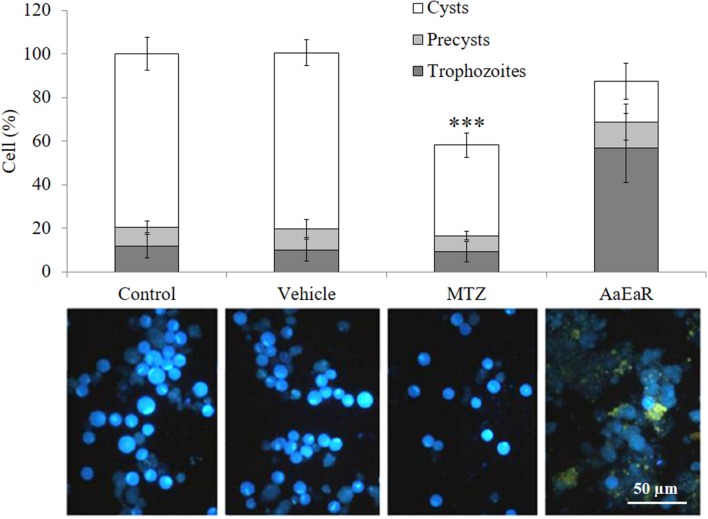
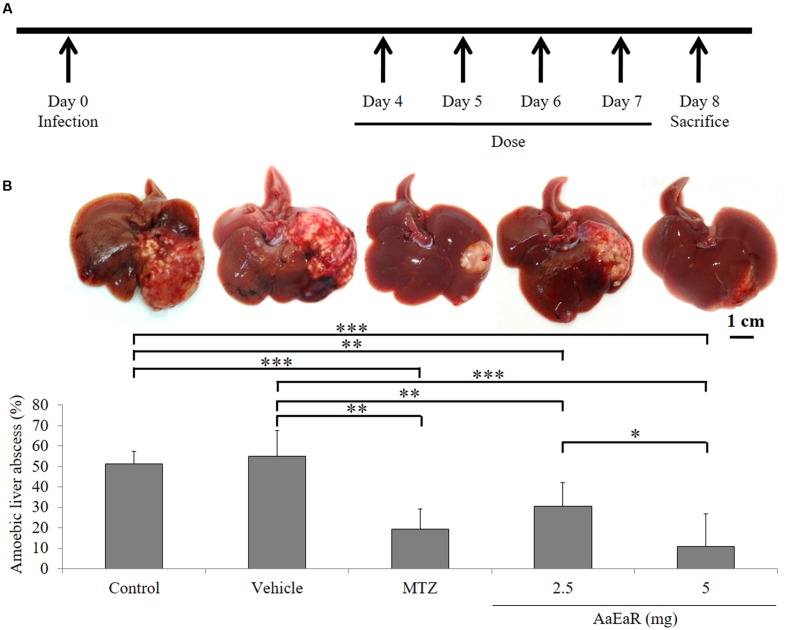
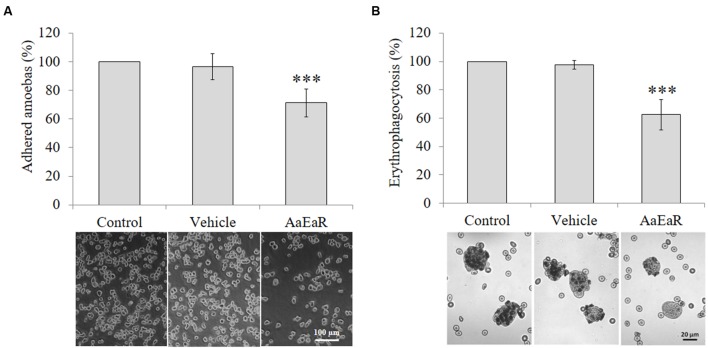
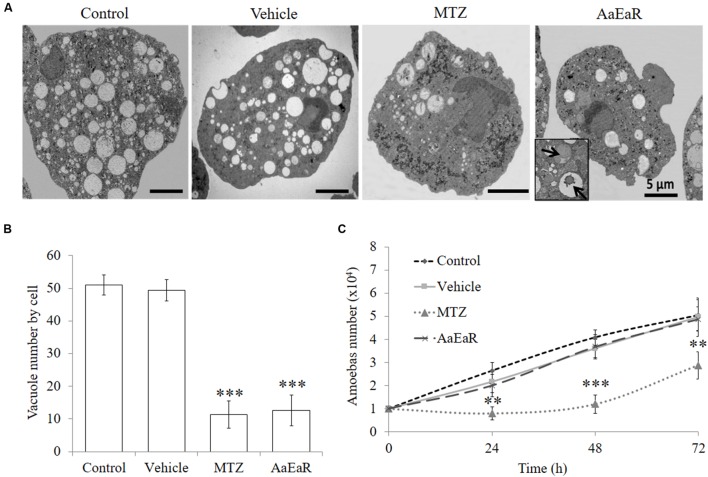
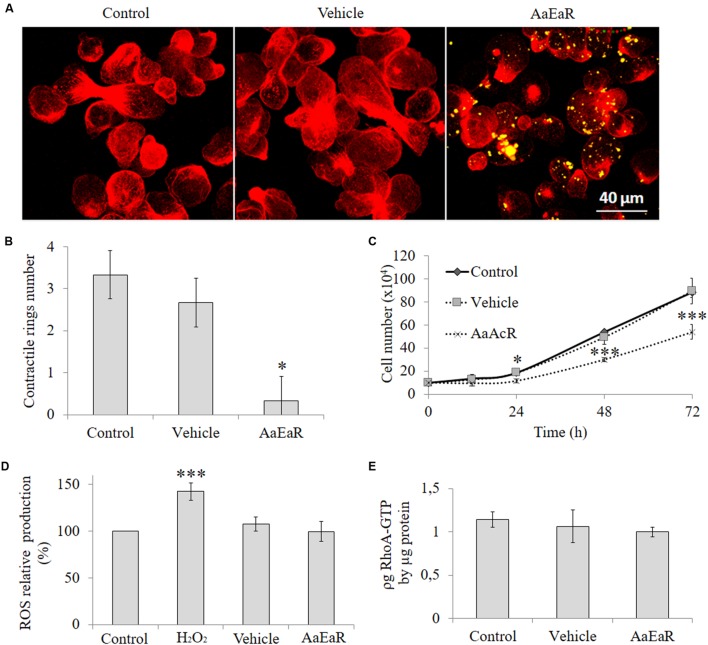
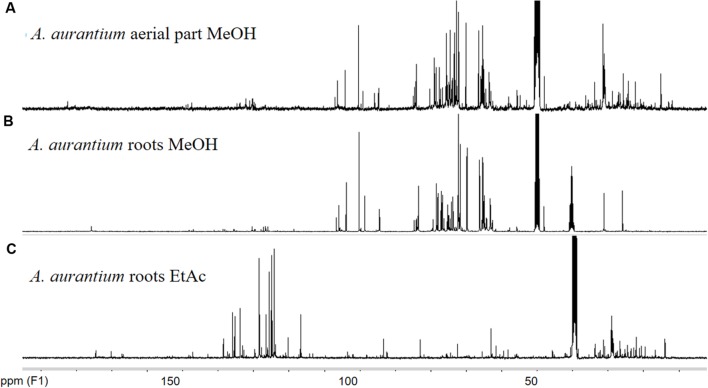
In Mexico, the Adenophyllum aurantium (L.) Strother plant is consumed as an infusion to treat intestinal diseases such as amoebiasis, which is an endemic health problem in Mexico and other countries. However, the effect of A. aurantium on Entamoeba histolytica, the causative agent of amoebiasis, is unknown. An aerial part methanolic extract (AaMeA), a root methanolic extract (AaMeR) and a root ethyl acetate extract (AaEaR) were tested on E. histolytica trophozoites. AaMeA and AaMeR did not show antiproliferative activity; however, AaEaR exhibited an in vitro GI50 of 230 μg/ml, and it was able to inhibit the differentiation of Entamoeba invadens trophozoites into cysts. The intraperitoneal administration of AaEaR (2.5 or 5 mg) to hamsters that were infected with E. histolytica inhibited the development of amoebic liver abscesses in 48.5 or 89.0% of the animals, respectively. Adhesion to fibronectin and erythrophagocytosis were 28.7 and 37.5% inhibited by AaEaR, respectively. An ultrastructure analysis of AaEaR-treated trophozoites shows a decrease in the number of vacuoles but no apparent cell damage. Moreover, this extract affected the actin cytoskeleton structuration, and it prevented the formation of contractile rings by mechanism(s) that were independent of reactive oxygen species and RhoA activation pathways. (13)C NMR data showed that the major compounds in the AaEaR extract are thiophenes. Our results suggest that AaEaR may be effective in treatments against amoebiasis, nevertheless, detailed toxicity studies on thiophenes, contained in AaEaR, are required to avoid misuse of this vegetal species.
在墨西哥,人们将金叶腺叶菊(Adenophyllum aurantium (L.) Strother)植株制成浸剂来治疗肠道疾病,如阿米巴病,这在墨西哥和其他国家都是一个地方性健康问题。然而,金叶腺叶菊对阿米巴病病原体溶组织内阿米巴(Entamoeba histolytica)的作用尚不清楚。对溶组织内阿米巴滋养体测试了地上部分甲醇提取物(AaMeA)、根部甲醇提取物(AaMeR)和根部乙酸乙酯提取物(AaEaR)。AaMeA和AaMeR未显示出抗增殖活性;然而,AaEaR在体外的半数生长抑制浓度(GI50)为230μg/ml,并且能够抑制侵袭内阿米巴(Entamoeba invadens)滋养体分化为包囊。对感染溶组织内阿米巴的仓鼠腹腔注射AaEaR(2.5或5mg),分别在48.5%或89.0%的动物中抑制了阿米巴肝脓肿的发展。AaEaR分别使对纤连蛋白的黏附及红细胞吞噬作用受到28.7%和37.5%的抑制。对经AaEaR处理的滋养体进行超微结构分析显示液泡数量减少,但无明显细胞损伤。此外,该提取物影响肌动蛋白细胞骨架的结构形成,并通过独立于活性氧和RhoA激活途径的机制阻止收缩环的形成。碳-13核磁共振(¹³C NMR)数据表明,AaEaR提取物中的主要化合物是噻吩。我们的结果表明,AaEaR可能对阿米巴病治疗有效,不过,需要对AaEaR中含有的噻吩进行详细的毒性研究,以避免滥用这种植物。